Thousands of Indian students enroll each year in Kyrgyz medical schools, drawn by the lower costs, easier enrollment, and more generally, the quality of the medical education. Finally, students and parents have the same question:
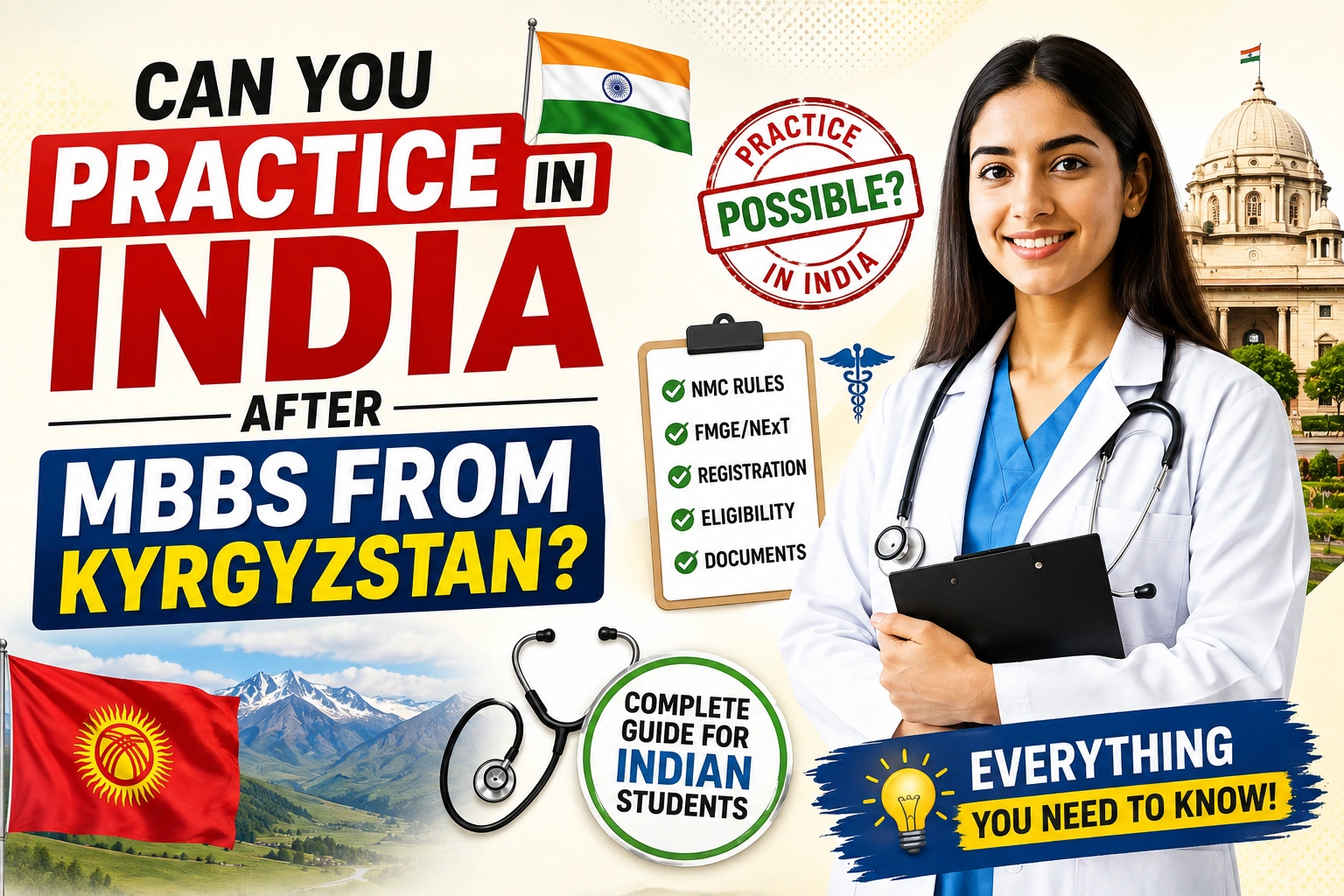
Can You Perform Medical Practice in India after Studying MBBS in Kyrgyzstan?
Yes, students can perform medical practice in India, provided the students comply with the National Medical Commission (NMC) requirements and the medical licensing exam of India. Studying abroad does not give the right to practice in India. Indian medical students must comply with the eligibility requirements for each step of the medical study.
This guide covers everything you need to know related to practicing MBBS from Kyrgyzstan and medical practice in India, NMC rules and regulations, WHO, WDOMS, and the licensing exam, internship, job opportunities, and the selected medical university in Kyrgyzstan.
Why Do Indian Students Choose MBBS in Kyrgyzstan?
The medical education system in Kyrgyzstan is the best in the region, and ample Indian students now study and practice medicine in Kyrgyzstan. Medical education in Kyrgyzstan is faster and more affordable than India's private medical colleges.
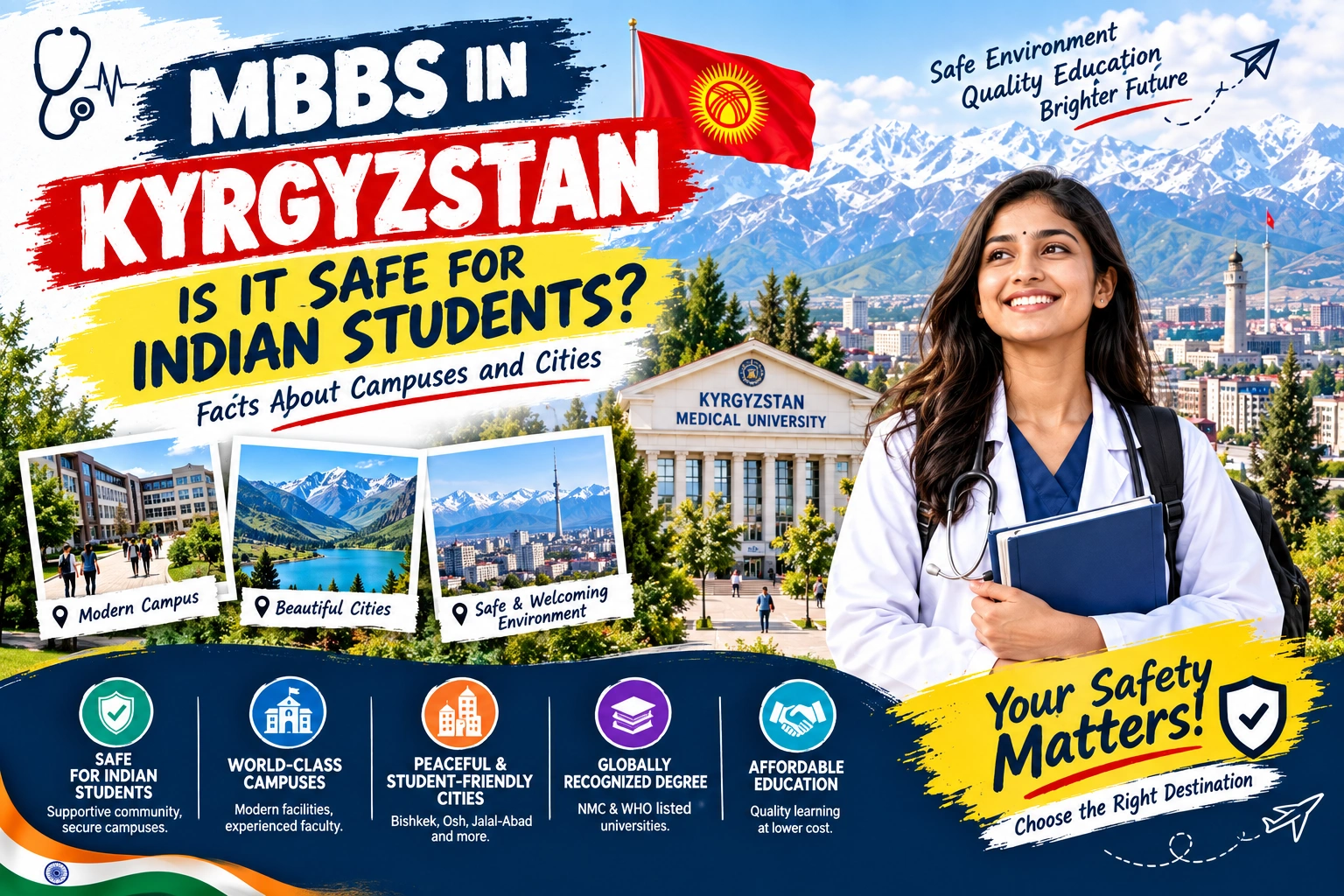
Other reasons include lower costs, medical degrees recognized globally, and an improved and experienced faculty with more modern labs, food suitable to Indian tastes, and a safe environment.
Importantly, NEET qualified candidates pursue MBBS in Kyrgyzstan knowing that they won’t be burdened with expensive admission donations or capitation fees.
Does India Recognize MBBS from Kyrgyzstan?
An MBBS degree from Kyrgyzstan can be recognized in India, provided the university and course comply with the National Medical Commission (NMC) regulations.
Recognition also depends on compliance with the Indian authorities’ course requirements.
To be eligible for medical registration in India, the following should be ensured:
Admission was preceded by NEET.
The university complied with the NMC guidelines.
The medical degree has international recognition.
The university is recorded in WDOMS.
The university is acknowledged by WHO.
The university and the students meet all academic and internship obligations.
If these are overlooked, there will be complications with medical licensing in India.
Importance of NEET Before Admission
For Indian students, the most significant requirement for studying medicine overseas is fulfilling NEET.
Indian students must qualify NEET to obtain an Eligibility Certificate to practice medicine in India after completing their MBBS abroad, as per NMC regulations.
Qualification of NEET assures students of the following in India:
Medical registration
Licensing examinations
Employment in Government Service
Postgraduate medical courses
Failure to qualify NEET will result in complications with medical registration in India.
Significance of NMC Recognition
The NMC is India's regulatory authority for medical education and medical licensing.
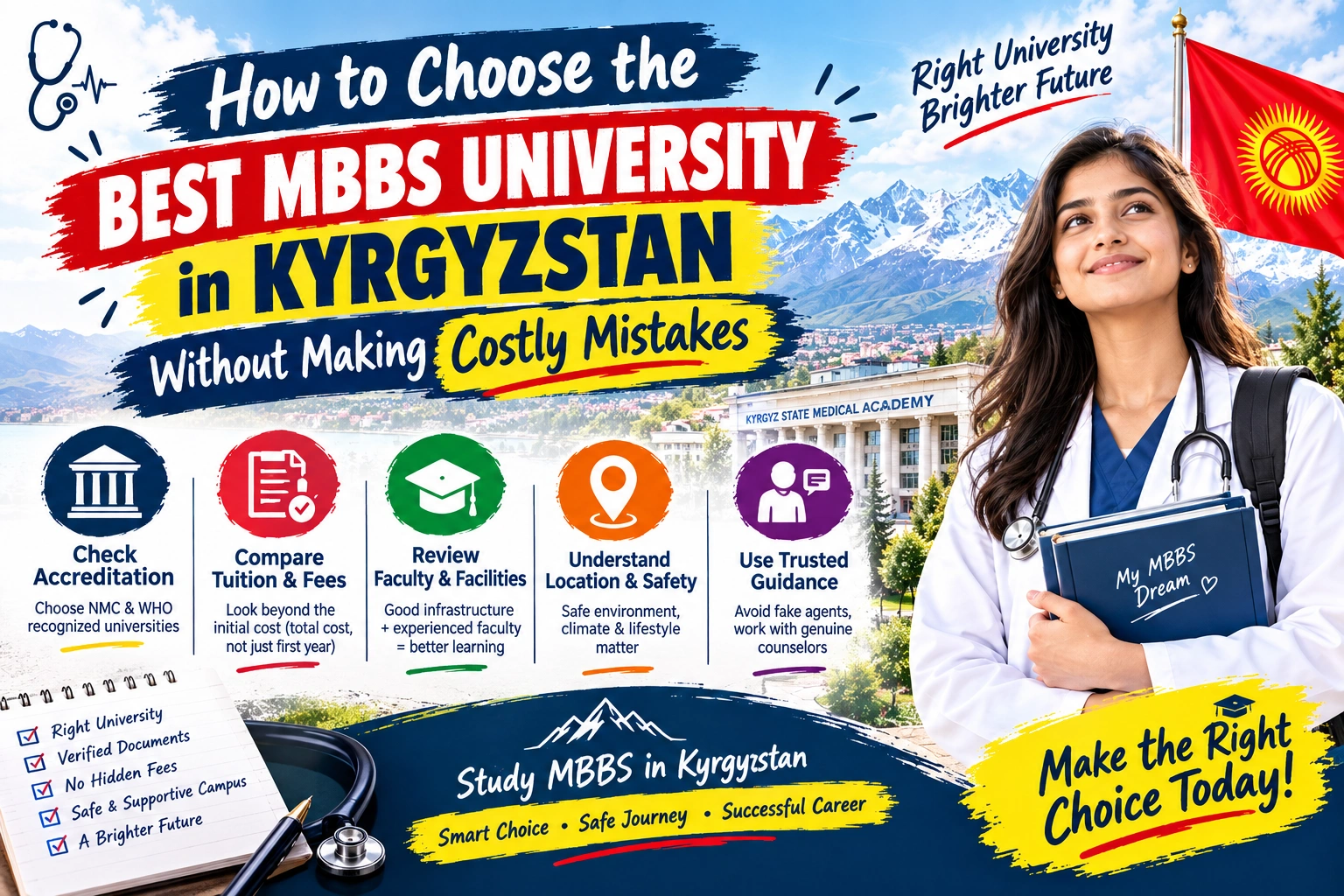
Before choosing a university in Kyrgyzstan, students have to check if the university meets NMC requirements.
The NMC assesses:
The duration of the MBBS course.
The sufficiency of clinical training.
The fulfillment of internship provisions.
If the curriculum is at par with the international standards.
The medium of instruction.
If students are provided practical exposure in recognized hospitals.
Attending a university that doesn't meet the NMC standards can impact the student's future registration in India.
Why does WHO Recognition Matter?
Most students think that the WHO directly recognizes medical colleges. In actuality, medical universities are recognized by their respective countries and are registered in international directories.
The universities that are in association with the WHO standards generally have a medical education system that is accepted worldwide.
WHO-associated recognition brings many benefits:
Greater acceptance internationally
More trust in the medical education system
Greater access to medical services and opportunities worldwide
Eligibility to take different international medical examinations
A better standing in the academic field
WHO recognition, while not permitting the practice in India, enhances the value of the degree internationally.
What is WDOMS? Why is it Important?
The World Directory of Medical Schools is one of the most vital directories for students wishing to study MBBS abroad.
Before taking admission, students have to check the listing of their chosen university in WDOMS.
A university that is listed in WDOMS is most likely to be recognized by the Medical Council of that country.
International recognition
Greater academic attainability
Eligibility for several international licensing examinations
Better job opportunities abroad
Greater credibility of medical graduates
No, you cannot practice directly in India after MBBS from Kyrgyzstan.
Earning an MBBS degree in Kyrgyzstan does not grant medical practitioners the right to commence medical practice in India.
Medical graduates need to complete the requisite formalities by the National Medical Commission upon their return to India.
Graduates need to complete all the requisite formalities to receive their legal entitlement to practice medicine in India.
Formalities upon return to India
Indian students who complete their MBBS in Kyrgyzstan need to follow a defined pathway to become eligible to practice medicine in India.
The defined pathway consists of:
Completion of the MBBS degree.
Completion of a mandatory internship as per the requirements.
Passing the requisite licensing examination in India.
Verification of the credentialing documents.
Registration with the respective medical authority.
Issuance of the permission to practice medicine.
Each of the defined steps needs to be fulfilled in order to practice medicine in India.
Importance of Clinical Training
There is a lot more to medical education than classroom instruction.
Students who wish to practice in India need to select the universities that provide ample opportunity for clinical instruction.
Clinical training of high quality consists of:
Multiple hospital rotations.
Direct patient care.
Diagnosis and treatment.
Surgical practice.
Emergency care.
Community medicine.
Practical skills of high quality and ample training increase success on the licensing exams.
Internship
The internship is a critical part of any medical education.
Students need to confirm that the university complies with NMC standards for the internship to be valid.
Quality internships create the opportunity for students to:
Gain skills in the management of patients.
Learn the processes of the hospital.
Learn the practice of medicine.
Gain valuable communication skills.
Acquire confidence for the practice of medicine.
Non-compliant internships create the opportunity for barriers to registration in India.
Career Prospects Following Return to India
Once students officially obtain their medical licenses, various career pathways become available to them.
Some of these options are:
Government hospitals
Private hospitals
Multispecialty hospitals
Primary healthcare centers
Medical research institutions
Clinical practice
Medical teaching
Healthcare administration
Public health services
Higher medical education
Many graduates also study for the postgraduate medical entrance examinations after they are registered.
Can You Pursue MD or MS in India?
Yes.
According to the current regulations, Kyrgyzstan graduates, who are now registered after the licensing process, can apply for postgraduate medical studies in India.
Many students also choose to specialize in
General Medicine
Surgery
Pediatrics
Orthopedics
Dermatology
Radiology
Obstetrics and Gynecology
Psychiatry
Anesthesiology
Specialization does offer increased career opportunities and earning capacity.
Challenges Students Should Be Prepared For
There are many advantages to studying medicine in Kyrgyzstan, however, students need to be aware of the challenges.
Some of these may be learning to adapt to a more demanding educational environment, different weather, keeping grades up, bettering communicational skills, and preparing for the licensing exam in India.
Those who are disciplined, notice a positive difference when they complete their course in India.
Tips for Choosing the Right Medical University in Kyrgyzstan
This part of the journey can define your entire medical career.
Make sure before you enroll in a University, the following holds true:
The university follows the NMC regulations.
It is listed in the WDOMS.
It has international standards set by the WHO.
Admittance occurs only after the NEET qualification.
The curriculum allows for clinical exposure.
Internship meets Indian requirements.
The university has adequate faculty.
There are services for Indian students.
The hostel and safety arrangements are adequate.
The university has a good reputation for its academic programs.
Students should research to avoid unnecessary legal and academic problems.
Common Misunderstandings of MBBS in Kyrgyzstan
There are many misunderstandings of foreign medical education. A common misunderstanding is assuming that foreign MBBS (Bachelor of Medicine and Bachelor of Surgery) degrees allow students to practice in India. Students must follow NMC (National Medical Commission) guidelines and processes to become eligible to practice.
An assumption that low tuition indicates low educational standards is also untrue. Some medical schools in Kyrgyzstan are of good quality and are also affordable to international students. They also have experienced faculty and ample clinical exposure.
Students should seek out verified facts in order to make their medical education plans.
Conclusion
Yes, it is possible to practice in India after completing MBBS in Kyrgyzstan, if all informed and educated decisions are made at the outset of the medical education journey. This includes choosing the right university, qualifying for the NEET (National Eligibility cum Entrance Test) prior to admission, studying in an institution that follows NMC guidelines and ensuring that the university is listed in the WDOMS (World Directory of Medical Schools) and affiliated to the WHO (World Health Organization).
Graduates are able to establish a successful medical career in India after thorough planning of their medical education, completion of clinical training and completion of the medical registration process and fulfillment of requirements for the licensing to practice in India.
Aspiring physicians wishing to find quality education at a low cost will find the MBBS programs in Kyrgyzstan to be an excellent option as long as students choose appropriate, recognized universities and follow the policies of the Indian medical council along the way.