In 2026, for Indian medical students planning to apply for overseas MBBS programs, will Kyrgyzstan still remain the optimal low-cost overseas study destination to pursue an MBBS degree?
Indian domestic medical students hoping to enroll in a medical school face two insurmountable core barriers:
First, competition for admission to public medical colleges continues to intensify, and the vast majority of applicants are completely unable to secure one of the extremely limited admission slots.
Second, tuition fees at private medical colleges reach as high as 6 million to over 100 million Indian rupees, far exceeding the affordability of ordinary Indian families.
These two obstacles force a large number of medical students who meet basic application requirements to turn to low-cost overseas medical study programs.
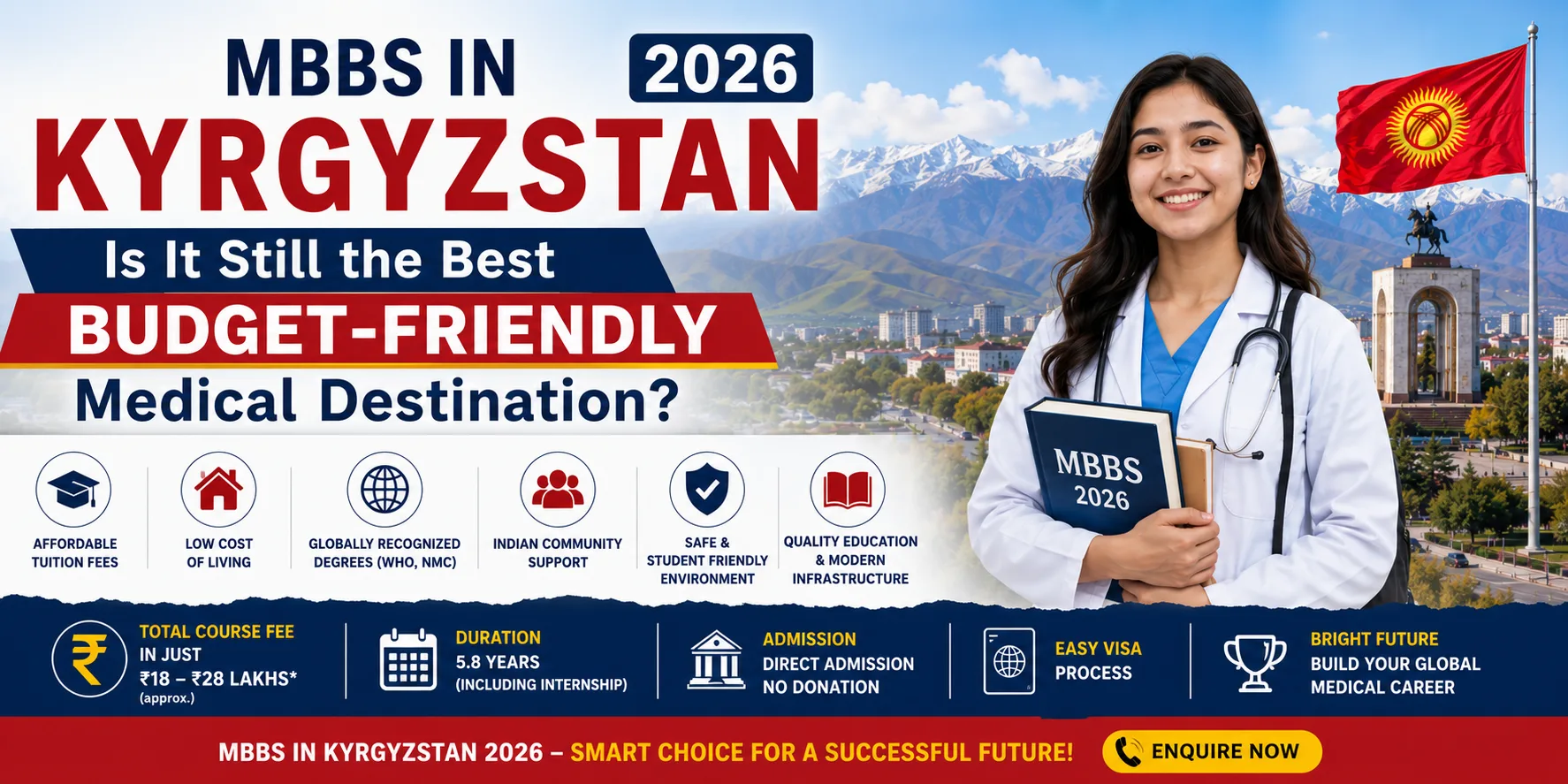
Over the past ten years, Kyrgyzstan has become a popular choice for Indian medical students thanks to four core advantages: total study-abroad costs of only 15 to 30 lakh Indian rupees, access to legitimate, internationally accredited universities listed in directories such as WDOMS, an English-medium teaching environment, and local monthly living costs of only 10,000 to 25,000 Indian rupees, all of which perfectly match the core needs of Indian applicants.
But in recent years, Kyrgyzstan has also encountered three major new challenges:
Adjustments to local international education regulations
Updates to application requirements for global medical practice licenses
Competition from peer study-abroad destinations including Russia, Kazakhstan, Georgia, and Uzbekistan
These developments have turned the opening question into a shared source of anxiety for all prospective applicants.
To address this, this guide will assess the value of studying in Kyrgyzstan in 2026 across six core dimensions, disclose in advance core favorable factors including degree recognition, admission thresholds, and study-abroad costs, lay the groundwork for subsequent in-depth analysis, and help prospective applicants organize all the core information they need to make their decision.
Core Information Required Before Choosing MBBS in Kyrgyzstan
If you are an Indian international student planning to travel to Kyrgyzstan to pursue an undergraduate medical degree (MBBS), this section will outline all the core information you need to make full-cycle study abroad decisions.
It will present end-to-end details covering school selection, application, enrollment, and post-graduation practice in your home country in the order of decision-making.
Popular Medical Universities and Recognition
First, the four medical schools most popular among international students in Kyrgyzstan all share core advantages of strong faculty, affordable tuition, and convenient locations.
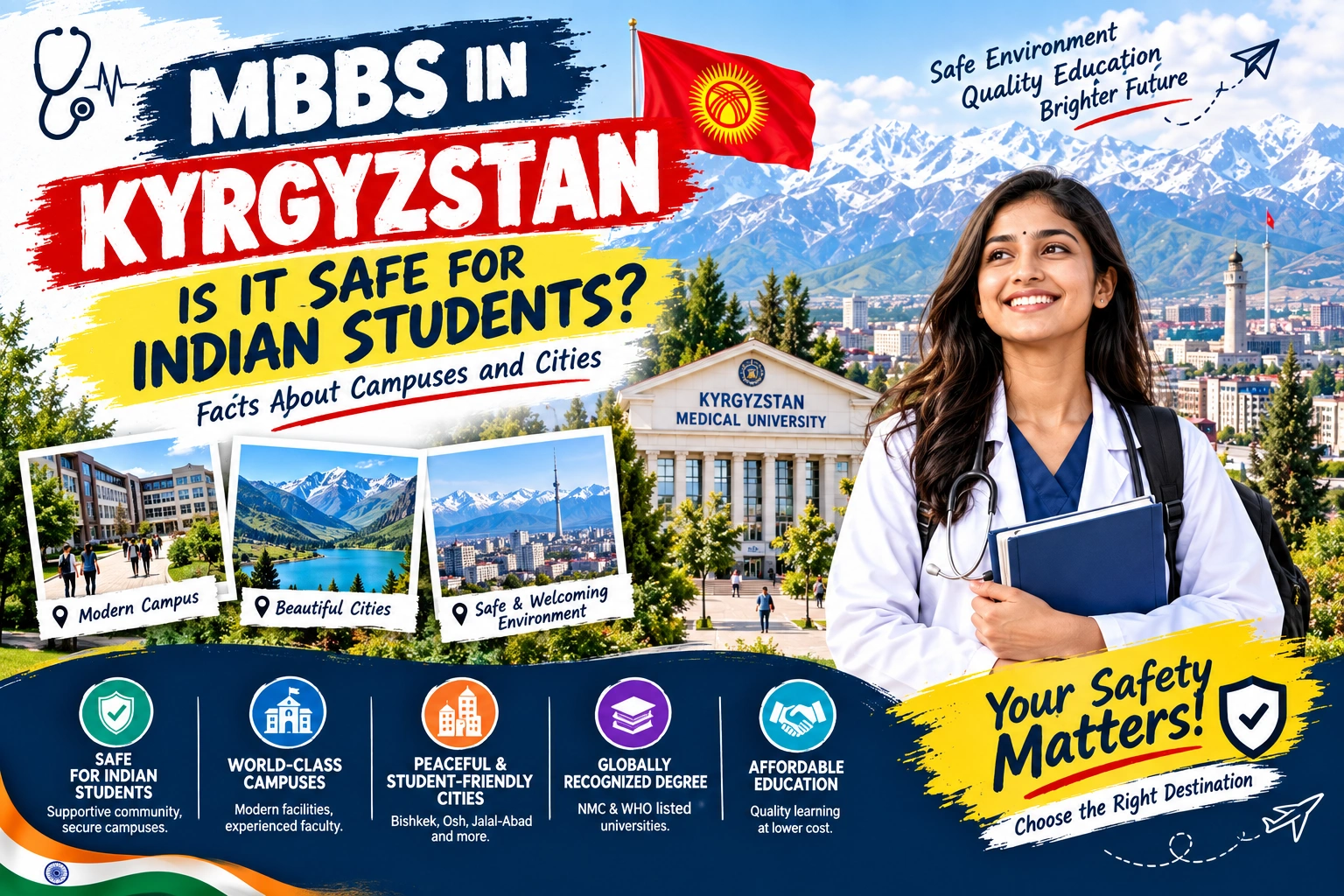
All compliant host institutions hold official educational accreditations recognized by the WHO, WDOMS, and India’s NMC.
Admission Requirements and Documentation
To submit an application for the 2026 intake, you must meet the corresponding academic score requirements, and prepare all required application materials including your passport, academic credentials, and language proficiency test scores.
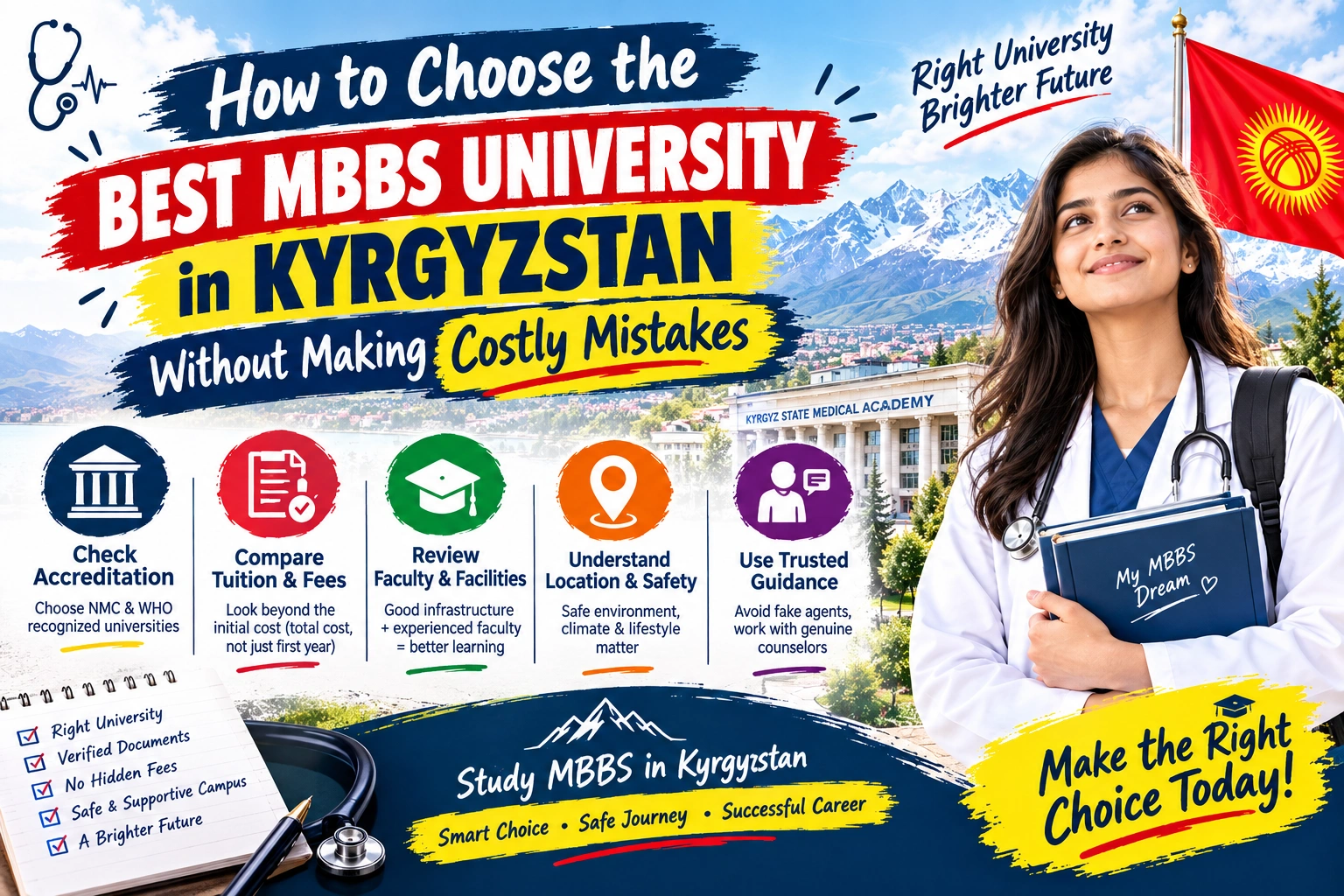
You must verify your target school’s accreditation through NMC’s official channels to avoid issues with your future medical practice caused by attending a non-compliant institution.
Clinical Training and Internship Exposure
During your enrollment, clinical training arrangements vary across schools; some institutions prioritize assigning Indian international students to clinical practice positions that align with India’s national medical practice standards.
Returning to India After Graduation
To practice in India after graduation, you must pass the NExT exam required by the NMC, and this section also compiles supporting study resources to help you prepare for this test.
Key Benefits and Challenges
In addition, this study abroad pathway has seven core benefits, including tuition fees far lower than those of domestic medical schools in India and an application process with no complex barriers.
This section also outlines potential challenges you should understand in advance, which will be explained in detail in subsequent content.
All proper nouns of core institutions, exams, and schools mentioned in this section retain their original English abbreviations: NMC/WDOMS/WHO/NEET/FMGE/NExT/KSMA/ISM.
Its modular arrangement organized by decision logic allows you to quickly filter the information you need, leaves no critical blind spots for your decision-making, and fits the webpage layout requirements of study abroad educational outreach content.
Why Kyrgyzstan Remains Competitive in 2026
For Indian students planning to pursue a Bachelor of Medicine and Bachelor of Surgery (MBBS) overseas in 2026, the competitiveness of Kyrgyzstan as a study-abroad destination merits priority analysis.
First, several core preliminary considerations must be clarified:
The climate of Kyrgyzstan differs significantly from that of India.
The quality of medical training at local Kyrgyzstani universities varies widely.
Students must continue preparing for their future professional licensing exams throughout their study period.
Enrolling in an uncertified non-compliant institution will cause irreversible negative impacts on their career development.
Comparison with Other MBBS Abroad Destinations
When comparing Kyrgyzstan to other popular destinations in the same competitive cohort—Russia, Kazakhstan, Georgia, and Uzbekistan—it is clear that these four destinations each hold distinct advantages in infrastructure, overall costs, clinical access opportunities, and career development pathways respectively, while Kyrgyzstan’s core competitive strength is its outstanding affordability.
Factors Supporting Kyrgyzstan’s Popularity
Thousands of Indian students are still expected to choose to study in Kyrgyzstan in 2026, a trend underpinned by five core supporting strengths.
Essential Eligibility and Compliance Requirements
To successfully pursue studies in Kyrgyzstan, students must also meet four key requirements:
They must verify the accreditation status of their target institution through three authoritative bodies—the National Medical Commission (NMC), the World Directory of Medical Schools (WDOMS), and the World Health Organization (WHO).
They must comply with all relevant regulations for the NEET examination.
They must ensure their chosen university remains compliant with Indian medical education regulations.
They must satisfy all academic and documentation requirements before admission.
Only by satisfying these conditions can Kyrgyzstan be confirmed as the most pragmatic, cost-effective choice for Indian students pursuing an overseas MBBS in 2026.