The Question Every NEET-Qualified Student Is Asking Right Now
Last October, at an overseas education fair in Lucknow, I watched a father from Kanpur spend forty minutes at three different stalls — all promising "the best university in Kyrgyzstan" — and walk away more confused than when he arrived. His daughter had scored 420 in NEET. Good enough to dream. Not quite enough for a government seat in India. He wasn't looking for the cheapest option. He was looking for the right one. That distinction matters more than most consultants will tell you.
I've been writing about overseas medical education for over twelve years. I've visited Bishkek twice, spoken to Indian students living in hostels in Osh, and sat through enough university open days to know the difference between a brochure and reality. So let me be direct: Kyrgyzstan is a legitimate destination for MBBS in Kyrgyzstan — but not every university there deserves your trust equally.
Why Kyrgyzstan at All? The Honest Version
The country sits in Central Asia, borders China and Kazakhstan, and has a capital — Bishkek — that is genuinely liveable. Winters are brutal, by the way. Students from Chennai or Hyderabad who land in November without a proper thermal jacket are in for a shock. Stock up before you fly; good thermal layers in Bishkek markets cost anywhere from ₹1,500 to ₹4,000, and you'll need them from November through March.
But the real draw isn't the geography. It's the cost. A full MBBS program across six years — tuition plus hostel — typically lands between ₹20 to ₹30 lakhs depending on the university. Compare that to private medical colleges in India charging ₹80 to ₹1.2 crore for the same degree, and the math is difficult to ignore.
Crucially, the top institutions here are recognised by the NMC, listed in the WHO directory, and verified on WDOMS — which means graduates can return to India, clear FMGE (now MCI screening), and practice legally. That's the baseline. Any university not meeting all three should be a non-starter for Indian families, regardless of what an agent promises.
The Universities That Actually Deserve Attention in 2026
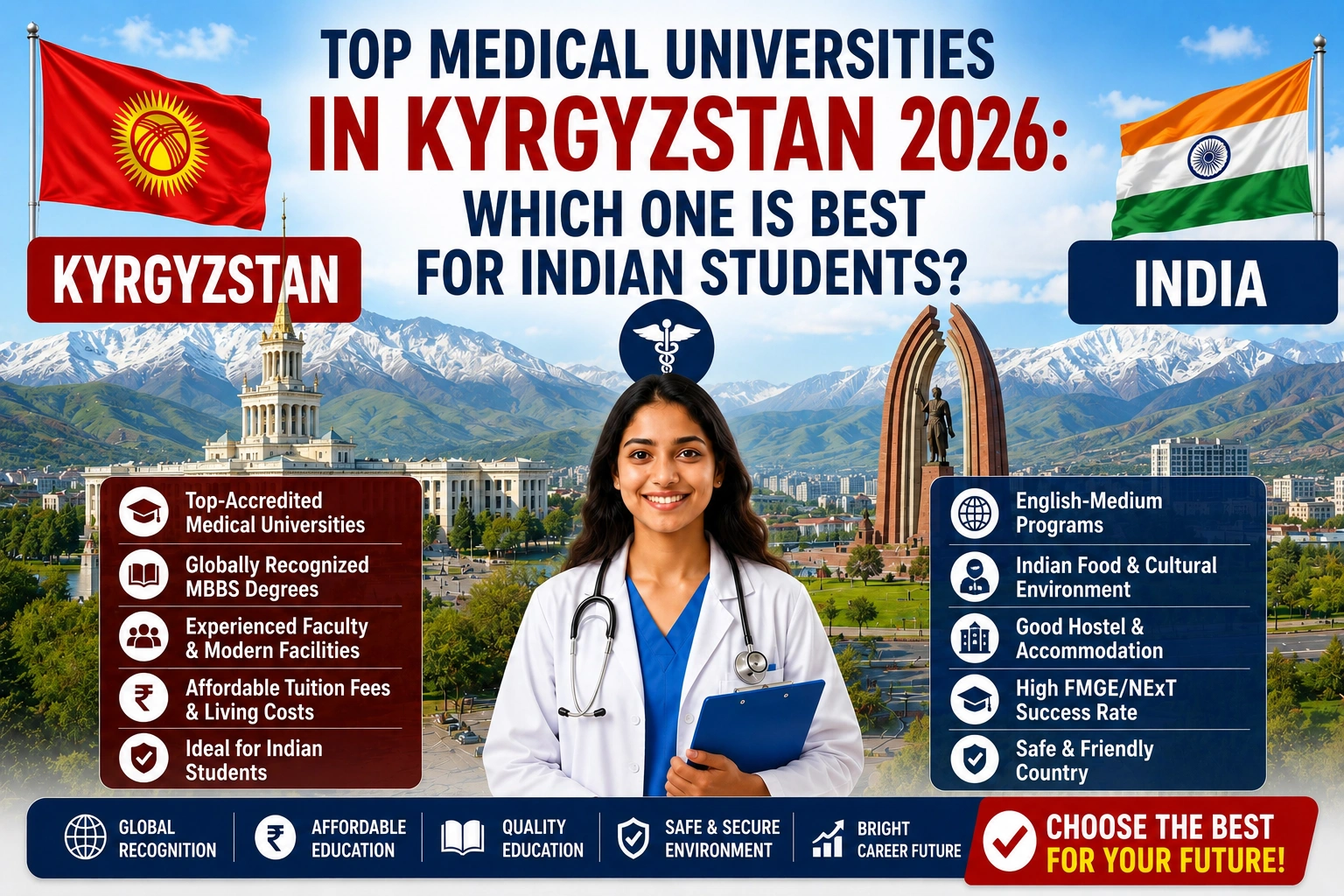
Kyrgyzstan has over a dozen medical universities. Most are fine. A handful are excellent. A few I'd be cautious about.
Kyrgyz State Medical Academy (KSMA) in Bishkek is the oldest and most prestigious. Established in 1939, it has faculties that have trained physicians for over eight decades. The infrastructure has been upgraded repeatedly, the faculty-to-student ratio is reasonable, and Indian students make up a significant portion of the international cohort — which means there's a functioning community, Hindi-speaking seniors, and familiar food options nearby. I've spoken to third-year students from Kerala and UP who praised the clinical exposure, though they were candid that the first two years are theory-heavy.
International School of Medicine (ISM) is a newer but rapidly credentialed institution, and it gets a lot of attention for English-medium instruction done right — not just label-deep. Their tie-ups with hospitals in Bishkek give students real ward exposure by their fourth year. Study MBBS in Kyrgyzstan through ISM and you're looking at roughly $4,000 to $5,000 per year in tuition.
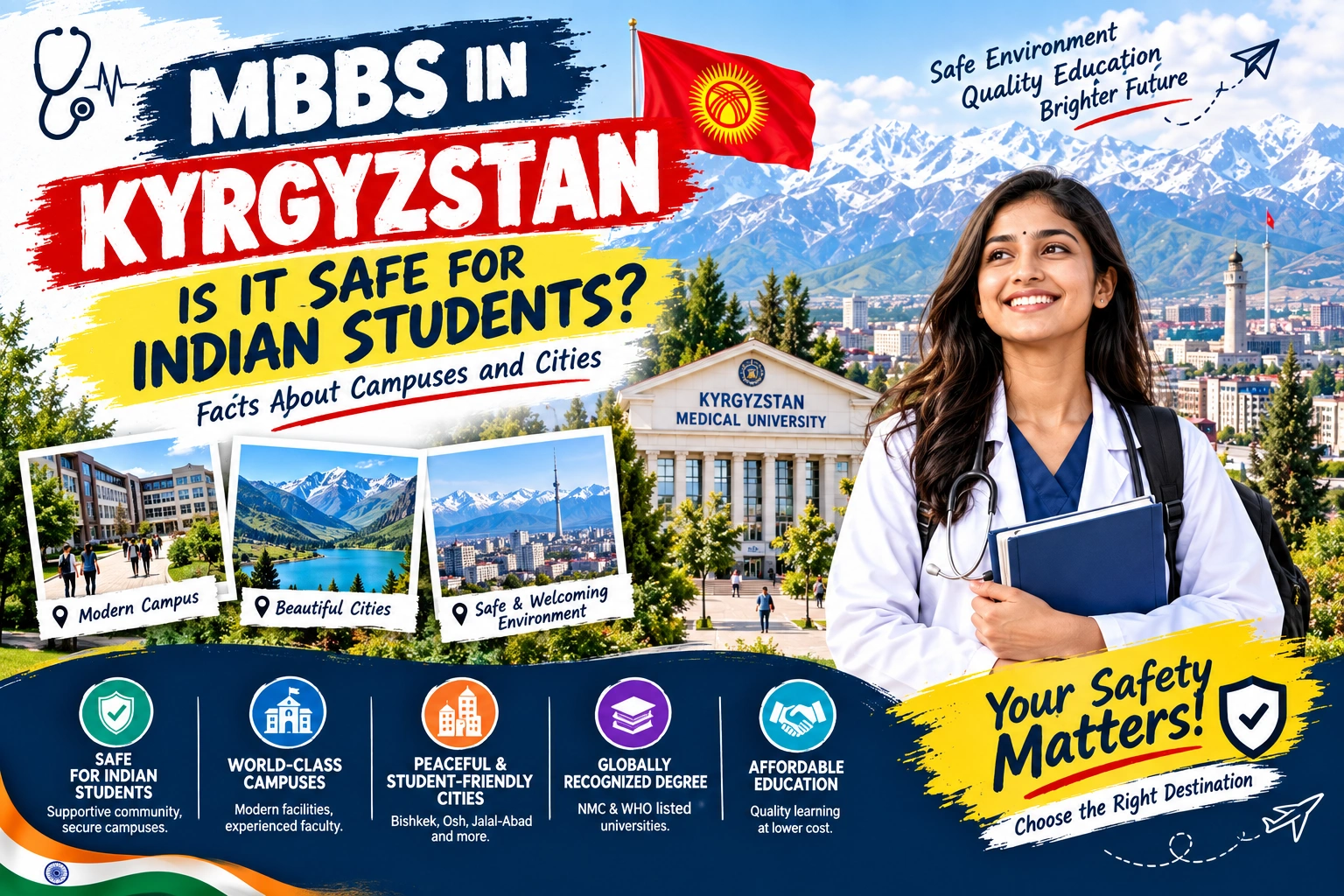
Osh State University's Medical Faculty sits in Osh — Kyrgyzstan's second city in the south — and it's often overlooked. I'd argue unfairly. The city is quieter, more affordable than Bishkek, and students I met there in 2022 mentioned lower monthly living costs (around $150 to $200 versus $250 to $350 in Bishkek). The trade-off is fewer direct flights home; you're routing through Bishkek or Almaty to get to Indian cities.
Asian Medical Institute (ASMI) in Kant is another name that comes up. It's solid, smaller in scale, and some families prefer that. Less crowd, more attention per student — at least in the early years.
The Myth I'd Like to Dismantle
Here's something I hear constantly at education fairs: "Any NMC-listed university is fine, just pick the cheapest one." No. Listing status tells you a university clears a minimum threshold. It doesn't tell you about faculty turnover, whether the anatomy hall has real cadavers or just diagrams, whether the hostel kitchen is functional or a fire hazard, or whether there's a working student grievance system.
I've seen Instagram reels of university hostels that look like boutique hotels. I've also spoken to students who cooked rice in electric kettles because the mess served food they couldn't stomach. Hostel food quality varies wildly. If a student is vegetarian — and many Indian medical students are — that's a real daily concern, not a footnote.
What Indian Students Actually Need to Check Before Deciding
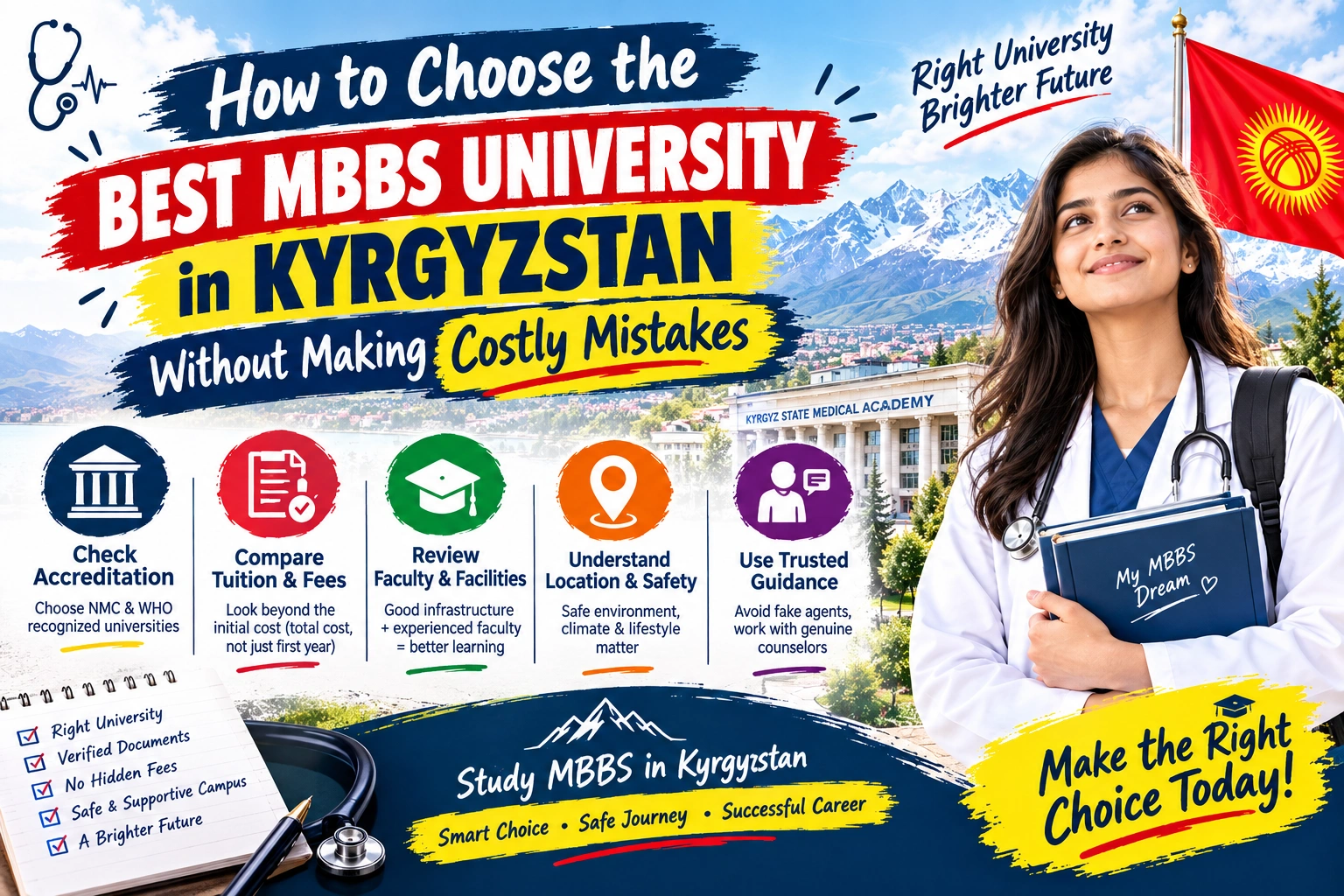
The process of choosing where to study MBBS in Kyrgyzstan as an Indian student should start with three questions: Is the university's recognition current and verifiable on the NMC and WDOMS portals? What is the medium of instruction for actual classroom teaching, not just the prospectus? And can you speak to a current Indian student — not a university-appointed ambassador, but someone you find independently?
Flight costs matter too. Bishkek has connections via Air Manas and via Almaty, but a return ticket to Delhi or Mumbai during peak season (May, December) can run ₹35,000 to ₹55,000. Budget for two trips home annually when you're calculating total costs.
A Grounded Way to Read This Decision
Kyrgyzstan is not a shortcut. It's a legitimate pathway for students who missed the government seat cutoff in India — but it requires the same seriousness of purpose as any medical education. The students who struggled weren't the ones who chose Kyrgyzstan. They were the ones who chose the wrong university based on a YouTube ad or an agent's commission incentive.
The country has real universities doing real medical education. But the difference between a good six years and a miserable one often comes down to a few hours of honest research before signing anything. Ask harder questions. Verify the numbers. And maybe most importantly — trust the student already living there more than the consultant in a Mumbai office.