Studying MBBS abroad has become a popular choice for Indian students, and Kyrgyzstan is often considered due to its affordability, English-medium programs, and globally recognized degrees. However, beyond these advantages, there are several hidden challenges that students must understand before taking admission.
This guide highlights the key realities, risks, and practical expectations.
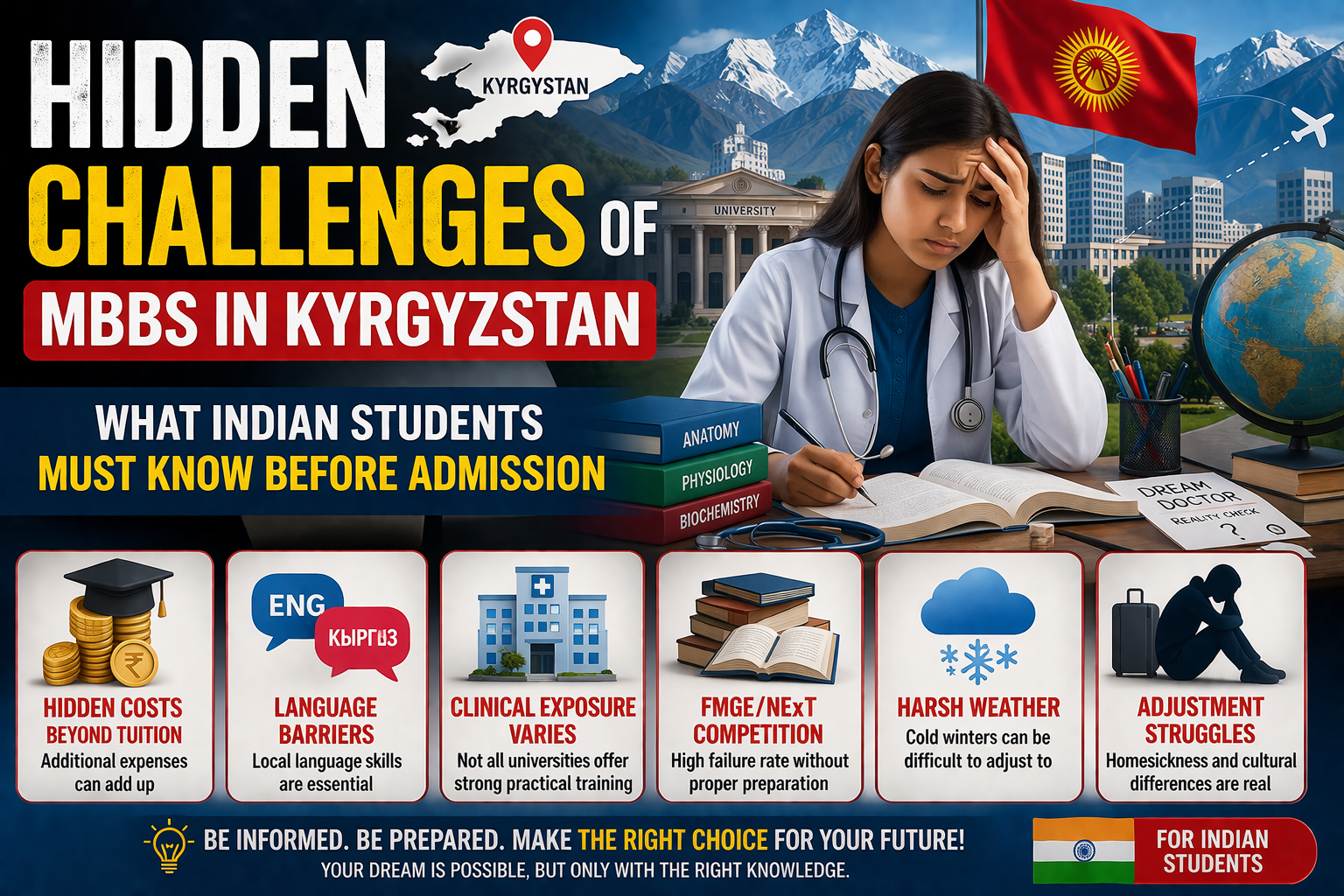
Language Barrier and Communication Issues
Language remains one of the biggest challenges.
Most universities offer English-medium teaching
But real-life interactions—especially in hospitals—are in Russian or Kyrgyz
Patients rarely speak English
Impact:
Difficulty during clinical rotations
Miscommunication with patients
Reduced learning during hospital exposure
Tip:
Learning basic Russian or Kyrgyz before or during your course can significantly improve your clinical experience.
Variation in Quality of Medical Education
Although many universities are recognized by the National Medical Commission and listed under the World Health Organization and World Directory of Medical Schools, the quality of education is not uniform.
Challenges:
Differences in faculty experience
Outdated infrastructure in some institutions
Inconsistent teaching methods
Limited structured clinical training in certain colleges
Reality:
Choosing the right university is critical—recognition alone does not guarantee quality education.
Licensing Challenges in India
After completing MBBS abroad, Indian students must clear licensing exams.
FMGE (current screening test)
NExT (upcoming unified exam)
Even if your university is approved by the National Medical Commission, success depends on:
Strong conceptual knowledge
Exam-oriented preparation
Understanding Indian medical standards
Students from lower-quality institutions may struggle due to gaps in training and curriculum differences.
Harsh Weather Conditions
Kyrgyzstan has a continental climate with long, extremely cold winters.
Challenges:
Temperatures dropping below freezing
Snowfall affecting travel and routine
Short daylight hours impacting mood and productivity
Impact:
Students may face physical discomfort and seasonal stress, especially during the first year.
Cultural and Social Adjustment
Adjusting to a new country involves more than academics.
Common issues:
Homesickness
Different food habits
Cultural differences
Limited Indian food options in smaller cities
This adjustment phase can affect both mental health and academic focus initially.
Limited Clinical Exposure (in Some Universities)
While clinical training is part of the MBBS program, the depth of exposure may vary.
Concerns:
Lower patient flow compared to Indian hospitals
Limited hands-on experience in some colleges
Less exposure to emergency and surgical cases
Impact:
Students may need additional preparation for practical exams like FMGE/NExT.
Hidden and Additional Costs
Kyrgyzstan is affordable, but students often overlook extra expenses.
Hidden costs include:
Language courses (Russian/Kyrgyz)
Winter clothing and travel expenses
Medical insurance
Books and study materials
Daily living fluctuations
Advice:
Plan a complete budget beyond just tuition fees.
Health, Safety, and Security
Kyrgyzstan is generally safe, but some concerns remain.
Possible issues:
Petty theft in certain areas
Limited advanced healthcare facilities outside major cities
Slower emergency response compared to India
Precautions:
Stay in student-friendly areas
Maintain proper health insurance
Follow university safety guidelines
Mental Health and Support Systems
Living abroad can take an emotional toll.
Challenges:
Staying away from family
Academic pressure
Limited counseling services in some universities
Suggestions:
Stay connected with family
Join student communities
Seek peer or professional support when needed
Final Thoughts Before Admission
Before choosing MBBS in Kyrgyzstan, every student should carefully evaluate:
University recognition and actual quality
Language preparedness
Career goals (India or abroad)
Financial planning
Emotional readiness
Conclusion
Kyrgyzstan offers an affordable and globally recognized pathway for MBBS, but it is not without challenges. From language barriers and climate adaptation to licensing exams and varying education quality, students must be fully prepared for the realities.
Making an informed decision—based on research, planning, and realistic expectations—can help transform your MBBS journey into a successful and rewarding medical career.