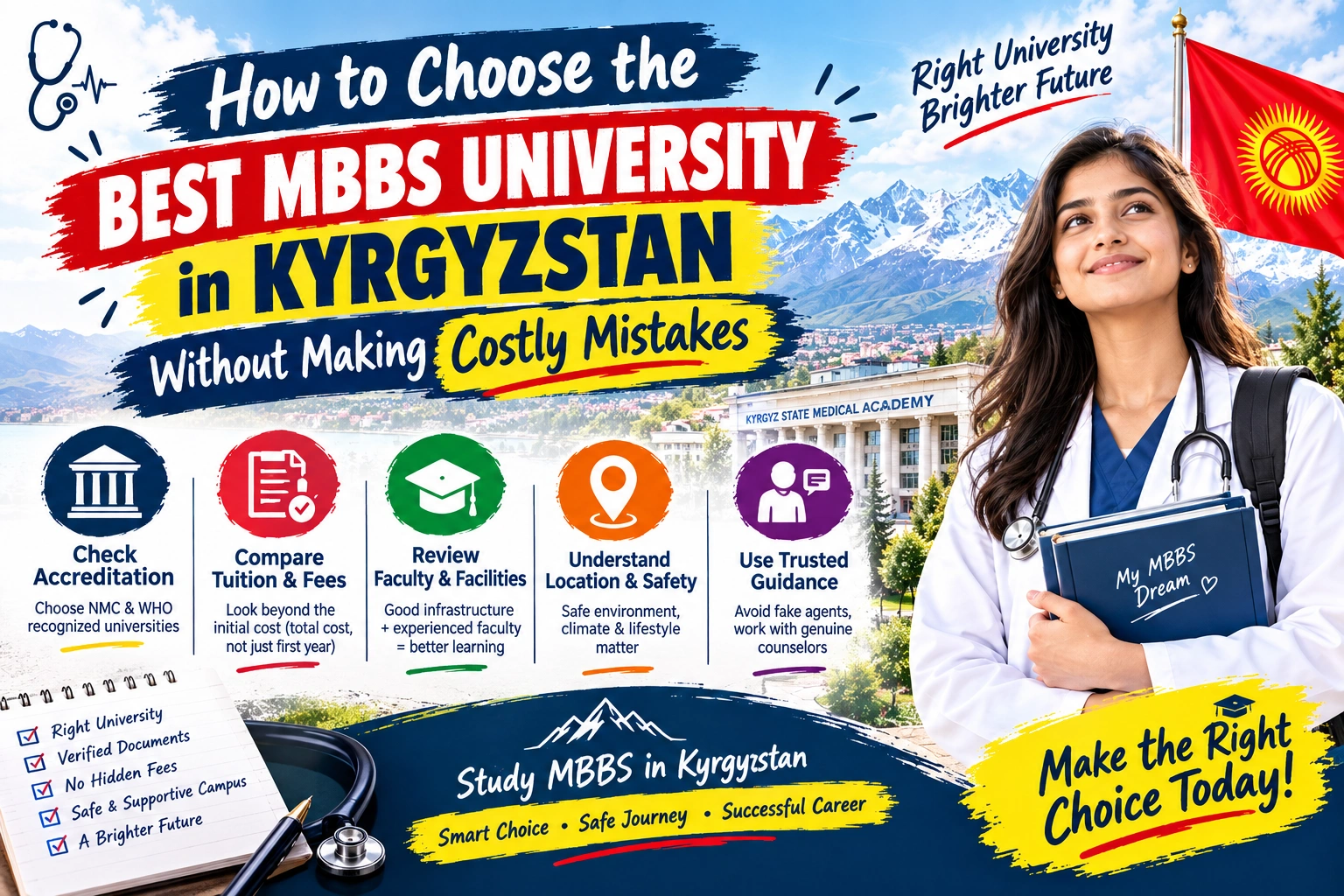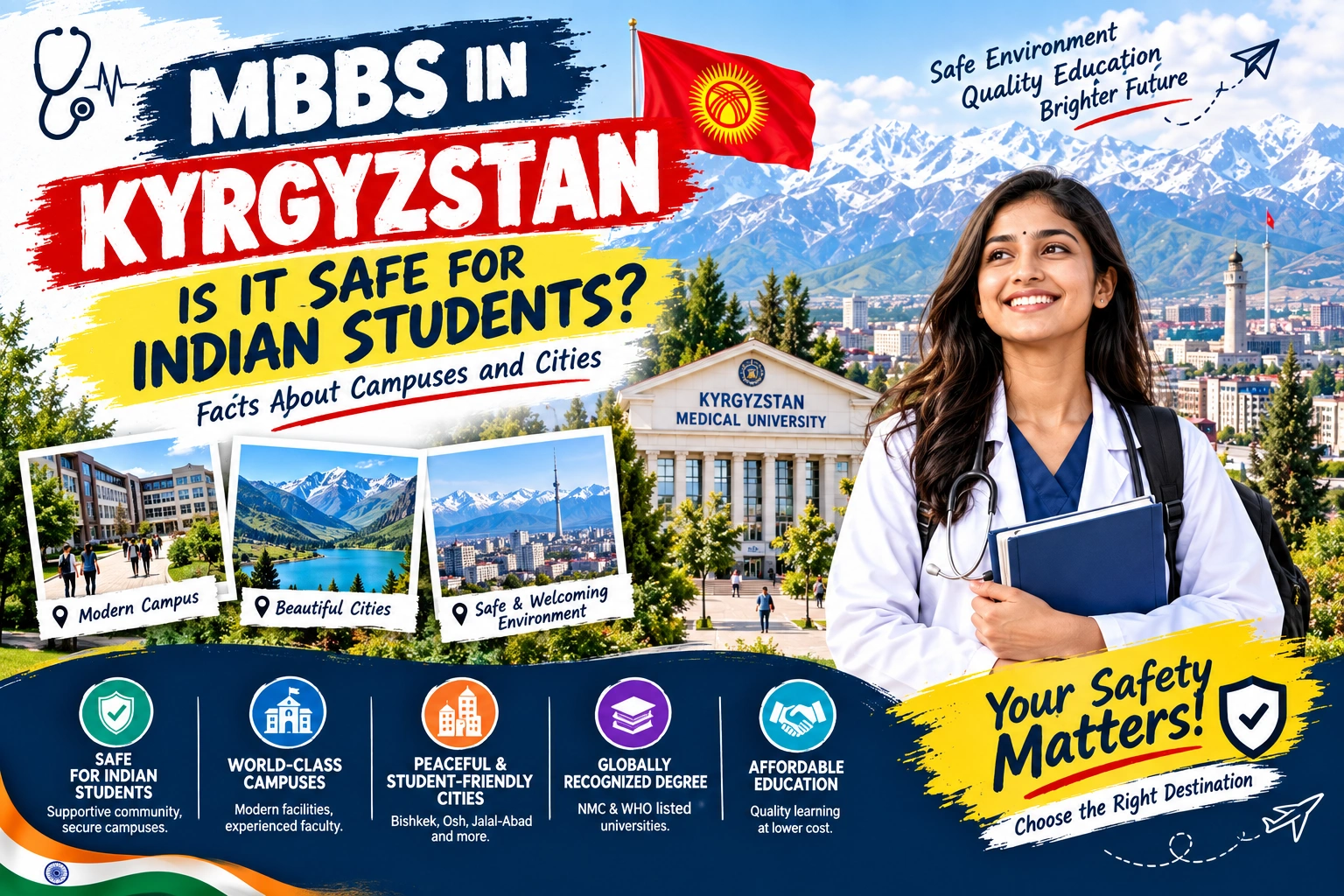
You can only learn so much from fee structures and advertisements. For example, what does a regular day for Indian MBBS students in Kyrgyzstan look like? When do they attend classes? If they have classes, what do they eat, and how much time do they allocate for studies as compared to other activities? Students often have to rely on word of mouth for most of the answers to these questions as they seem to be nearly impossible to find before getting your ticket.
The objective of this piece of writing is to simplify the daily life of an MBBS student from India studying in Kyrgyzstan for the rest of the world. This piece covers morning schedules, evening relaxations, and other daily activities in addition to the admission process, eligibility, fees, pros and cons, leading colleges, and career opportunities from this country. This covers everything that is daily life to a MBBS student from India in Kyrgyzstan.
The daily life of MBBS students from India in Kyrgyzstan
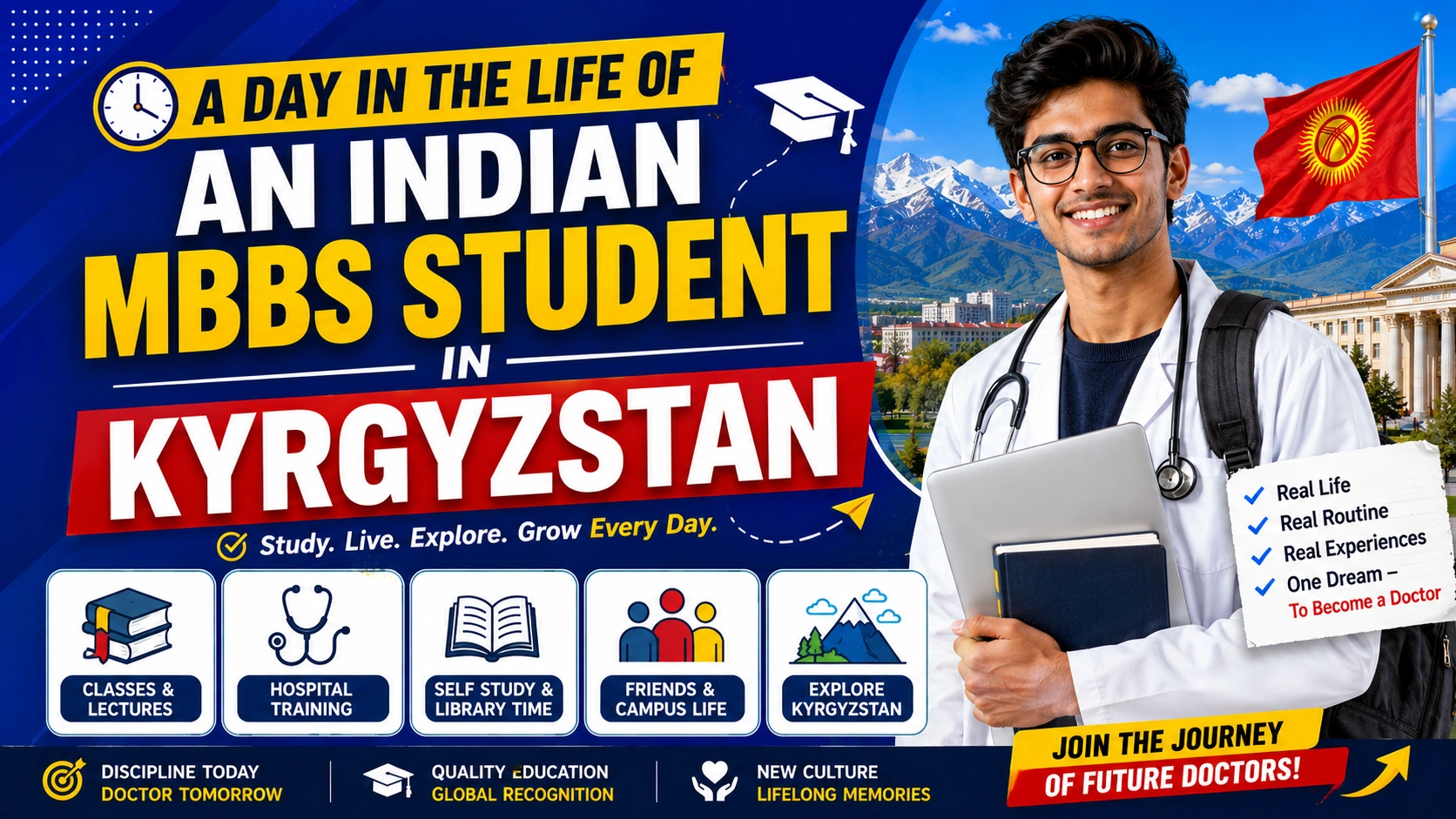
What do you do that is close to a typical day for an Indian pursuing MBBS? Students often attend lectures that are in the English language. These lectures are followed by either labs or clinical lectures. The evening is often reserved for self or private studies. This is generally done with fellow Indians who are often friends or students from the same college. Your foreign friends are your friends. Students' hostels offer food from India, and most college campuses are easily walkable. Daily life that is many kilometers away from your residence is sustainable.
Early Schedule
It is not uncommon for students to have their first class at or by 9. The typical MBBS students will schedule other activities for the day around this.
Depending on the year of study, mornings are reserved for core subjects. In the earlier years, it's anatomy and physiology, whereas, in the later years, it is the clinical subjects such as medicine and surgery. Since the teaching of MBBS in Kyrgyzstan programs is largely in the English language, students find the teaching formats to be very similar to that of India, as these are also lecture-based classes, though the class sizes and teaching styles may differ.
Pre-clinical year students have even more classroom lectures followed by clinical practical sessions. These might include participation in an anatomy lab with cadavers, a biochemistry lab, or a physiology practical with a live demonstration. These give students a great head start on their medical training.
Lunch, Breaks and Campus Life
Lunch breaks range from approximately 1 pm to 2 pm. Refreshments available on or near campus typically cater to the Indian student population, providing both North and South Indian meal options and, in many cases, Kyrgyz cuisine. A top reason for choosing an MBBS abroad destination, students, frequently note that while they do suffer from homesickness, the ability to access familiar foods is a significant strength.
Midday is also a great time to socialize as students may see many friends who will become lifelong companions. The Indian Students' Associations are prevalent on most campuses and provide a huge variety of services ranging from festival celebrations to study groups prior to exams.
Afternoon Rotations and Practical Sessions
From year three onward, most students will start to experience a greater proportion of their afternoons taken up by clinical rotations in the hospital.
The Kyrgyzstan MBBS program spans five years of directed learning that culminates in a supervised direct patient interaction internship. The program's structure allows students to participate in interactive clinical learning earlier and offers a differentiated, integrative approach to medical education. It positions children with the opportunity to participate in clinical learning through rounds with assigned doctors and progressively engaging in direct diagnostic and clinical procedures as they approach the completion of their program. The MBBS program in Kyrgyzstan integrates the practice and theory of medical education and typically runs for five years followed by a one-year internship. The MBBS program in Kyrgyzstan is on par with other international medical programs in terms of the MBBS program duration and structure.
Study Time and Leisure Time
Student life in the Kyrgyzstan MBBS program is self-directed in the evenings. The most common way of utilizing the self-directed time is reviewing the teaching materials and/or preparing for the practicals. This is often supplemented with the reading of the reference texts. As the MBBS program is very intensive, students often engage in self-directed study and group study to a greater extent when they approach examinations. Mentoring is a common practice of senior students. Many students walk around the campus to unwind and catch up with family. For many, there is a vast array of options to explore Kyrgyzstan on the weekends.
Entry Requirements
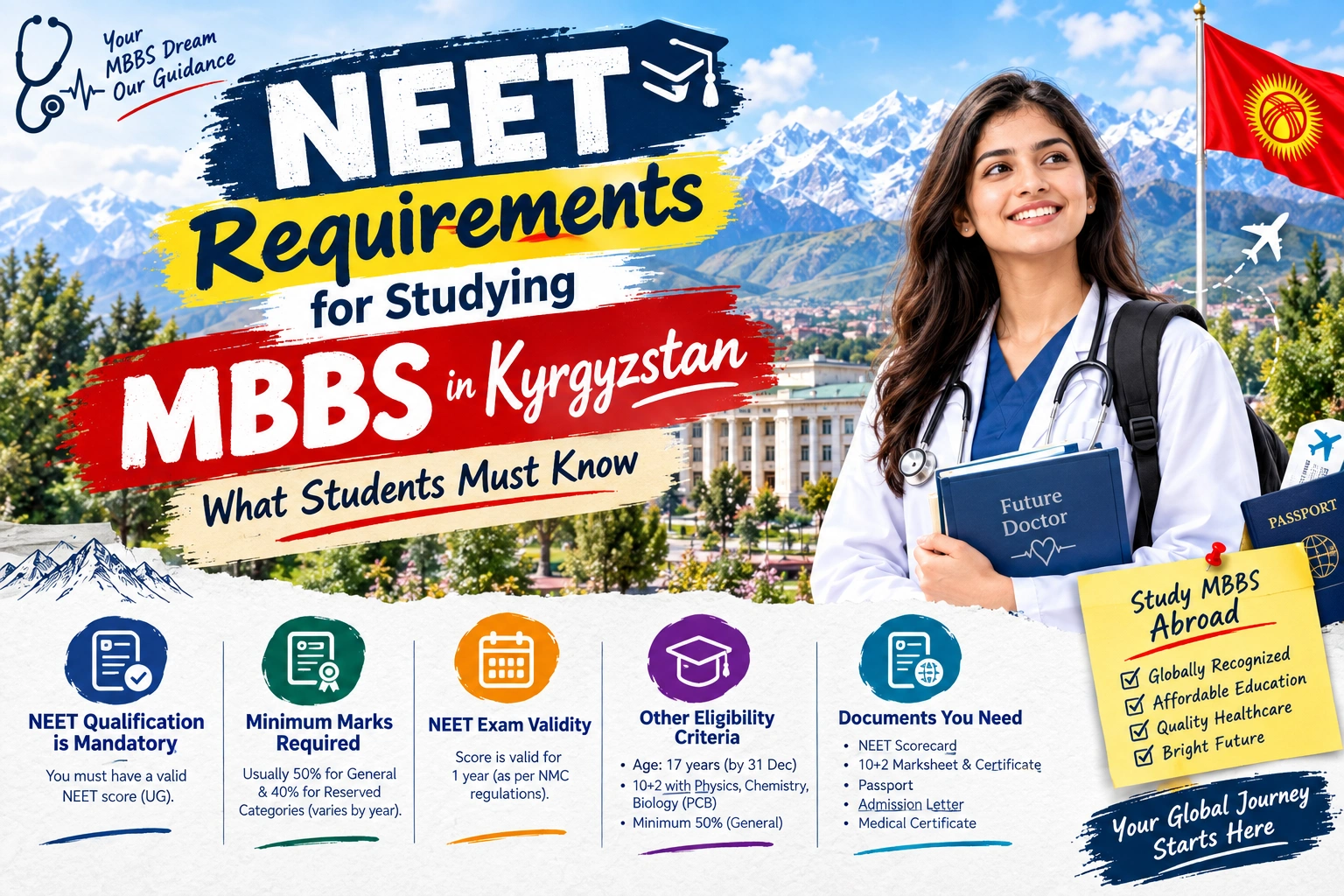
Applicants must be a minimum of 17 years of age and must have completed higher secondary education with at least 50 percent marks in Physics, Chemistry, and Biology (40 for reserve categories). Students must have a valid qualified score for NEET to obtain a medical practice license in India and must be medically fit to obtain a visa and be enrolled in the program.
The first thing to do to gain admission for mbbs abroad in Kyrgyzstan — and subsequently, to have the job shown in the daily routine above — is to satisfy the following criteria.
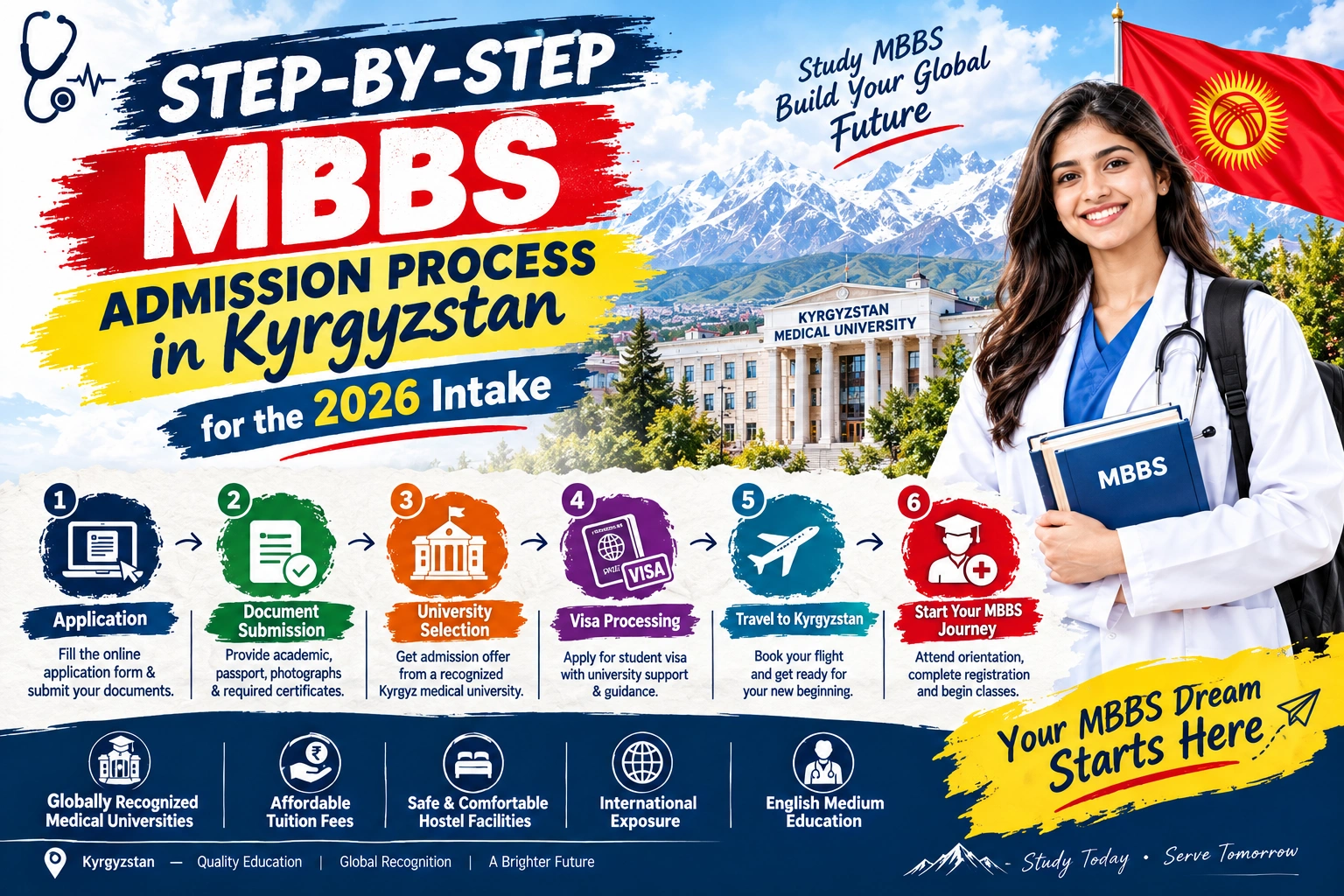
Understanding the Admission Procedure:
Step 1: University Selection
Take the time to survey the options and place some value on the quality of the campus, the hostels, and the hospitals.
Step 2: Application Submission
Submit mark sheets, a copy of your passport, some photos, and your NEET admit card to the university.
Step 3: Offer Letter
The formal invitation to the university will be issued once your documents have been verified.
Step 4: Visa Application
Your invitation letter will allow you to apply for a student visa. The process takes about 2-4 weeks.
Step 5: Arriving and Attending Orientation
Most students arrive in the last week of August to attend orientation and get settled into the hostels before classes begin in September.
Understanding the Fees that Support the Daily Routine
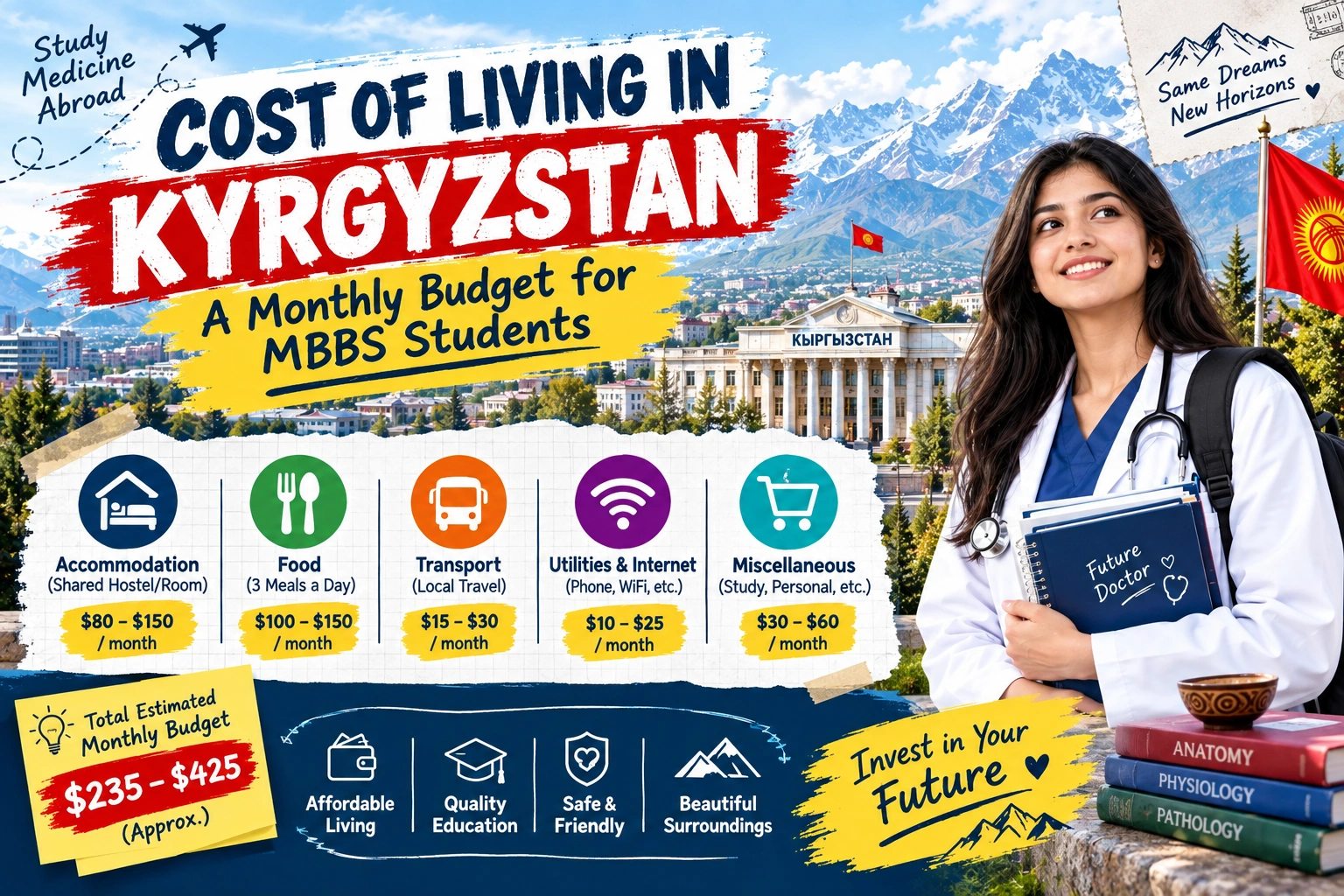
Combining the living and tuition costs provides a more accurate representation of what the daily routine reflects. The costs, on average, are as follows:
Tuition Fee: ₹2.5 – 4.5 Lakh
Hostel/Accommodation: ₹60,000 – 1.2 Lakh
Food: ₹80,000 – 1.5 Lakh
Health Insurance: ₹15,000 – 25,000
Visa & Other Costs: ₹30,000 – 50,000
The total average cost per year is approximately ₹4 – 7 Lakh.
The total estimated costs, including living expenses for the entire course, are between ₹22 Lakh to ₹35 Lakh for Kyrgyzstan mbbs fees in Indian Rupees. To obtain a precise figure for the mbbs in Kyrgyzstan fees in Indian Rupees, please directly contact the universities you have preselected, as hostel and food costs are subject to personal choices.
Looking at mbbs in kyrgyzstan fee structure for different universities helps you to be realistic with a monthly budget. Looking at Kyrgyzstan medical college fees with a hostel and food estimates will give you some clues about the cost of living and what will be available to you in your daily life.
Day-to-Day Benefits
Easier Academic Transition:
Having lectures taught in English is an easy transition for Indian students.
What is Your Peer Community Like?:
Large populations of Indian students provide a support structure for students, especially in the first few homesick months.
How Affordable is the Cost of Living?:
Compared to other study-abroad destinations, mbbs in kyrgyzstan is relatively inexpensive.
Are the Campuses Accessible?:
Most Universities in Kyrgyzstan are small and therefore have a short walking distance.
What is the Variety of the Class Like?:
Most classrooms have students from various countries, adding to the truly international feel of everyday life.
Families deciding about mbbs in kyrgyzstan for Indian students use living expenses as a major input in the decision and not just tuition.
Climate Change:
Indian students exposed to the cold have a more difficult everyday experience.
Homesickness:
Indian food and support from the community does not compensate for missing family
Heavy Workload:
Most students have very little to no work/study balance
Limited Variety:
Smaller cities have a smaller choice of entertainment and recreational activities.
Communication barriers during clinicals:
Without the skill of basic local language, some patient interactions during the clinical rotations can be difficult.
Influential Universities
University | City | Established | Affiliation |
Kyrgyz State Medical Academy | Bishkek | 1939 | |
Osh State University, Medical Faculty | Osh | 1939/1993 | NMC, WDOMS, WHO |
International School of Medicine | Bishkek | 2003 | NMC, WDOMS, WHO |
Jalal-Abad State University | Jalalabad | 1993 | NMC, WDOMS |
Life at each Kyrgyzstan MBBS college is quite different based on campus size and city. Therefore, to get a better understanding of the daily routines, visit some prospective medical students and talk to students to evaluate potential Kyrgyzstan medical college locations.
Career Scope after the Daily Grind Pays Off
Practice in India: Clear the FMGE or NExT and get registered with NMC or your State Medical Council.
Practice in Kyrgyzstan or CIS countries: with extra local licensing.
Postgraduate studies: WHO-aligned WDOMS-listed university degrees qualify to take postgraduate entrance exams in India and other countries.
Global licensing routes: Graduate MBBS with the USMLE or PLAB
Questions & Answers
Q1. Do Indian students get Indian food in Kyrgyzstan?
Yes, the majority of the university hostels and nearby eateries provide food options for the large Indian student population.
Q2. How many hours a day do MBBS students study?
This depends on personal schedules. However, many students self-study from 2-4 hours a day averaging these hours around personal schedules and class schedules during exam phases.
What are the total costs of MBBS education in Kyrgyzstan?
about 4-7 lakh per year for the entire duration of the course, about 22-35 lakh, inclusive of hostel and food, which is approximately 2,700 – 4,800 USD per year, for the entire 5 years about 13,500 – 24,000 USD.
Q4. Is it difficult to establish friendships as an international student?
For most, it is not difficult to do so due to the many active Indian student associations and the multicultural campus.
Q5. How chilly does it get and how does it affect your daily life?
It can get very cold in the winter. Students will need to make some adjustments, but classes will continue as usual.
Q6. What are the total fees for MBBS in Kyrgyzstan for an MBBS education with a comfortable lifestyle?
The fees for MBBS in Kyrgyzstan, considering a comfortable hostel and food, are generally in the range of ₹4-7 lakh per year.
Q7. Do you get the weekends off?
Students will generally have the weekend off from scheduled lectures.
Conclusion
While you look at maps of the world, notice lists of fees, or scan checklists for required documents, you will see the traces of a human life. The daily life of an MBBS student in Kyrgyzstan consists of carefully planned routines -- early classes, lectures, and labs, as well as a community of students who gather in the same spot to share a meal. Kyrgyzstan offers Indian students a supportive community where they can build a daily routine around their studies and continue to learn and grow.
If you think you might take this path, no brochure can tell you more than talking to current students about their day-to-day lives.