.png)
Costs of Private and Government Medical Colleges in Kyrgyzstan for Indian Students (2026–27)
Introduction
Kyrgyzstan is becoming popular among Indian students wishing to pursue their medical studies abroad. There are both government and private medical universities that offer students the opportunity to pursue their dream of becoming doctors. However, there may be several differences in fees, facilities, admissions and services. One of the most common questions Indian parents ask is whether government medical universities are cheaper than private ones. While it may seem like a straightforward question, there can be several differences between the two.There are several things to consider when looking at the costs. Just because the tuition is cheaper does not mean the overall cost will be lower. Hostel, food, insurance, visa, travel and other expenses can vary significantly. This article compares government and private medical colleges, discusses why costs vary and explains what you should know before choosing a university in 2026–27.
1. Government and Private Medical Universities in Kyrgyzstan
Government medical universities are run by the public sector. Some have been established for many years and offer academic facilities, experienced departments and medical education infrastructure.Private medical universities are run by the private sector. These institutions may focus on international admissions and student support. However, their quality and facilities can vary, so it is important to research each university individually.The main thing to remember is that you need to ensure the university offers medical qualifications and courses that meet the applicable regulations.In 2025 and 2026, there have been changes to the way medical education is regulated in Kyrgyzstan. The Embassy of India has mentioned a state monopoly for medical specialist training and new state accreditation requirements for medical institutions. It is therefore extremely important to ensure that the university you choose is currently authorised and has the correct admission arrangements.
2. Government Medical College Costs in Kyrgyzstan
Government medical universities are frequently considered by Indian students because some offer relatively affordable tuition.
Some examples of government universities students commonly research include:
Kyrgyz State Medical Academy (KSMA), Bishkek
Osh State University, Osh
Jalal-Abad State University, Jalal-Abad
Kyrgyz-Russian Slavic University, Bishkek
Each university has different admission requirements, courses and fees. Tuition can vary depending on the course, language and nationality of the applicant. You should not rely on previous fee quotations from agents for the 2026–27 session. The Kyrgyz government has introduced minimum fee requirements for foreign medical students. The Embassy of India has mentioned that the international admissions portal will show which courses, fees and languages are offered by universities.
Factors That Influence Government University Costs
Reputation: Some universities are well established, with different fees depending on the course.
Language: English and Russian courses may have different admission arrangements.
Length of course: The duration of the course can affect the total tuition expenditure.
Facilities: Laboratory access, clinical training and other facilities can influence the overall cost.
3. Private Medical College Costs in Kyrgyzstan
Private medical universities can also be considered by Indian students. Some offer English-medium courses and international student support.However, you should not assume that all private universities cost more than government universities. It depends on the approved fees, courses and government requirements.Some private universities may have additional costs for accommodation, registration, administration and other facilities. You should ensure that all these expenses are clearly explained before admission.You should be especially careful when researching newly established private medical universities. The Embassy of India advises students to examine infrastructure, laboratories, English-speaking faculty and compliance with the applicable NMC requirements.
Factors That Influence Private University Costs
Campus facilities and infrastructure.
Availability of English-medium courses.
Laboratory and practical training facilities.
Accommodation and international student support.
University admission and administrative fees.
Applicable government fee requirements.
Choose a private university based on whether it meets the necessary academic and regulatory requirements rather than simply looking at its admission package.
4. Comparison of Government and Private Medical College Costs
Below is a general comparison of government and private medical universities in Kyrgyzstan.
Comparison Factor | Government Universities | Private Universities |
Ownership | Public sector | Private sector |
Tuition fees | Vary by university | Vary by university |
Academic history | Some have long-established medical departments | Varies by institution |
Facilities | Depend on the university | Depend on the university |
Clinical training | Check affiliated teaching hospitals | Check affiliated teaching hospitals |
English courses | Availability varies | Availability varies |
Accommodation | Hostel options may be available | Hostel options may be available |
Admissions | Depend on university requirements | Depend on university requirements |
5. Understanding the Overall Cost of MBBS in Kyrgyzstan
You should calculate the overall cost of medical education for your family. The following expenses should be considered.
Tuition Fees
Tuition fees will usually be the largest academic expense. Ensure you ask for a year-wise breakdown of fees and confirm whether the amounts are fixed or subject to revision.
Accommodation
University accommodation can be a good option for international students. However, private accommodation can provide more freedom but may cost more in rent, utilities and transportation.
You should check the following facilities:
Room facilities and availability.
Security arrangements.
Heating facilities.
Internet access.
Distance from the university.
Food Expenses
Food expenses depend on individual preferences and lifestyle. Students who cook their own meals may have a different monthly budget from those who regularly eat outside.Ensure that the university or accommodation provides suitable food facilities for Indian students.
Medical Insurance
Ensure you understand the health insurance requirements for international students. Check what is covered, how long the insurance remains valid and what payments are required.
Visa and Registration
Visa processing, immigration registration and other administrative procedures can involve additional expenses. Ensure you check the latest official requirements before travelling.
Travel and Personal Expenses
Other expenses may include:
Flight tickets.
Local transportation.
Winter clothing.
Mobile connectivity.
Personal items and daily necessities.
Although tuition may be relatively affordable, the total expenditure may be higher because of accommodation and other living costs.
6. What Is Best for Indian Students?
There is no single answer to this question. Both government and private medical universities can be considered as long as they meet the necessary requirements.
When to Consider Government Universities
Government universities may be worth considering if you are looking for:
Well-established medical education institutions.
Existing academic departments.
Clinical training opportunities through the university.
Clear tuition fees published officially.
A suitable English-medium medical course.
However, you should ensure that the university you choose has current admission approval and meets the applicable course requirements.
When to Consider Private Universities
Private universities may be considered if they offer:
Suitable English-medium courses.
Properly equipped laboratories.
Qualified teaching staff.
Verified hospital affiliations.
Clear accommodation and fee structures.
Good support for international students.
You should investigate the history, facilities and regulatory status of the university before paying any admission fees.
7. NMC Requirements to Check as an Indian Student
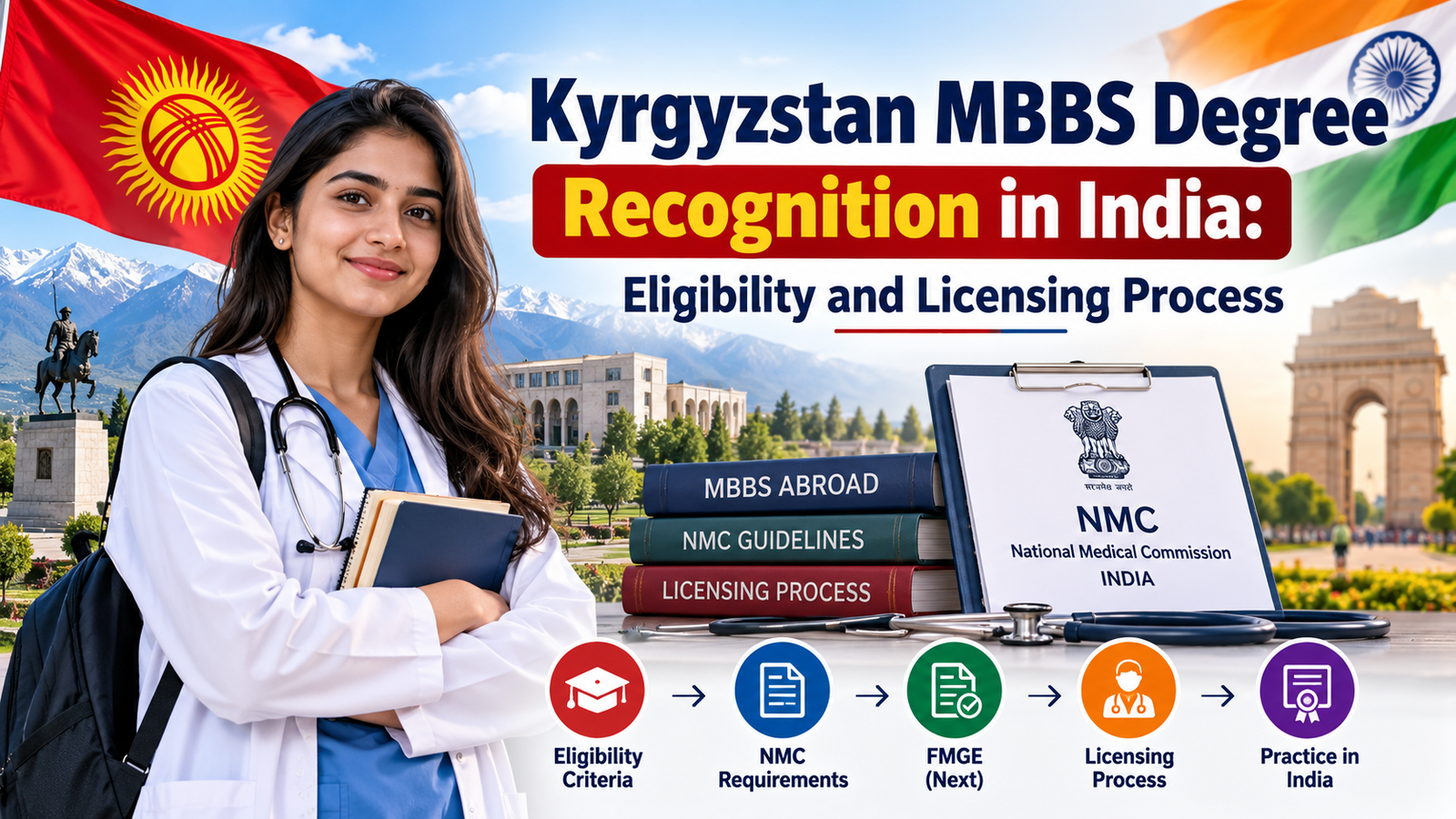
One of the most important things to consider when studying medicine abroad is whether you can practise in India after graduation.Indian students should understand the National Medical Commission's Foreign Medical Graduate Licentiate (FMGL) Regulations, 2021, and other applicable requirements.
Important Requirements Include
1. Course Length
The foreign medical qualification must meet the applicable minimum study-duration requirements, including at least 54 months of medical education.
2. Language
The medical education must be delivered in English as required by the applicable regulations.
3. Clinical Training
The course must include the required theoretical, practical and clinical training.
4. Internship
Students must fulfil the applicable internship requirements, including the prescribed internship arrangements.
5. Registration
Students must meet the relevant licensing and registration requirements before practising in India.
You should read the official regulations carefully. Attending a foreign medical university does not automatically guarantee eligibility to register as a medical practitioner in India.
Important Official Resources
National Medical Commission (NMC)
World Health Organization (WHO)
World Directory of Medical Schools (WDOMS)
Students should use these official resources to research medical education, eligibility, university information and applicable regulatory requirements. A WDOMS listing or WHO-related information should not be treated as an automatic guarantee of NMC eligibility.
8. Important Changes to Medical Education in Kyrgyzstan
Indian students applying for the 2026–27 academic session should be aware of recent changes. According to the Embassy of India's advisory dated 29 April 2026, Kyrgyzstan has introduced a state monopoly policy concerning medical specialist training and new state accreditation procedures for medical education institutions. The Embassy has also mentioned a centralised admissions portal for international students. This will allow applicants to find information about the courses, fees and admission arrangements offered by universities.Therefore, you should ensure that the university you choose is authorised and has met the applicable accreditation requirements. You should also confirm that the medical course you want to pursue is available for international admission.This makes it particularly important to conduct your own research before selecting a university.
9. Common Mistakes to Avoid When Applying
Many students focus on tuition fees and forget to consider other important factors. To help your family make a better decision, avoid the following mistakes.
1. Choosing a University Due to Low Fees
Never choose a university based only on low fees. Always ensure that it meets the necessary academic and regulatory requirements.
2. Relying on Oral Promises About Fees
Always obtain an official fee list showing tuition, accommodation and additional costs.
3. Ignoring Clinical Training
Ensure that the university has verified affiliated hospitals and supervised practical training arrangements.
4. Not Checking the Course Duration
Ensure that the complete course structure meets the applicable requirements for Indian students.
5. Paying Unauthorised Fees
Ensure that payments are made through authorised channels and that you receive proper receipts.
6. Ignoring Accreditation
Ensure that the university is currently authorised and has the required accreditation. Do not rely only on old marketing material.
10. Making the Right Decision About Costs
Before choosing a government or private medical university, you should create a complete cost comparison.
You can calculate:
Total tuition fees for the complete course.
Hostel or private accommodation expenses.
Food and monthly living costs.
Medical insurance and visa expenses.
Travel costs.
Examination and administrative charges.
Possible currency exchange fluctuations.
Ask the university for clarification about fee increases, refund policies and payment deadlines.Parents can compare two or three universities using the same expense categories.This will help them understand which institution offers a suitable balance of academic quality, facilities and affordability.
Conclusion
Carefully researching whether to choose a private or government medical college in Kyrgyzstan is very important, particularly for Indian students wishing to study medicine in 2026–27.
Government universities may be appealing because of their established academic backgrounds. However, private universities can offer different facilities and support services for international students. You should not automatically assume that one category is better or cheaper than the other. The most important factors to consider are accreditation, course duration, English-medium education, clinical training, transparent fees and compliance with the applicable NMC requirements.Ensure that you check all admission details directly with the university and the official admission portal. By conducting proper research, your family can manage its education budget and avoid unnecessary admission-related problems.
For more information about choosing the right university, admission procedures and medical education opportunities, explore MBBS in Kyrgyzstan.