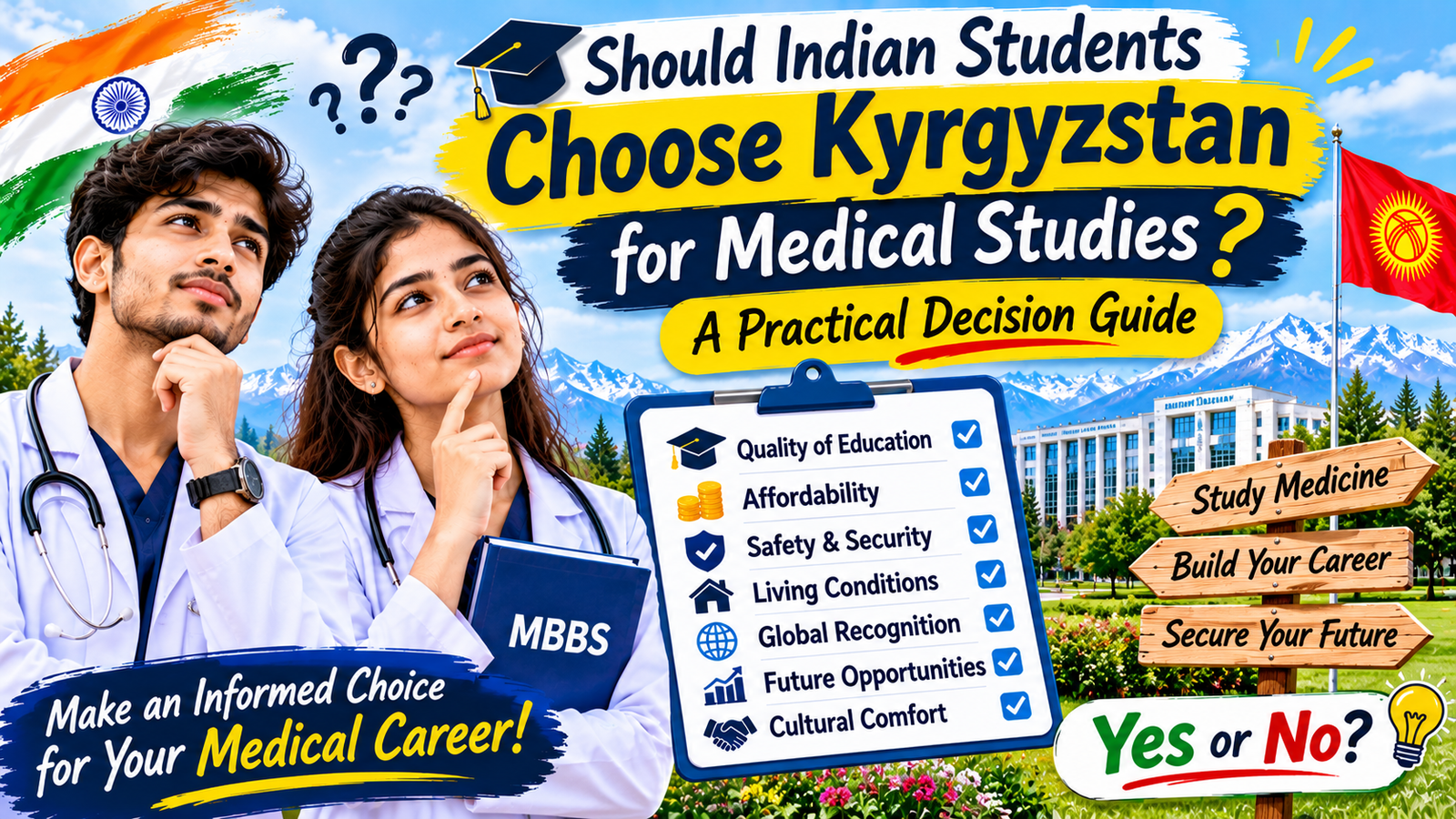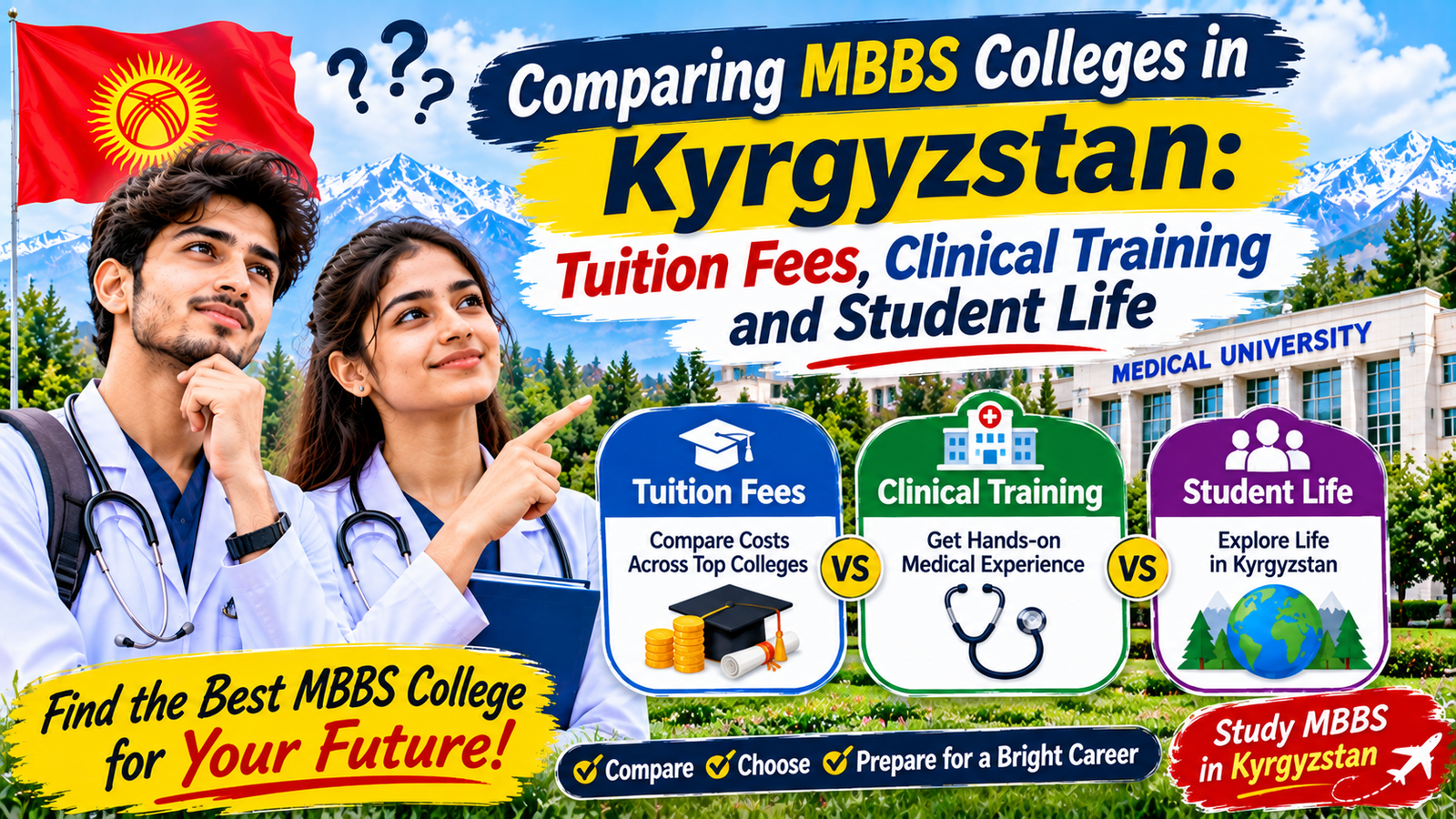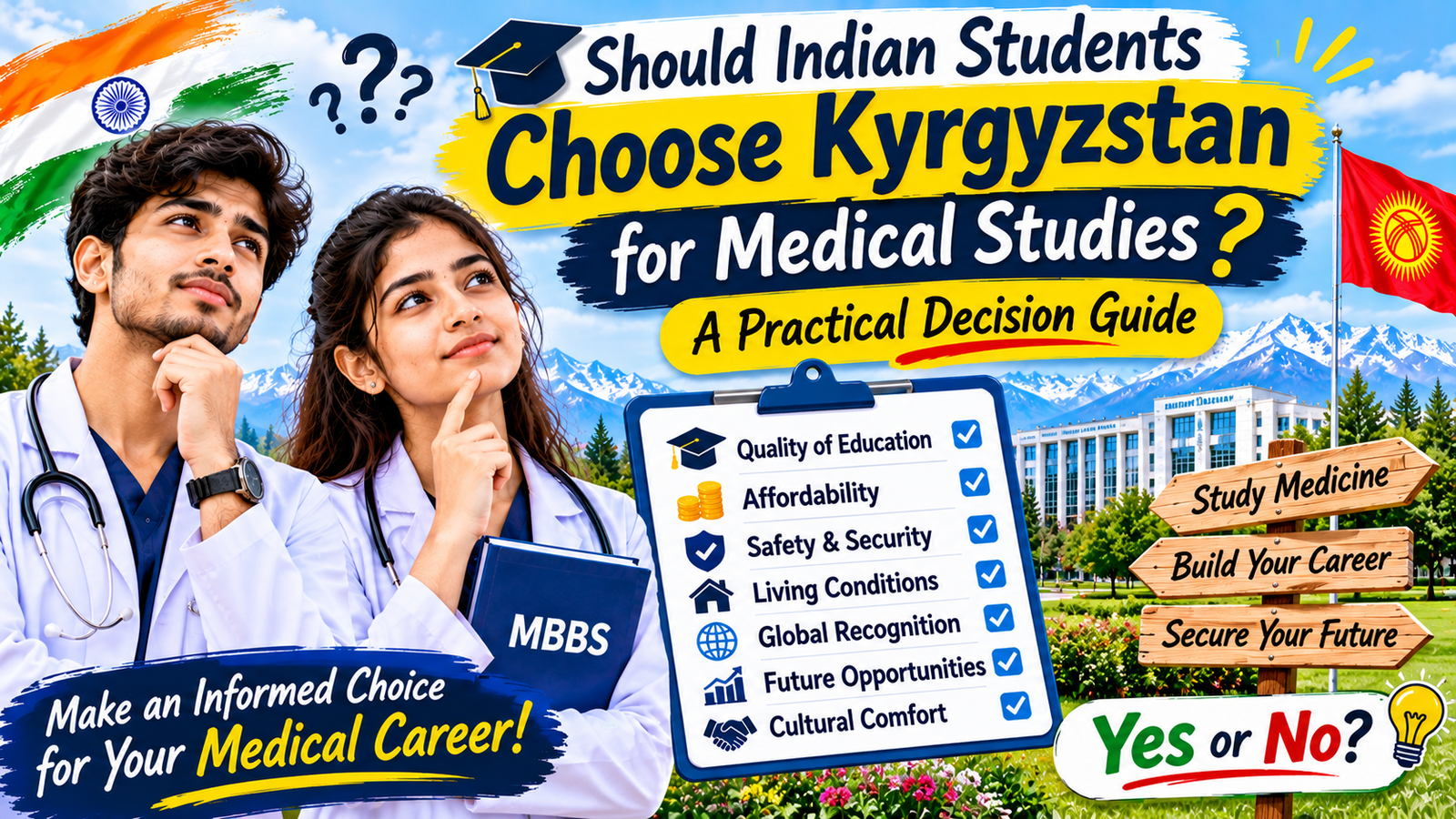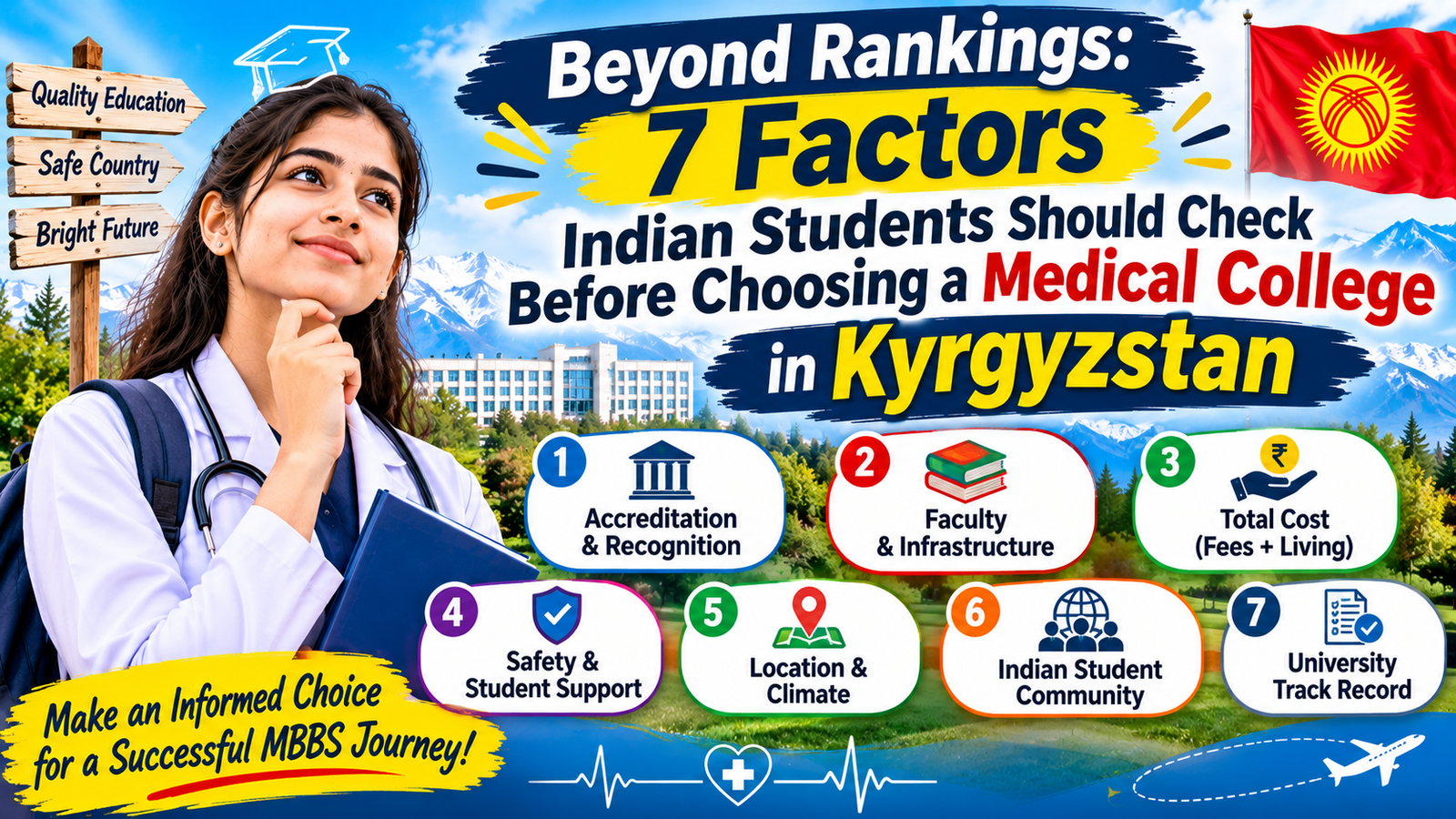
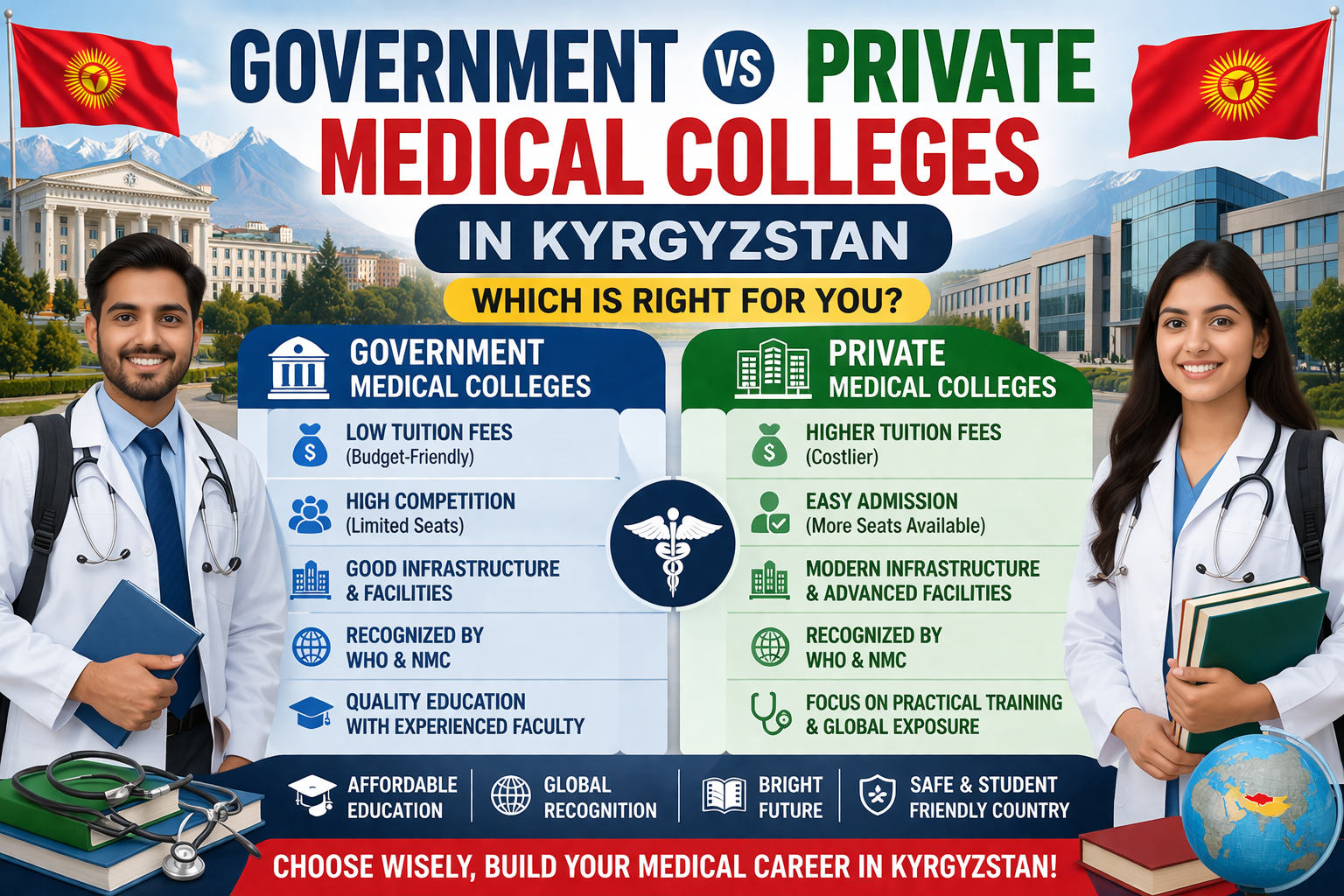
Kyrgyzstan has emerged as one of the most preferred countries for Indian students pursuing MBBS abroad. The presence of both government and private medical colleges, affordable tuition, globally recognized degrees, and education in English mean students have choices. Differences among these groups can help inform the decision for admissions in 2026.
Overview
Kyrgyzstan’s medical education system includes:
And these are the types of medical colleges you can study at in India:Government Medical CollegesThese universities, managed and funded by the government, charge minimum tuition fees.
Private Medical Colleges – These are managed by the private authorities with a flexible fee structure, modern facilities, and relatively small class size.
The same has been recognized by NMC, WHO and WDOMS for both the types enabling FMGE/NEXT examination in India.
Tuition Fees Comparison
Government Colleges
Per year tuition fee: ₹2.5 lakh – ₹4 lakh
Total cost of MBBS: ₹18 lakh – ₹28 lakh
No donation needed and minimal extra costs
Private Colleges
Tuition per year: ₹3.5 lakh – ₹5 lakh
Total cost of MBBS: ₹25 lakh – ₹35 lakh
Note, extra charges are applicable for infrastructure & facilities
Note: Government colleges mostly have freezer fees and validations to lower middle class families.
Quality of Education
Government Colleges:
Established universities with long-standing reputation
Experienced faculty and structured syllabus
Early diagnosis and treatment of diseases through high-level clinical exposure in government hospitals
ERASMUS for TOP medical universities in TURKEY: Examples: Kyrgyz State Medical Academy, Osh State Medical University
Private Colleges:
Modern infrastructure, smaller batches
Technology and research in specialized labs
You may have different levels of practical exposure based on the hospital you are affiliated to
Example: Asiatic Medical Institute, School of Medicines International
Observation: So, government colleges will give you quality clinical exposure, and private ones provide good facilities and personal attention.
Infrastructure and Facilities:
Classrooms
Standard, sufficient
Modern, well-equipped
Labs
Well-maintained
Advanced and updated
Hostels
Affordable, basic
Comfortable, slightly expensive
Libraries
Comprehensive
Modern with digital access
Sports & Recreation
Limited
Better facilities
While private colleges have more luxurious campuses, government colleges are based on practical medical education:
Admission Process
Government Colleges
Admission is straightforward and regulated
• Successful candidates to be appointed based on merit through academic marks and NEET clearance
No donation or hidden fees
Private Colleges
Large corporations have more data on October 2023
Merit plus financial capacity considered
Colleges also offer scholarships and early-bird discounts
Public colleges grant admission in a systematic and transparent manner, however, private colleges may be less clear-cut.
Recognitions and Eligibility
NMC (National Medical Commission)
WHO (World Health Organization)
WDOMS (World Directory of Medical Schools)
Both types of graduates are eligible for:
FMGE/NEXT in India
USMLE, PLAB or any other international licensing exams
Note: Recognition is not based on Government vs Private - and students are advised to check the official listings in NMC/WDOMS.
Cost of Living and Accommodation;
Government Colleges
Hostel charges: ₹40,000 – ₹1 lakh/year
Mess: ₹6,000 – ₹10,000/month
Shared rooms common, more economical
Private Colleges
Hostel fees : ₹ 65,000 – ₹ 1.5 Lakh/Year
Additional services may include mess and food
There is also an option for private rooms/groups.
O/I: Private schools might offer more comforts — at a greater price.
Advantages:
Government Colleges
Affordable tuition and living costs
Established clinical exposure
Large Indian student community
Stable, regulated academic environment
Private Colleges
Modern infrastructure and labs
Smaller batches for personalized learning
Potential scholarships or fee discounts
Better recreational facilities
Challenges:
Government Colleges: Infrastructure will be older and batches are large; Basic facilities
Tuition: Higher tuition; may have less clinical exposure due to hospital standing (less common).
When students choose a brand, they should consider cost vs facilities vs practical exposure.
Conclusion:
Inclined aspirants can pursue MBBS program from both the government as well as private medical colleges Kyrgyzstan, awarded degrees recognized on an international level to sit FMGE/NEXT and practice medicine in other countries.
If affordability, long established reputation and strong clinical exposure is what you are looking for then choose Government Colleges.
Private Colleges : Go for private colleges with contemporary infrastructure, smaller batches and more comfort but higher fees.
Ultimately, the decision is based on budget, personal preference, and career goals. Option 1: American Medical Education System (NEET to practice in India)These are medical colleges recognized by NMC, WHO, and WDOMS. They eventually let you pursue MBBS abroad, letting you practice internationally