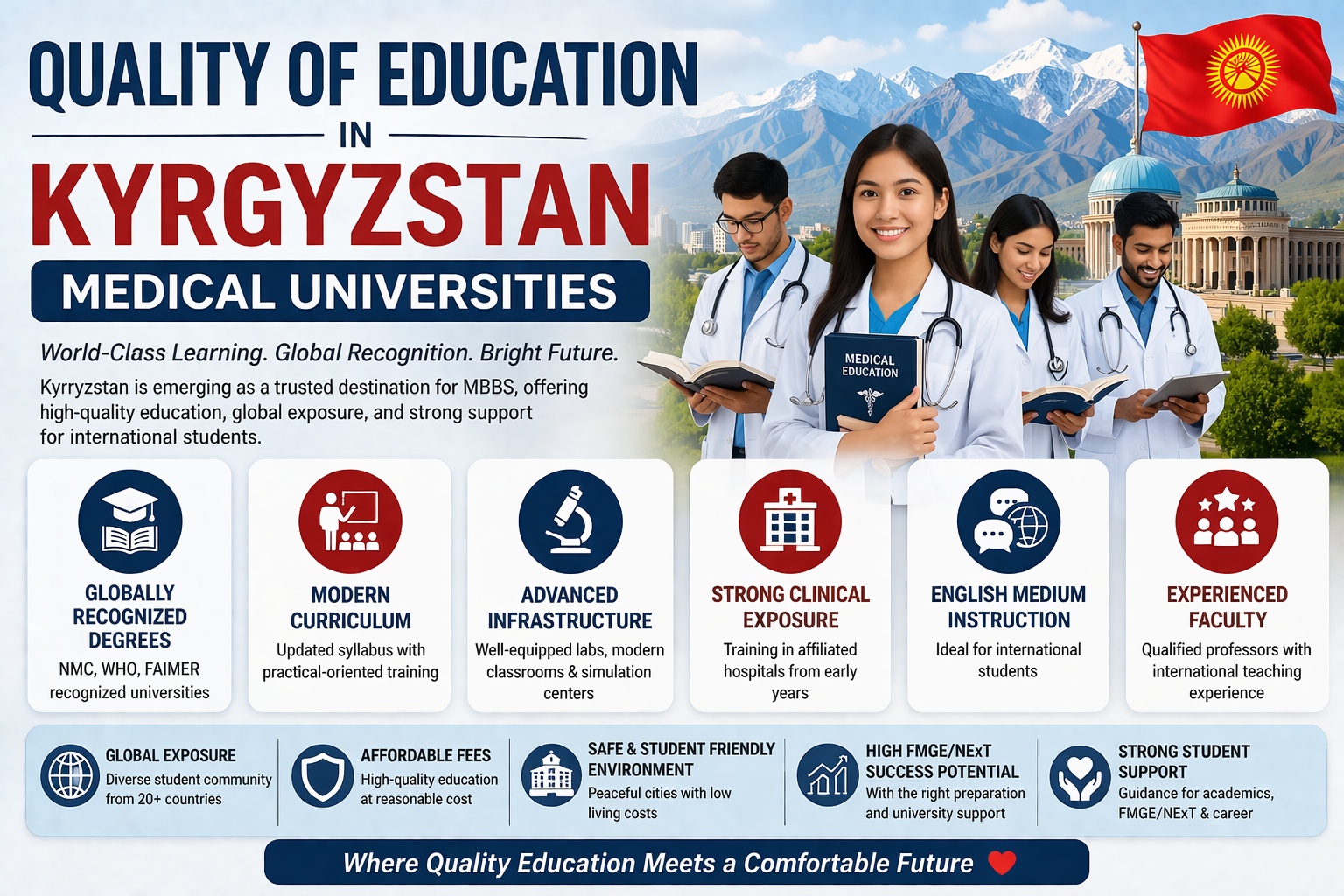
Kyrgyzstan has become a popular destination for Indian students pursuing MBBS abroad due to its affordable fees, availability of English-medium programs, and universities that meet global standards. However, one of the most important concerns remains the quality of education and whether it adequately prepares students for licensing exams like FMGE or NExT.
This guide provides a clear and structured overview of the education quality in Kyrgyzstan medical universities, including teaching standards, clinical exposure, infrastructure, and global recognition.
Recognition and Accreditation
Most medical universities in Kyrgyzstan comply with the guidelines of the National Medical Commission, making their degrees valid for FMGE/NExT in India.
Additionally, many universities are listed in the World Directory of Medical Schools and follow frameworks aligned with the World Health Organization.
Key Benefits:
Eligibility for FMGE/NExT in India
Recognition for international licensing exams such as USMLE and PLAB
Globally accepted medical degree
Insight: Accreditation ensures credibility and adherence to international medical education standards.
Curriculum Structure
The MBBS program in Kyrgyzstan generally follows:
5 years of academic study
1 year of compulsory internship
Core Subjects:
Anatomy, Physiology, Biochemistry
Pharmacology, Pathology, Microbiology
Medicine, Surgery, Obstetrics & Gynecology, Pediatrics
Community Medicine and Preventive Healthcare
Teaching Methodology
Medical universities in Kyrgyzstan use a mix of modern and traditional teaching approaches:
Classroom lectures and seminars
Laboratory practical sessions
Clinical rotations in hospitals
Use of digital tools, simulations, and e-libraries
Clinical Exposure
Clinical training is a critical part of MBBS education and is provided through affiliated hospitals.
Key Aspects:
Hands-on patient interaction
Diagnosis and treatment planning
Participation in hospital rotations
Exposure to real-world medical scenarios
Infrastructure and Facilities
Most universities provide:
Well-equipped classrooms and laboratories
Digital libraries with access to global medical journals
Safe hostel facilities with Indian mess options
Recreational and sports facilities
International Standards and Research Opportunities
Many universities follow globally accepted medical education systems aligned with international frameworks.
Opportunities:
Participation in research projects
Attendance at international conferences
Publication in medical journals
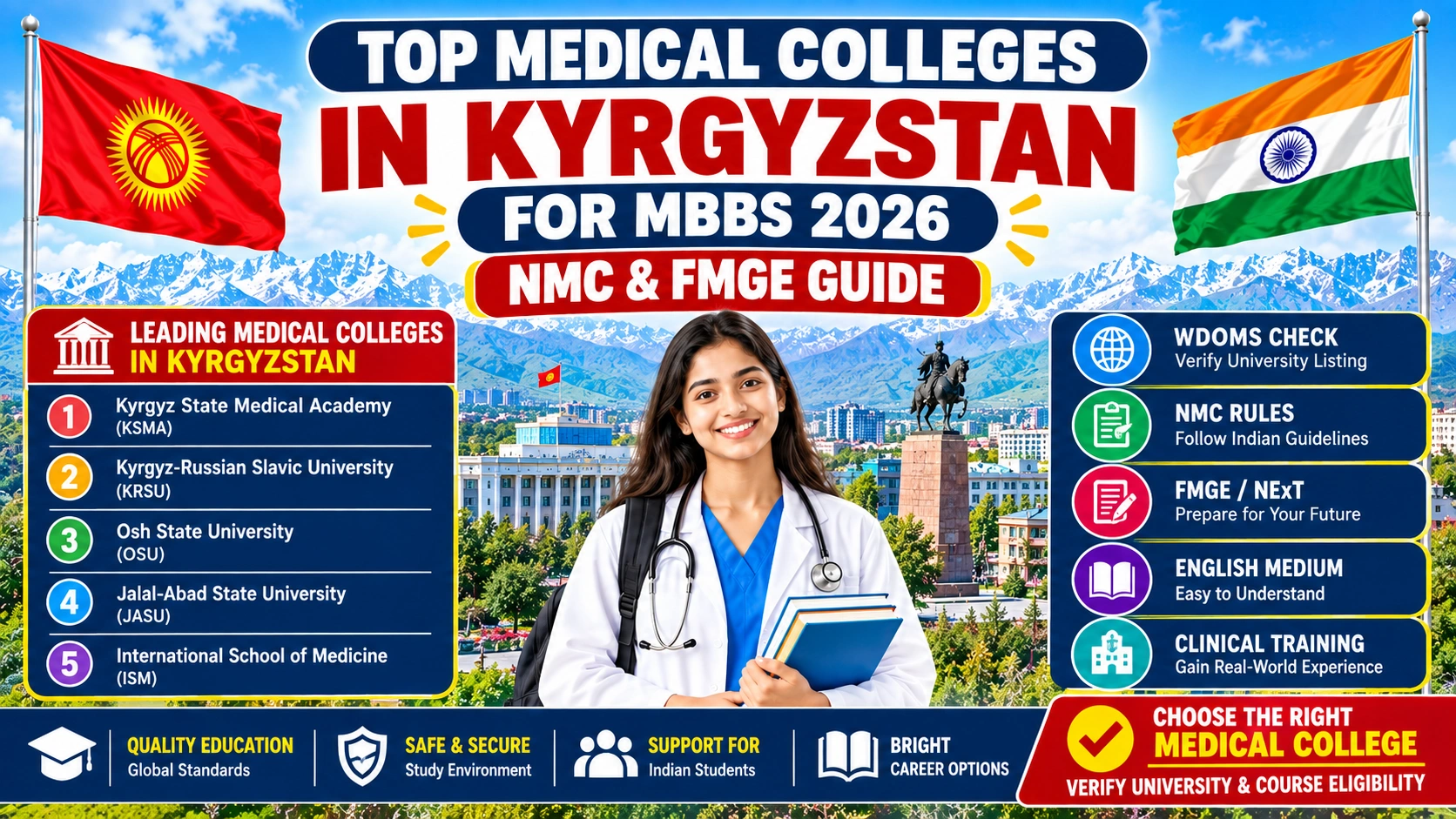
Institutions like Kyrgyz State Medical Academy are known for encouraging academic research.
Student Support and Guidance
Kyrgyzstan universities offer strong support systems:
Indian student communities and associations
Mentorship programs for FMGE/NExT preparation
Career counseling for PG and international exams
Advantages of Studying MBBS in Kyrgyzstan
Affordable tuition and living costs
Globally recognized degrees (NMC, WHO, WDOMS aligned)
English-medium education
Adequate clinical exposure
Opportunities for international careers and PG studies
Conclusion
Kyrgyzstan offers a balanced and cost-effective option for Indian students pursuing MBBS abroad in 2026. With structured curriculum, global recognition, English-medium teaching, and growing clinical exposure, students receive a solid foundation for their medical careers.
However, the quality of education can vary between universities. Careful selection of NMC-compliant and WDOMS-listed institutions is essential.
For disciplined and proactive students, Kyrgyzstan provides a practical and internationally recognized pathway to becoming a successful doctor.