Introduction
For international students who aspire to pursue a career in medicine, choosing the right destination to study medicine abroad is the foremost major challenge on their academic path. In recent years, the MBBS programs in Kyrgyzstan have gradually become the top choice for international medical students, the majority of whom are from India.
Backed by affordable tuition fees, internationally accredited institutional qualifications, a full English-medium instruction model, and abundant clinical practice opportunities, these programs attract thousands of global applicants every year. The career goals of these students cover roles such as licensed physicians, specialist physicians, medical researchers, and healthcare sector administrators.
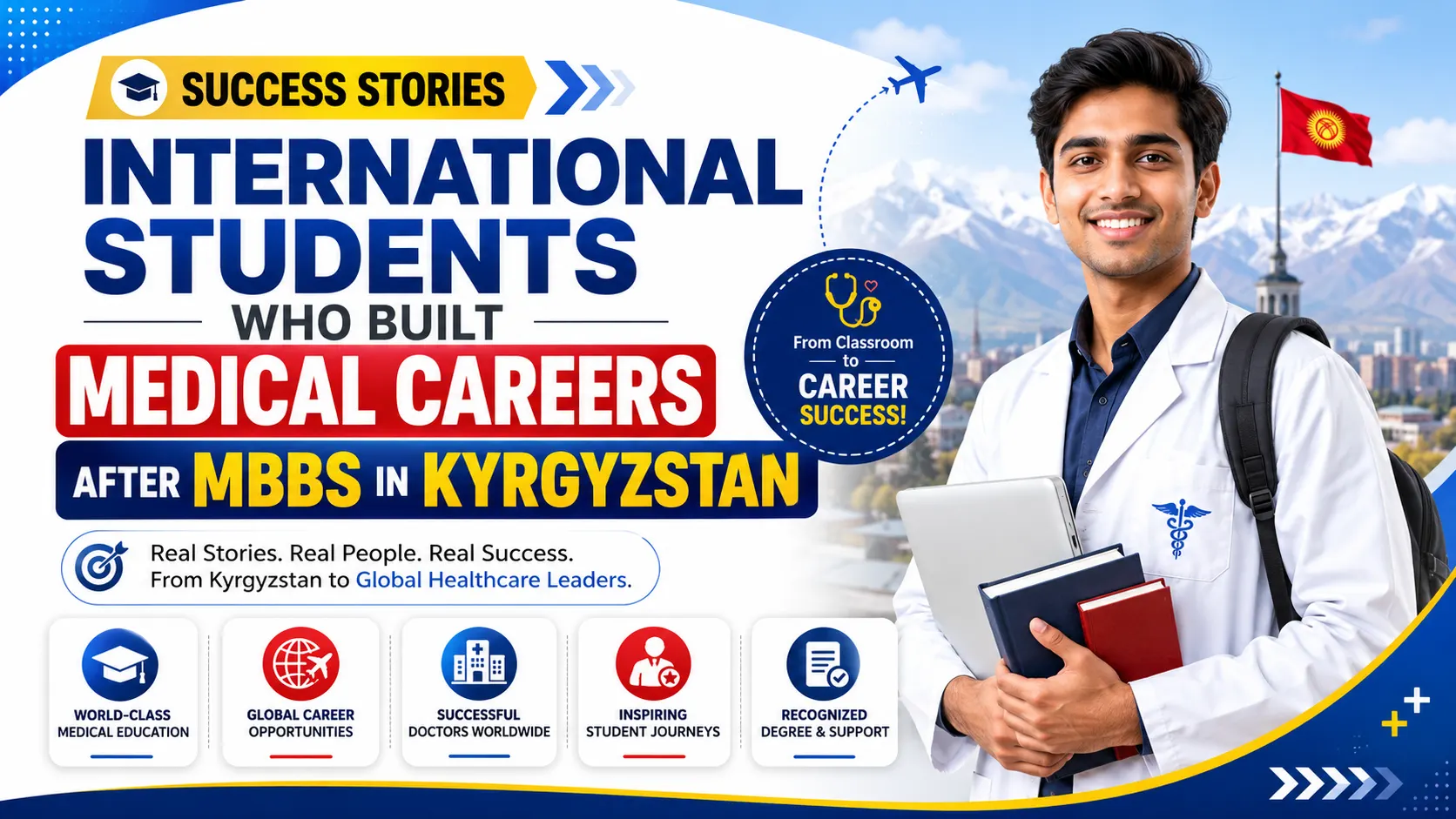
At first, high cost-effectiveness was the core factor attracting students, but what truly wins over subsequent applicants is the successful experience of previous alumni who converted their medical degrees from the program into high-quality career pathways around the world.
Career Success Stories of Kyrgyzstan MBBS Graduates
Today, many Indian graduates of these programs have secured positions at hospitals in multiple countries, pursued postgraduate medical degrees, conducted medical research, and even participated in the construction of local healthcare systems.
These experiences prove that career success after medical education relies not only on the platform of one’s alma mater, but also on an individual’s dedicated effort, continuous learning ability, solid clinical skills, and sound career planning.
This paper sorts out the trend of sharply rising popularity of Kyrgyzstan’s MBBS programs among Indian students over the past decade, and analyzes the core drivers behind this trend:
Competition for domestic medical school seats in India and other similar countries is extremely fierce.
A large number of students need alternative options that are cost-effective, up to standard in quality, and offer internationally recognized degrees.
The MBBS tuition fees in Kyrgyzstan are far lower than those of private medical schools in most countries, making the programs accessible to applicants from diverse economic backgrounds.
The structured curricula, practical training, and clinical resources of locally accredited, authoritative universities equip graduates to stay competitive in the global healthcare industry.
The growing number of successful alumni has further boosted the reputation of these programs.
Importance of Alumni Experiences in Choosing Medical Education
This paper also unpacks the unique value of alumni stories for prospective applicants. Most students only focus on hard indicators such as admission requirements, tuition fees, infrastructure, and university rankings when choosing a school, but real alumni experiences can answer the core concerns that arise after graduation:
Whether one can build a successful career path.
Whether the degree is internationally recognized.
Whether there are opportunities for advanced specialized study.
Whether one can practice medicine in their home country.
What the actual effect of the clinical training is.
This paper sorts out the career development potential of international medical students enrolled in medical schools in Kyrgyzstan, whose core subgroup is Indian students who travel to Kyrgyzstan to pursue a Bachelor of Medicine and Bachelor of Surgery (MBBS) degree. It analyzes the success factors across their full path from enrollment to licensed medical practice.
Key Factors Behind Medical Career Success
The paper opens with the impressive career outcomes achieved by the graduate cohort of Kyrgyzstan’s medical schools as a lead-in, then puts forward its core argument: medical students’ career success depends on continuous learning rather than the mere attainment of a degree.
As long as a reasonable training model is paired with sufficient personal investment, medical students can achieve outstanding career results.
Most newly enrolled international students have only a limited understanding of the global healthcare system. The core academic content covered during their schooling, and the requirements for the identity transition from medical student to practicing physician, build the core framework for their growth.
Three Core Modules of Medical Career Development
The paper then lays out its core supporting arguments through three modules.
Clinical Training and Professional Competencies
The first module focuses on the value of clinical training. This education program covers 5 core competencies, which help graduates meet the requirements of medical licensing exams in various countries, master’s and doctoral training programs at home and abroad, and professional practice standards.
Benefits of Post-Graduation Specialization
The second module explores the value of post-graduation specialized advanced study. Currently, there are 10 popular specializations that graduates choose for advanced study; this type of further education can greatly enhance graduates’ professional recognition and long-term development space.
Employment Opportunities for Indian Graduates
The third module examines the home-country employment scenario of Indian graduates who return to India to work. Data on the cohort of Kyrgyzstan’s medical graduates compiled for this paper shows that after returning to India, Indian graduates primarily enter 5 types of mainstream domestic employment institutions in India.
The stable practice outcomes of these Indian graduates after their return to their home country once again confirm the solid foundational support that Kyrgyzstan’s medical education provides for international students’ career development.
Global Career Opportunities After MBBS in Kyrgyzstan
For international students planning to pursue an MBBS degree in Kyrgyzstan, particularly Indian applicants who make up our core service group, the first point to clarify is that the core value of overseas medical education is to build a globally accessible career development platform for you.
Graduates of Kyrgyzstan’s officially recognized medical schools are eligible to work in five types of healthcare-related institutions around the world, which align with the four common core career paths for all international medical school graduates.
However, all graduates must pass additional professional licensing exams and complete required supporting training before they can practice medicine officially. Fortunately, the vast majority of past graduates have successfully completed this full series of procedures.
Characteristics of Successful Medical Graduates
Beyond the formal basic education provided by their universities, personal characteristics play a key role in long-term career success.
After reviewing the career profiles of hundreds of successful alumni, we have summarized six shared core traits among this group. Most of these alumni’s success stems from long-term consistent dedication, rather than accidental special opportunities.
Graduate development data from Kyrgyzstan’s two leading medical schools—the International School of Medicine Kyrgyzstan and Kyrgyzstan’s JAIU—also confirms that success is the combined outcome of high-quality institutional resources and sustained personal effort.
NMC, NEET, WHO, and WDOMS Compliance Requirements
Finally, we must remind all applicants that the four core regulatory frameworks of WHO, NMC, NEET, and WDOMS are non-negotiable baseline requirements for both the application process and future medical practice.
Specifically for Indian students, NMC compliance and NEET eligibility are core access conditions for practicing medicine after returning to India, and these requirements must never be overlooked.
If you are an Indian international student planning to pursue a medical degree in Kyrgyzstan, this guide will organize all core decision-making information for you across the full process from application to career development.
Cost, Higher Education, and Long-Term Career Growth
First, we cover the compliance requirements for the application stage. Many students overprioritize WHO certification, and we first correct this widespread misconception: before enrolling, you must verify as a top priority two credentials of your target school: its NMC compliance, and its inclusion in the World Directory of Medical Schools (WDOMS).
These two qualifications directly determine whether you can successfully obtain a medical practice license and access legal professional opportunities in the future.
Second, the cost of studying medicine in Kyrgyzstan is very low. This light financial burden frees you from the constraint of only chasing short-term income after graduation.
You will not need to limit your choices to quickly recoup your study costs, and can instead flexibly apply for internships, master’s or doctoral programs for advanced study, or pursue positions in scientific research or public health, to prioritize investment in your long-term career development.
Medicine is a continuously evolving field, so you must commit to lifelong learning. You can update your professional knowledge through channels including continuing education programs, industry seminars, research projects, clinical training courses, and advanced professional certifications, to keep pace with progress in the healthcare industry and improve the quality of patient diagnosis and treatment.
Diverse Medical Career Paths and Physician Salary Growth
Beyond standard clinical work, you can also choose from a diverse set of career paths:
Medical innovation
Clinical trials
Public health research
Medical education
Healthcare policy formulation
Medical entrepreneurship
Private clinics
Diagnostic centers
Telemedicine services
Medical technology startups
Healthcare consulting firms
Many Indian medical graduates who studied in Kyrgyzstan have already established professional reputations in these fields.
Next, we will discuss the widely concerned topics of physician salaries and long-term career growth for doctors working in Kyrgyzstan.
The core dimensions shaping physicians’ career development include professional skills, clinical competence, level of specialization, work experience, geographic location, and more.
Physicians who commit to continuous learning and career growth achieve higher long-term success rates and income potential.
A physician’s salary level is determined far more by their career progression than by the location of their undergraduate institution, which debunks the common misconception that one’s undergraduate study site sets the upper limit of their career.
Guidelines for Future MBBS Students
By sorting through the career trajectories of successful graduates who completed their MBBS in Kyrgyzstan, we have distilled 7 actionable guidelines for prospective students to follow:
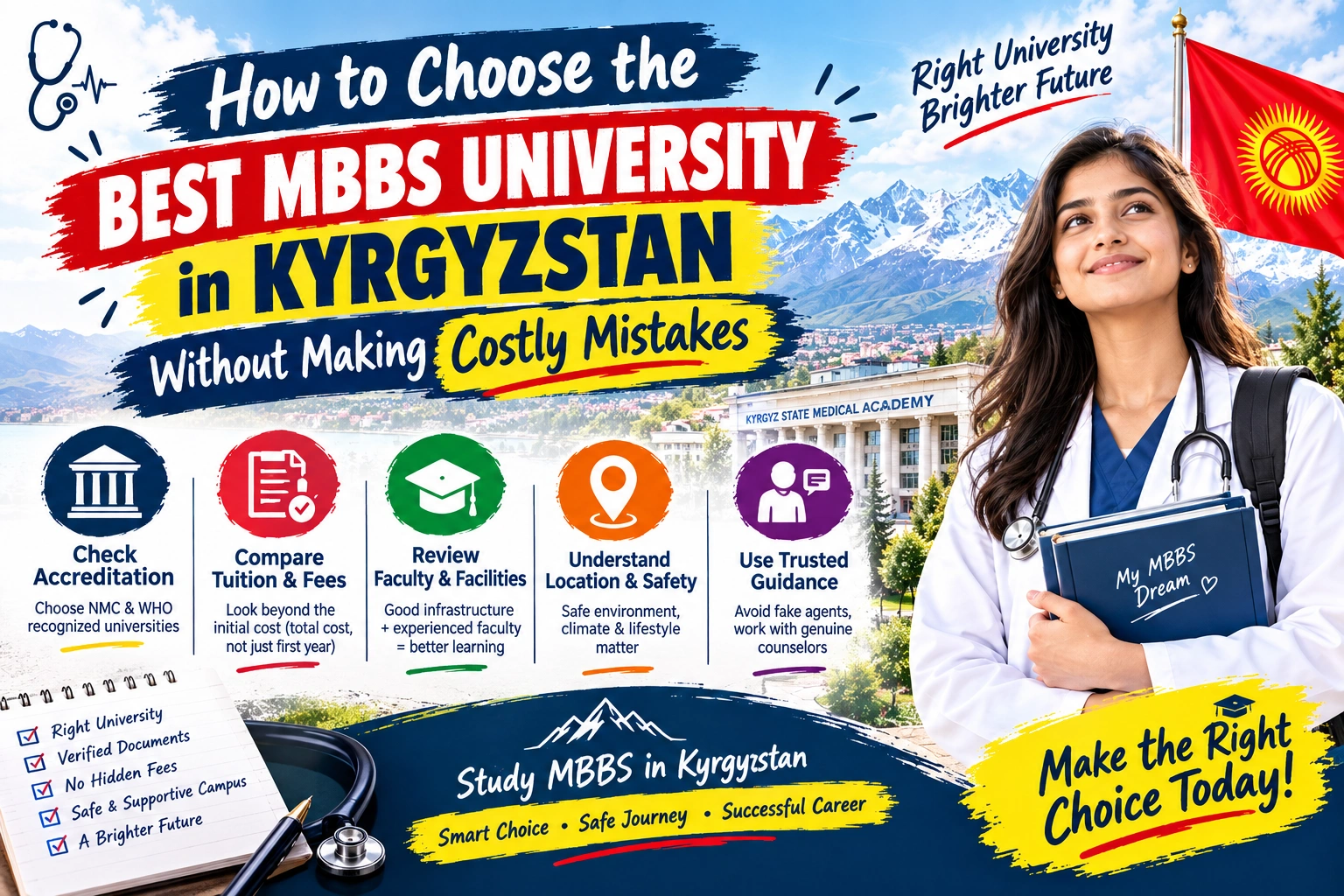
Choose an accredited university.
Verify compliance with NMC and WDOMS requirements.
Prioritize academic performance.
Actively participate in clinical training.
Prepare early for medical licensing exams.
Develop communication skills.
Uphold lifelong learning.
Legitimate higher education institutions in Kyrgyzstan, such as the International School of Medicine Kyrgyzstan, continue to attract students worldwide with formal medical career plans, drawing on their low study costs, high-quality education, abundant clinical practice opportunities, and broad international recognition.
Graduates of these institutions have gone on to work in a wide range of medicine-related roles across many global regions, including practicing physicians, medical specialists, researchers, educators, healthcare administrators, and medical industry entrepreneurs.
Conclusion
These institutions can provide long-term development support for students striving for excellence in their fields.
Specifically for Indian students considering pursuing an MBBS in Kyrgyzstan, we emphasize: success in a medical career is not primarily determined by one’s study location, but by how effectively an individual leverages the opportunities available to them.
As long as students plan thoroughly, stay focused, complete high-quality clinical training, meet all regulatory compliance requirements, and commit to continuous learning, they can turn this educational experience into a successful international medical career.