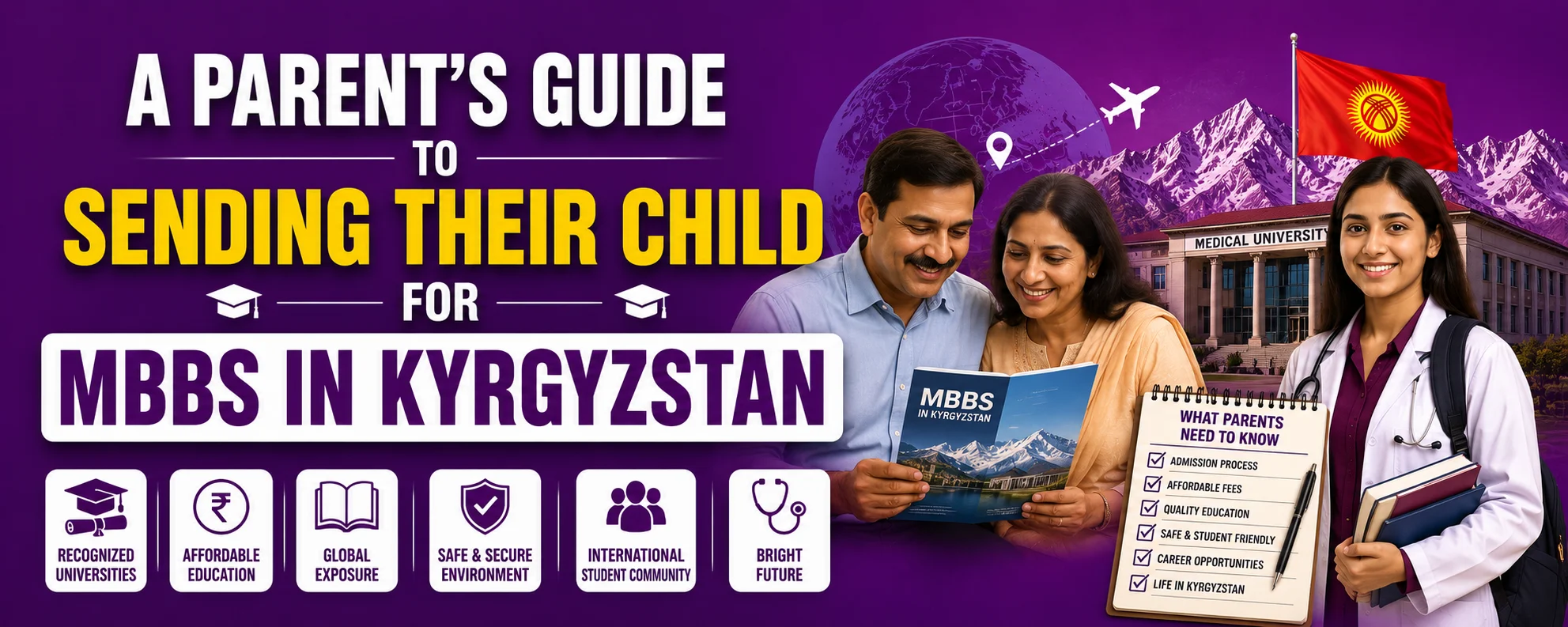
If you are an Indian parent planning to send your child to pursue an MBBS degree at MBBS in Kyrgyzstan, this dedicated guide will organize all the core information you need to make informed decisions. In India, having a child become a doctor is a widespread wish for countless families. However, competition for seats at domestic public medical colleges is growing increasingly fierce, while the exorbitant tuition fees of private medical colleges lock a large number of ordinary families out. As a result, pursuing a medical degree abroad has become a practical choice for more and more Indian families, and Kyrgyzstan has become the top destination for Indian medical students studying abroad in recent years.
We cite data from the latest education reports to verify this popularity. Kyrgyzstan has seven core advantages that make it favored by Indian families: low tuition fees, internationally recognized degrees, full English-medium instruction, low local cost of living, no requirement to pay any donation fees or seat reservation fees, a continuously expanding community of Indian students in Kyrgyzstan, and a simple application process.
The MBBS program in Kyrgyzstan is six years long, including five years of academic and clinical study plus one year of internship, and its learning modules cover core content such as basic medicine, systematic clinical training, and hospital rotations.
We fully understand that besides tuition fees, Indian parents also worry about many other issues during their child’s study abroad, including safety, academic quality, suitable accommodation, access to Indian-style food, the degree’s recognition after returning to India, their child’s career prospects, and on-campus student welfare.
Degree Recognition and Regulatory Compliance
Among these, degree recognition is the core concern for all parents: a degree can only be used legally in India if the host university is listed in the World Directory of Medical Schools (WDOMS) and meets the regulations of India’s National Medical Commission (NMC).
This guide will comprehensively cover all dimensions including university selection, admission requirements, arrangements for life as an international student, safety safeguards, financial planning, and post-graduation career opportunities, to provide reliable full-process support for your study abroad decision-making.
Application Requirements for MBBS in Kyrgyzstan
If you are planning to send your child to Kyrgyzstan to pursue a Bachelor of Medicine and Bachelor of Surgery (MBBS), you must first sort out all core tasks across the full process of application, school selection, funding preparation, life adaptation, and safety assurance, and verify each item one by one to ensure full implementation.
First, the primary prerequisite for applying to study an undergraduate medical degree in Kyrgyzstan is meeting the five mandatory application requirements set by the National Medical Commission (NMC) of India.
We solemnly remind all parents that before submitting an admission application to any higher education institution, you must verify the latest policies and rules directly with the NMC to avoid delaying your application due to outdated information.
Budget Planning and Cost Considerations
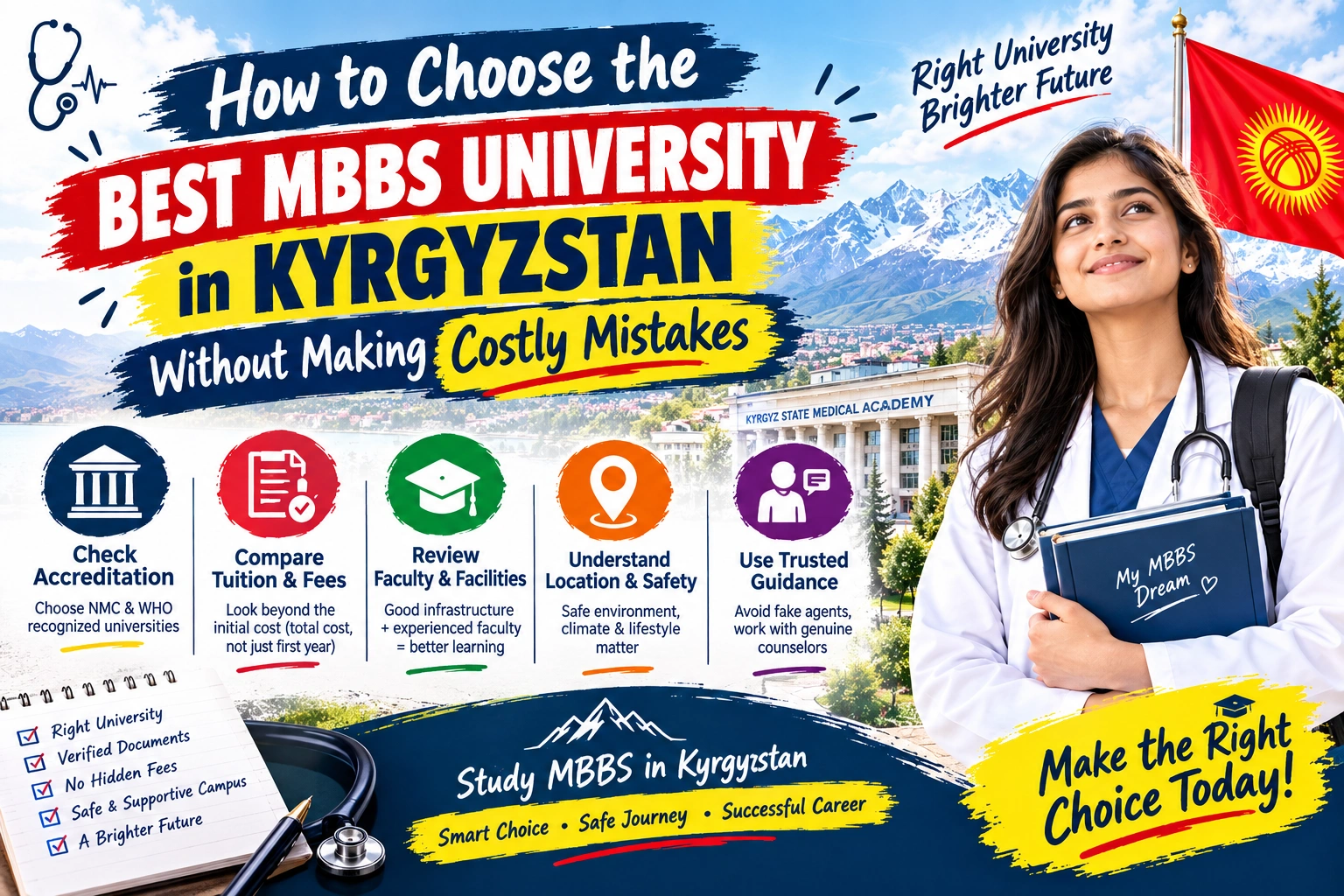
When entering the school selection stage, you can screen the suitability of target institutions using four core evaluation dimensions.
On the cost front, study abroad expenses in MBBS in Kyrgyzstan have a clear advantage over the mainstream European and American medical study destinations commonly chosen by Indian students.
You must include all potential expenses in your budget, such as tuition fees, student enrollment registration fees, daily living costs, and annual round-trip travel fees, and develop a complete funding plan in advance that covers the full six-year program duration.
Accommodation, Food, and Student Welfare
For daily life, the two major concerns of most parents—housing and dining—are well addressed by most local institutions.
For international students, especially the large Indian student community, most institutions offer dedicated residential areas and meal services that comply with Indian dietary customs.
Student Safety in Kyrgyzstan
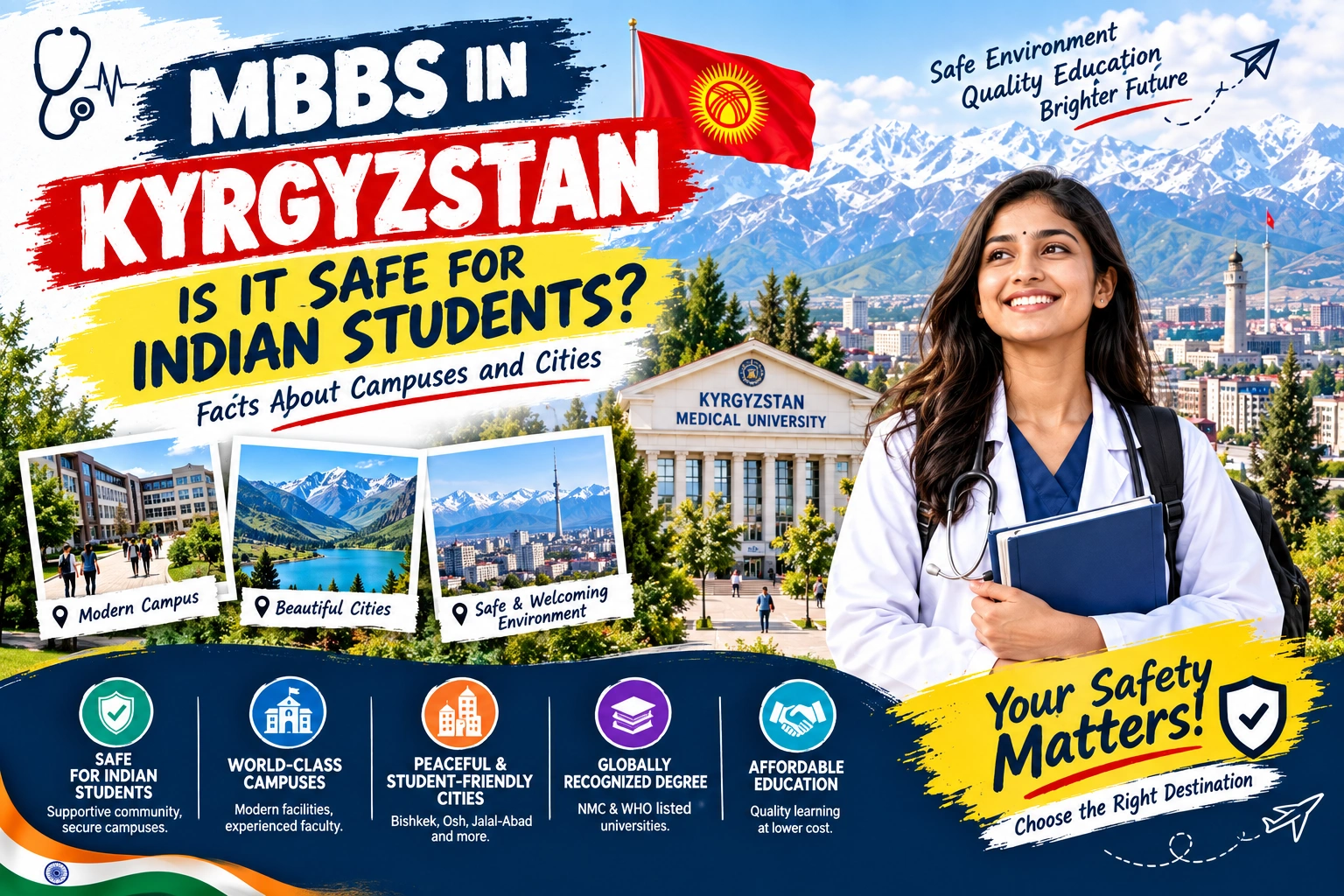
Finally, the core concern of all parents is student safety.
The overall environment in Kyrgyzstan is currently relatively safe for international students, and we will release specific safety improvement measures in follow-up content to help you further avoid all types of potential risks.
Seven Core Modules for Parents and Students
This guide lays out full-cycle study abroad preparation steps for Indian international students and their parents who plan to travel to Kyrgyzstan to pursue a Bachelor of Medicine, Bachelor of Surgery (MBBS) degree. It divides the content into seven core modules to clarify the responsibilities of all relevant parties and the support services provided by host universities.
Module 1: Basic Safety Regulations
Students are required to live in university-approved dormitories, comply with local laws, avoid isolated areas at night, and maintain regular contact with family members.
After arriving in Kyrgyzstan, students must register with the Indian Embassy in Kyrgyzstan as required.
Most local universities have an international student office that can handle a variety of emergency and administrative affairs.
Module 2: Cultural Adaptation
In the early stage of studying abroad, students often face four types of challenges: homesickness, cultural barriers, language differences, and climate discomfort.
Most students can adapt smoothly within a few months, and the multi-national student body at local universities can support their integration and growth.
Parents are reminded to maintain communication while encouraging their children to develop independence.
Module 3: Language and Communication
Most local medical universities offer courses taught in English, which greatly lowers the academic threshold for students.
However, students are required to learn basic Russian or Kyrgyz, as most patients in local hospitals speak local languages.
Mastering a local language can improve the efficiency of clinical communication and make daily life more convenient, and relevant language training has been included in the official curriculum of most universities.
Module 4: Academic Requirements
The academic requirements module reminds parents that no matter which country an MBBS program is pursued in, its academic intensity is extremely high.
Students must complete five core tasks:
Coursework
Laboratory practical training
Clinical rotations
Internal exams
University assessments
They must not underestimate the academic rigor of Kyrgyzstan’s MBBS programs just because of their high cost-effectiveness.
Module 5: Clinical Training
The clinical training module notes that practical training is the core of medical education.
Students must gradually transition from theoretical learning to clinical practice, participating in training activities such as ward rounds, patient observation, case discussions, and diagnostic procedures.
Universities that have in-depth partnerships with local hospitals can provide sufficient practical training opportunities to support students’ future career development as medical professionals.
Module 6: FMGE and NExT Preparation
For students who plan to return to India to practice, this module requires parents to urge their children to start preparing for relevant exams as early as possible.
Students must pass two required exams:
Foreign Medical Graduate Examination (FMGE)
National Exit Test (NExT)
For the latest policies, students and parents should verify information with the National Medical Commission (NMC) of India.
Many universities and tutoring programs already offer dedicated exam preparation support for these tests.
Module 7: Health Security and Travel Planning
The final module, health security and travel planning, requires parents to purchase comprehensive health insurance for their students that covers outpatient consultations, emergency care, inpatient treatment, and basic medical services.
Most host universities assist students in enrolling in mandatory local medical insurance.
Transportation between India and Kyrgyzstan is becoming increasingly convenient, and students usually enter and exit the country via Bishkek and Osh, so they need to reserve a travel budget in advance.
Career Opportunities After MBBS
This guide is tailored specifically for Indian parents planning to send their children to pursue MBBS in Kyrgyzstan, and it compiles core information to support the full process of study-abroad decision-making.
First, we break down the three core categories of travel and living expenses for studying medicine overseas, then introduce cross-border communication tools commonly used by contemporary international students; stable global network connectivity has greatly reduced the sense of loneliness associated with studying abroad at an international level.
Next, we focus on the post-graduation career prospects that parents care about most.
Practicing Medicine in India
To practice medicine in India, graduates must meet the licensing requirements of India’s National Medical Commission (NMC).
Practicing Medicine in the United States
To practice in the United States, graduates must follow the USMLE exam pathway.
Practicing Medicine in the United Kingdom
To work in the United Kingdom, graduates must submit an application through the General Medical Council (GMC).
Alternative Career Pathways
Beyond these clinical practice pathways, there are four additional diverse global career tracks:
Scientific research
Public health
Hospital management
Pursuing postgraduate study
Career success hinges on three core factors:
Academic performance
Professional licensing exam scores
Accumulated professional development experience
Common Mistakes Parents Make While Selecting a University
Following that, we outline the five most frequent mistakes Indian parents make when selecting a university:
Choosing a school based only on cost
Ignoring institutional accreditation
Relying entirely on education agents
Overlooking the quality of clinical training
Disregarding the medical practice requirements of their intended destination country
Pre-Departure Checklist
Before departure, families must complete six essential preparations:
Verify all application documents
Confirm the university’s accredited qualifications
Clarify the full program cycle’s cost structure
Purchase overseas medical insurance
Confirm a local emergency contact abroad
Build their child’s independent living skills in advance
Why Kyrgyzstan Remains a Preferred Choice
The MBBS program in Kyrgyzstan aligns with the needs of most Indian families, with five standout core advantages:
Affordable education
International accreditation
English-medium instruction
Global career opportunities
A friendly student community
To date, thousands of Indian international students have completed this program and gone on to practice medicine successfully both in India and abroad.
All content in this guide centers on parents’ core needs, to support families in making rational study-abroad decisions.
For eligibility, students should qualify through NEET and verify recognition through the National Medical Commission (NMC), the World Directory of Medical Schools (WDOMS), and international medical standards published by the World Health Organization (WHO).