Introduction
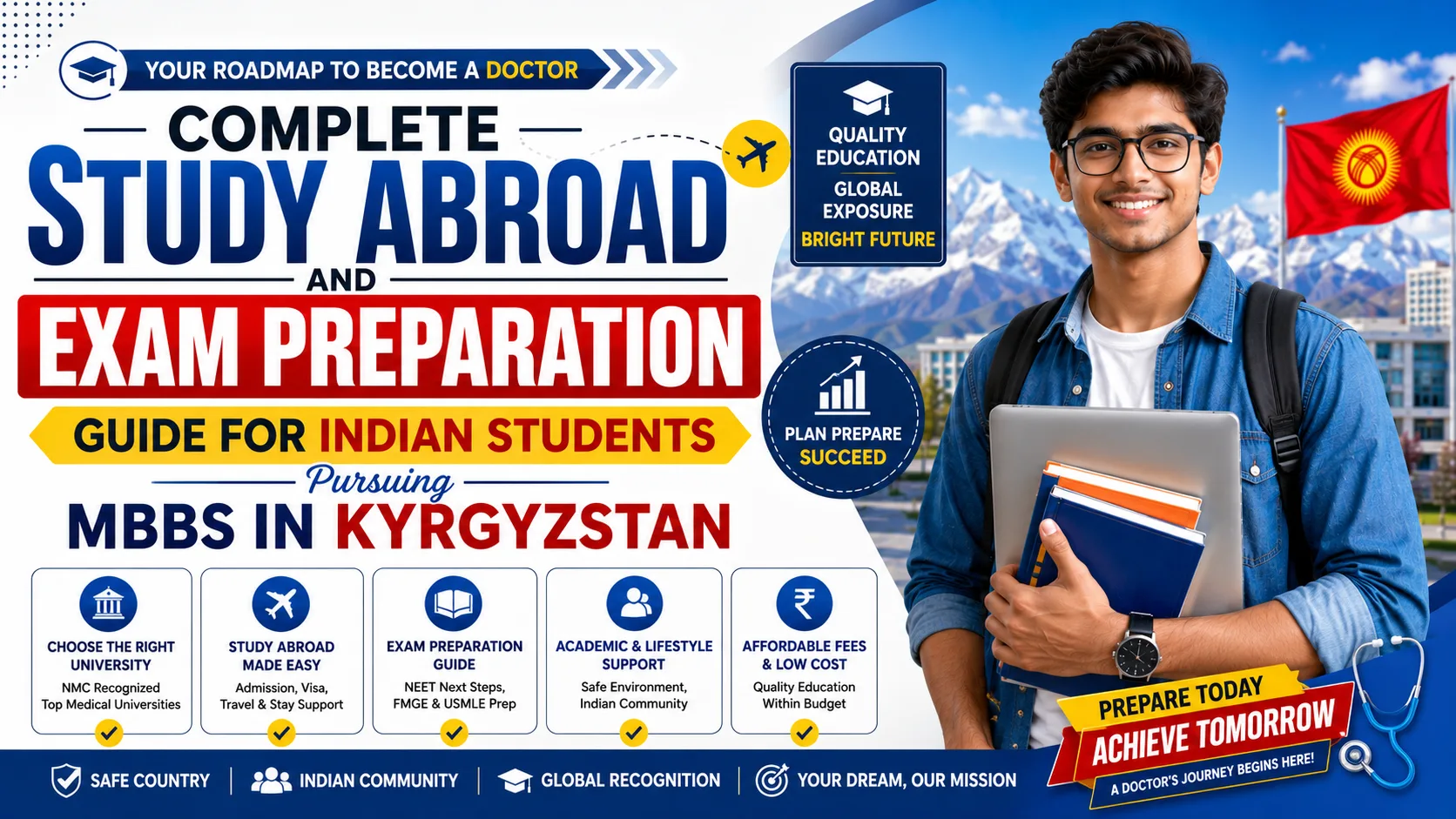
As an original study-abroad and exam preparation guide created exclusively for Indian medical students pursuing an MBBS in Kyrgyzstan, this guide opens by laying out the core policy logic of cross-border medical practice. Every year, thousands of Indian students apply to MBBS programs in Kyrgyzstan. The country boasts low tuition fees, fully English-medium instruction, globally recognized degrees from its partner universities, and a far simpler admissions process than top-tier medical schools in India, making it a popular choice for many Indian medical students to fulfill their dream of practicing medicine.
Common Mistakes Indian Students Make While Studying MBBS in Kyrgyzstan
However, most Indian medical students studying in Kyrgyzstan hold two fatal cognitive misconceptions.
They pour all their energy into admissions applications, and completely overlook the need to start preparing for medical licensing exams from the initial stage of their medical education.
They routinely delay exam preparation until the final year of their studies, yet the syllabus of these relevant exams covers more than 11 core medical disciplines including anatomy and physiology.
Cramming for the exams right before graduation will only lead to overwhelming stress, making it impossible to prepare fully for the tests.
Understanding FMGE and NExT for Foreign Medical Graduates
Currently, the standard licensing exam for Indian medical students with overseas medical degrees is the FMGE, which must be passed to obtain registration to practice medicine in India. The NExT, once fully implemented, will replace the FMGE as a unified licensing and postgraduate entrance exam that covers all medical students, both those studying in India and those pursuing their degrees overseas.
Centered on competency-based assessment, the NExT prioritizes the evaluation of clinical capabilities. This guide will provide end-to-end guidance for Indian students in Kyrgyzstan to complete their in-school academic coursework and prepare for the FMGE and NExT simultaneously, effectively increasing their success rate of entering careers in India’s healthcare sector after graduation.
Benefits of Integrating Licensing Exam Preparation With MBBS Studies
As a content team specialized in tutoring for medical study-abroad exams, we first need to remind all Indian medical students who plan to pursue or are currently pursuing an MBBS in Kyrgyzstan that integrating preparation for India’s two major physician licensing exams, the FMGE and NExT, into their daily academic work will bring 6 core benefits, spanning multiple dimensions including exam preparation efficiency, time utilization, and depth of mastery of test content.
MBBS Program Structure in Kyrgyzstan and Exam Alignment
In response to the set of high-frequency search keywords among this group: MBBS program duration in Kyrgyzstan, curriculum arrangements of Kyrgyzstani medical schools, eligibility requirements for Indian medical students to study medicine in Kyrgyzstan, FMGE preparation plans, and alignment of NExT test points, we first outline the universal program structure adopted by most local medical schools: the 6-year MBBS program is divided into three consecutive phases.
First Phase: Basic Medical Sciences
The basic medical science courses in the first phase correspond to 35% of the assessment weight of the two licensing exams.
Second Phase: System-Based Clinical Medicine
The system-based clinical medicine courses in the second phase account for 45% of the total score of the licensing exams.
Third Phase: Pre-Clinical Bridging and Clinical Transition
The pre-clinical bridging courses in the third phase complete the transition from in-classroom learning to hands-on clinical practice, and all courses are strictly aligned with the assessment requirements of the licensing exams.
Long-Term FMGE and NExT Preparation Strategy
We have launched a long-term structured preparation strategy that starts from the first year of enrollment, which implements three core actions:
Keeping pace with local teaching progress during classes to build a solid foundation of core concepts.
Simultaneously referring to standard domestic Indian medical textbooks to align with local test points.
Compiling streamlined, personalized preparation notes every week to sort out unmastered knowledge.
Importance of Clinical Training During MBBS in Kyrgyzstan
Finally, we emphasize that the clinical training that runs through the later period of the program is the core support for tackling the practical skill test questions of the licensing exams, which fundamentally resolves the common core pain point many students face: the separation between their local academic studies and licensing exam preparation.
Clinical practice plays an irreplaceable role in boosting medical students’ diagnostic reasoning ability and their in-depth understanding of core medical concepts.
If a student deliberately avoids participating in clinical work during their studies, they will very likely lose a large number of points when they later take licensing exams that feature application-focused test questions.
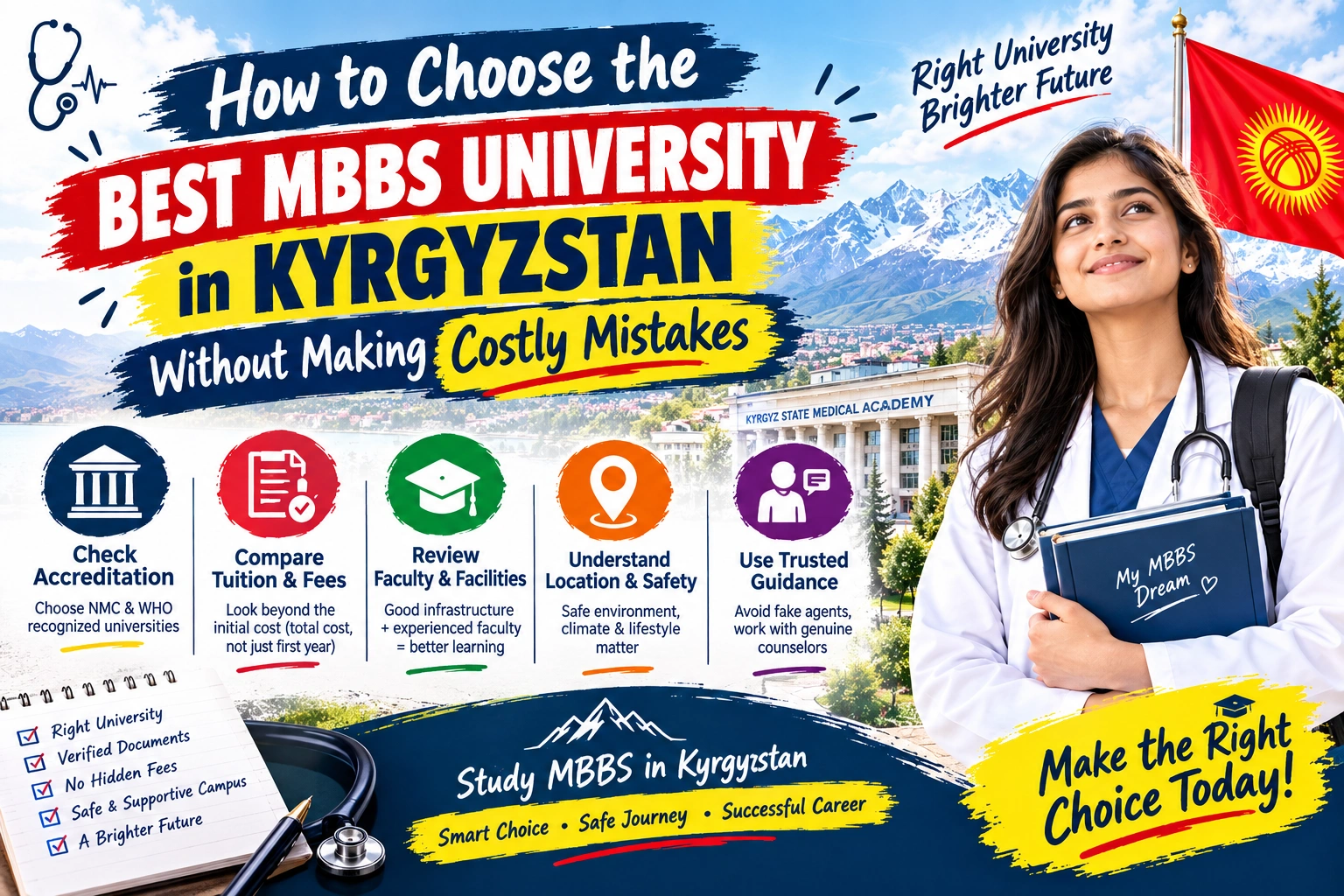
How to Choose the Right Medical University in Kyrgyzstan
For all Indian medical students planning to pursue an MBBS in Kyrgyzstan, the core value of choosing the right school far exceeds cost considerations.
Students must never base their selection solely on tuition levels; they should prioritize assessing academic quality, and must verify 6 core institutional indicators when choosing a school:
Compliance qualification from India’s National Medical Commission (NMC)
Access to in-school clinical exposure
The institution’s overall teaching standards
Resources of partner hospitals
Supporting student service systems
The professional qualifications of teaching faculty
Currently, the recommended institutions that meet all core requirements are the International School of Medicine Kyrgyzstan and JAIU University Kyrgyzstan. Choosing the right school can greatly improve your final exam preparation pass rate.
Understanding NMC, WDOMS, WHO, and NEET Requirements
Next, students must clarify the priority order of four major medical regulatory qualifications:
NMC compliance and inclusion in the World Directory of Medical Schools (WDOMS) rank higher than WHO certification.
The first two are directly linked to your eligibility to register for India’s national medical licensing exam after you return home.
The teaching standards are based on global guidelines issued by the World Health Organization (WHO).
The NEET is a mandatory threshold for Indian students to study medicine abroad, and the NMC is India’s official body responsible for regulating the practice qualifications of foreign-educated medical graduates.
Daily Study Habits for FMGE and NExT Success
The core principle of exam preparation is to maintain consistency, rather than cramming with excessively long study sessions. Setting aside 1 to 2 hours of focused preparation each day is sufficient.
Students must implement 5 daily practices:
Attend all classes with full attendance.
Review the day’s in-class knowledge points every day.
Regularly practice MCQ tests.
Study standard textbooks.
Review previously learned material every week.
Never delay exam preparation until right before graduation.
India’s two national medical licensing exams, the FMGE and NExT, set extremely high requirements for MCQ problem-solving skills. Starting to practice these questions from the first year of university will deliver five key benefits:
Improved memory.
Trained time management ability.
Strengthened clinical reasoning.
Familiarity with exam question formats.
Accurate identification of weak subject areas.
Digital Resources, MBBS Costs, and Career Opportunities
Next, we will discuss digital learning resources developed specifically for overseas Indian medical students, which can help you advance your exam preparation more efficiently.
If you are an Indian medical student planning to pursue an MBBS in Kyrgyzstan, this full-dimensional guide covering exam preparation, study-abroad decision-making, and career development will precisely meet all your core information needs, from initial preparation to long-term planning, and fully aligns with the standard order in which students access relevant information.
Online Medical Exam Preparation Resources
We have curated 5 categories of online medical exam preparation resources tailored for Indian medical students. These resources overcome geographic barriers and fully fit the model of India’s domestic medical exams.
However, we must emphasize a core principle: digital resources may only serve as a supplement to formal core medical education, and must never replace the professional medical instruction provided by academic institutions.
MBBS Costs and Educational Investment in Kyrgyzstan
We cover 8 frequently searched cost details related to studying MBBS in Kyrgyzstan, clarify that the total cost of studying in Kyrgyzstan is far lower than that of private medical colleges in India, and also remind students that medical education is a long-term investment, and the lowest price must never be used as the sole standard for school selection.
Career Opportunities After FMGE and NExT
In subsequent content, we will elaborate in detail on local physician salaries and industry development prospects in Kyrgyzstan.
Final Thoughts on MBBS in Kyrgyzstan
This study focuses on Indian international students planning to pursue a Bachelor of Medicine and Bachelor of Surgery (MBBS) degree in Kyrgyzstan, and sorts out the core advantages of this study-abroad pathway: affordable tuition costs and a degree recognized by all major international medical regulatory bodies.
That said, it must be clearly noted that holding only this degree is not sufficient to legally practice medicine independently after returning to India. Students are required to start preparation for the Foreign Medical Graduate Examination (FMGE) or the upcoming National Exit Test (NExT) licensing examination from their first year of enrollment in medical education.
Over the six-year degree program, students must complete four core learning tasks. When choosing a higher education institution, students should prioritize schools that meet the accreditation requirements of the National Medical Commission (NMC) and the World Directory of Medical Schools (WDOMS), such as the International School of Medicine Kyrgyzstan.
All qualification review requirements must be fully implemented throughout the entire study period to strengthen future career prospects. On balance, Kyrgyzstan remains a highly popular study-abroad destination that enjoys wide recognition among Indian groups aiming to become licensed practicing doctors.