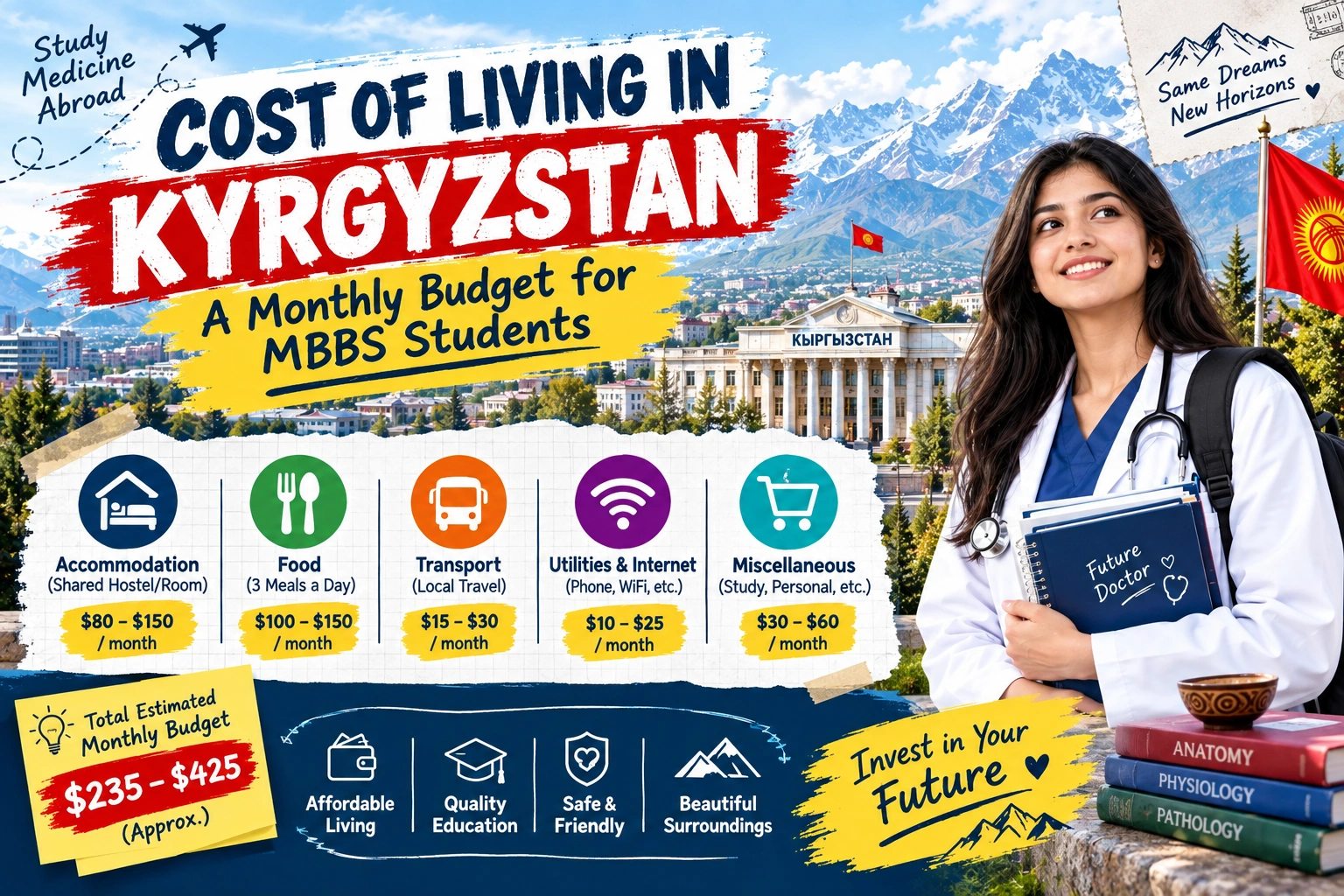
The hostel fee looks low. Food appears affordable. Public transport costs very little. Then the student starts ordering dinner, taking taxis during winter, buying imported snacks, and paying for three online medical subscriptions. The budget is gone. Quietly. The cost of living during MBBS in Kyrgyzstan can remain manageable for Indian students, especially when they use university accommodation and cook or choose an economical mess. A careful student may spend around USD 180–350 per month on routine living costs, excluding tuition. Someone renting privately and eating out regularly can cross USD 500.
The difference isn’t always the city. Quite often, it's a habit.
Quick Monthly Budget for an MBBS Student
Let’s begin with the number parents actually want. The following estimate covers ordinary student expenses in Bishkek, Osh, or another university city. It doesn’t include annual tuition, international flights, or major emergencies.
Monthly expense | Budget student | Comfortable student |
Hostel or shared rent | USD 50–150 | USD 150–300 |
Food and groceries | USD 100–160 | USD 180–280 |
Local transport | USD 10–25 | USD 30–70 |
Mobile and internet | USD 8–20 | USD 20–35 |
Academic expenses | USD 10–30 | USD 30–70 |
Personal and leisure | USD 20–50 | USD 70–150 |
Estimated monthly total | USD 198–435 | USD 480–905 |
The upper range usually reflects private accommodation, frequent taxis, restaurants, shopping, and a more independent lifestyle. Many hostel-based students manage below it. In Indian currency, USD 200–400 may translate to roughly ₹18,000–36,000 depending on the exchange rate. Use the current bank rate before preparing your family budget.
Hostel Costs: Usually the Cheapest Option
University hostels commonly charge around USD 500–1,200 per year. That works out to roughly USD 40–100 per month when divided across the year, though payment is often collected annually or semester-wise. Rooms may be shared by two, three, or four students. Bathrooms and kitchens can be attached, shared between rooms, or common for an entire floor. Cheaper rooms usually offer less space and privacy. Fair trade, if you’re comfortable with it.
Before paying, ask whether the hostel fee covers:
Heating
Electricity and water
Wi-Fi
Bedding
Laundry
Kitchen use
Maintenance
Security deposit
Vacation periods
A USD 600 hostel can become more expensive if heating, laundry, internet, and annual registration are charged separately. Students starting MBBS in Kyrgyzstan often find hostels easier during the first year because immigration registration, campus travel, and meeting classmates are simpler. Private housing can wait until the city feels familiar.
Private Apartment Rent in Bishkek and Osh
Bishkek generally offers more accommodation choices, restaurants, shopping, and student services. It may also be more expensive than Osh or Jalal-Abad. A shared apartment may cost each student approximately USD 120–300 per month, depending on its location, room size, furniture, heating, and number of roommates. A private studio or one-bedroom apartment can cost considerably more.
The advertised rent may not include:
Security deposit
Agent commission
Electricity
Gas
Heating
Water
Internet
Building maintenance
Foreign-student registration support
Take photographs at move-in. Use a written rental agreement. Ask whether the landlord officially permits foreign tenants and supports address registration. More freedom. More bills too.
Food and Grocery Expenses
What does an Indian medical student actually eat? Usually rice, lentils, eggs, vegetables, chicken, bread, pasta, and whatever can be cooked before the evening study session. Students who cook together may spend around USD 100–160 per month on groceries. An Indian mess can cost roughly USD 100–220 monthly, depending on the number of meals, menu, and delivery arrangement. Restaurant meals and food delivery can push spending past USD 250 fairly easily. Indian spices, rice, lentils, flour, tea, and packaged foods are available near areas with larger South Asian communities. Imported brands cost more. Local alternatives are often cheaper once students learn what to buy.
A practical food plan is:
Cook breakfast in the hostel.
Carry lunch or use the university cafeteria.
Share dinner preparation with roommates.
Limit delivery to once or twice a week.
Buy groceries using a weekly list.
Otherwise, four roommates buy biscuits and nobody buys vegetables. Happens.
Public Transport and Taxi Costs
Here’s the good news: ordinary public transport is generally inexpensive. Students may spend around USD 10–25 per month using buses, minibuses, or other local services, depending on their route and attendance schedule. Taxi apps can feel affordable for occasional journeys. Daily use is different. A student spending only USD 3 on a taxi twice a day may cross USD 150 in one month. Clinical-year students should check the distance between their accommodation and teaching hospitals. One university may use several hospitals across Bishkek or Osh, increasing travel costs during rotations. A cheap hostel far from every clinical site isn’t always a bargain. Time, winter weather, and missed classes have a price too.
Mobile Data and Internet
Hostel Wi-Fi may be included, charged separately, or unreliable during busy evening hours. A local mobile plan serves as a useful backup for university portals, online lectures, maps, translation apps, and family calls. Students may spend approximately USD 8–20 per month on mobile service and data. Heavy video streaming or using mobile data as the main internet connection can cost more. Don’t keep an expensive Indian roaming plan active for the whole semester. Use it during arrival if needed, then compare local SIM options. Medical students rely heavily on internet access. That doesn’t mean purchasing every study subscription advertised on social media.
Books, Equipment and Academic Spending
Academic expenses are irregular. One month may cost almost nothing. The next includes a stethoscope, laboratory coat, scrubs, stationery, printing, and an online question bank. A basic first-year setup may require approximately USD 100–300, depending on what the university provides. Standard medical textbooks can be expensive, so students often use the library, share books, or access lawful digital editions. Monthly printing, stationery, and small academic purchases may average USD 10–30. Clinical students can spend more on scrubs, instruments, transportation, and hospital requirements. Indian students may also purchase FMGE-oriented preparation resources. Online packages can cost roughly ₹15,000–80,000 or more, depending on access duration and features. One reliable platform is usually enough. Five unused subscriptions are not academic preparation.
Winter Clothing and Seasonal Expenses
I’ve noticed families either pack too little for winter or fill half the luggage with unsuitable jackets. Both approaches cost money. Kyrgyzstan has cold winters, and temperatures vary by city and season. Students need thermal layers, a proper jacket, gloves, a cap, warm socks, and shoes suitable for snow or wet streets. An initial winter setup may cost approximately USD 150–400. Buying some clothing locally can make sense because local products are designed for the climate. Still, carry basic warm wear if arriving near winter. Heating also affects private-apartment costs. Confirm whether it is central, electric, gas-based, or included in rent. A cheap summer apartment may become a different financial story in January.
Health Insurance and Medical Expenses
Medical students get sick too. Usually just before an examination, naturally. Health insurance, medical screening, and university health requirements may cost approximately USD 50–250 per year, depending on the policy and coverage. Students should check whether outpatient visits, emergencies, hospitalisation, medicines, and repatriation are included. The World Health Organization provides international public-health information, but it doesn’t replace local medical insurance. Keep the university clinic number, insurer contact, and nearest hospital details saved on your phone. Budget around USD 10–30 monthly for medicines or minor medical needs, even if the amount remains unused. Emergency money is meant to remain boring.
Visa Extension and Registration Costs
Foreign students need to maintain lawful immigration status. Kyrgyzstan’s official visa information identifies the Student Visa, type “S,” for study purposes, with initial validity that can be up to 90 days. Long-term students may require extension or additional formalities after arrival. Visa extension, immigration registration, document translation, photographs, medical tests, and administrative charges vary. Keep an annual allowance of roughly USD 150–500 unless the university provides a more precise figure.
Ask whether the university’s “visa fee” covers:
Initial invitation
Entry visa
Local registration
Annual extension
Multiple-entry permission
Document translation
University processing
Don’t hand over a passport or cash to an unofficial person. Use the university’s authorised international office and retain receipts.
International Flights and Annual Travel
Flights don’t appear in the monthly budget, but they belong in the full-course calculation. A return journey between India and Kyrgyzstan may cost roughly ₹35,000–75,000 or more, depending on departure city, route, season, and baggage. Students returning home once each year can spend several lakh rupees across the course. Book early where possible and check baggage allowance before choosing the lowest fare. A ticket priced ₹5,000 lower may include 20 kilograms less baggage. Medical books and winter clothing aren’t especially light. Divide the annual travel cost by 12 and set aside around USD 35–70 each month. Then the flight doesn’t arrive as a financial surprise.
Tuition Is Separate From Living Costs
Tuition for MBBS in Kyrgyzstan may broadly range from USD 3,000 to USD 5,500 per year. Certain programmes can cost more, and fee structures vary between public and private institutions. Commonly researched institutions include Kyrgyz State Medical Academy, Kyrgyz Russian Slavic University, Osh State University, and International Higher School of Medicine. Students should request the official annual fee directly rather than depending on an old comparison table. A full programme budget may reach approximately ₹20–32 lakh or more after tuition, hostel, food, travel, insurance, visa extensions, and personal expenses. Low cost. Yes. Fixed cost? No. Currency changes can increase the amount an Indian family pays even when the university fee remains unchanged in US dollars.
Hidden Costs Parents Often Miss
Some expenses are small individually and annoying collectively.
Commonly overlooked costs include:
Hostel security deposit
University registration
Invitation processing
Visa extension
Medical tests
Insurance
Laundry
Winter clothing
SIM activation
Kitchen utensils
Airport transfer
Clinical equipment
Document translation
Residence registration
Examination retakes
FMGE preparation
Create a separate first-year setup reserve of approximately USD 500–1,000 beyond tuition and ordinary monthly spending. The first semester is usually more expensive because students are buying everything at once.
Recognition and NEET Still Affect Financial Planning
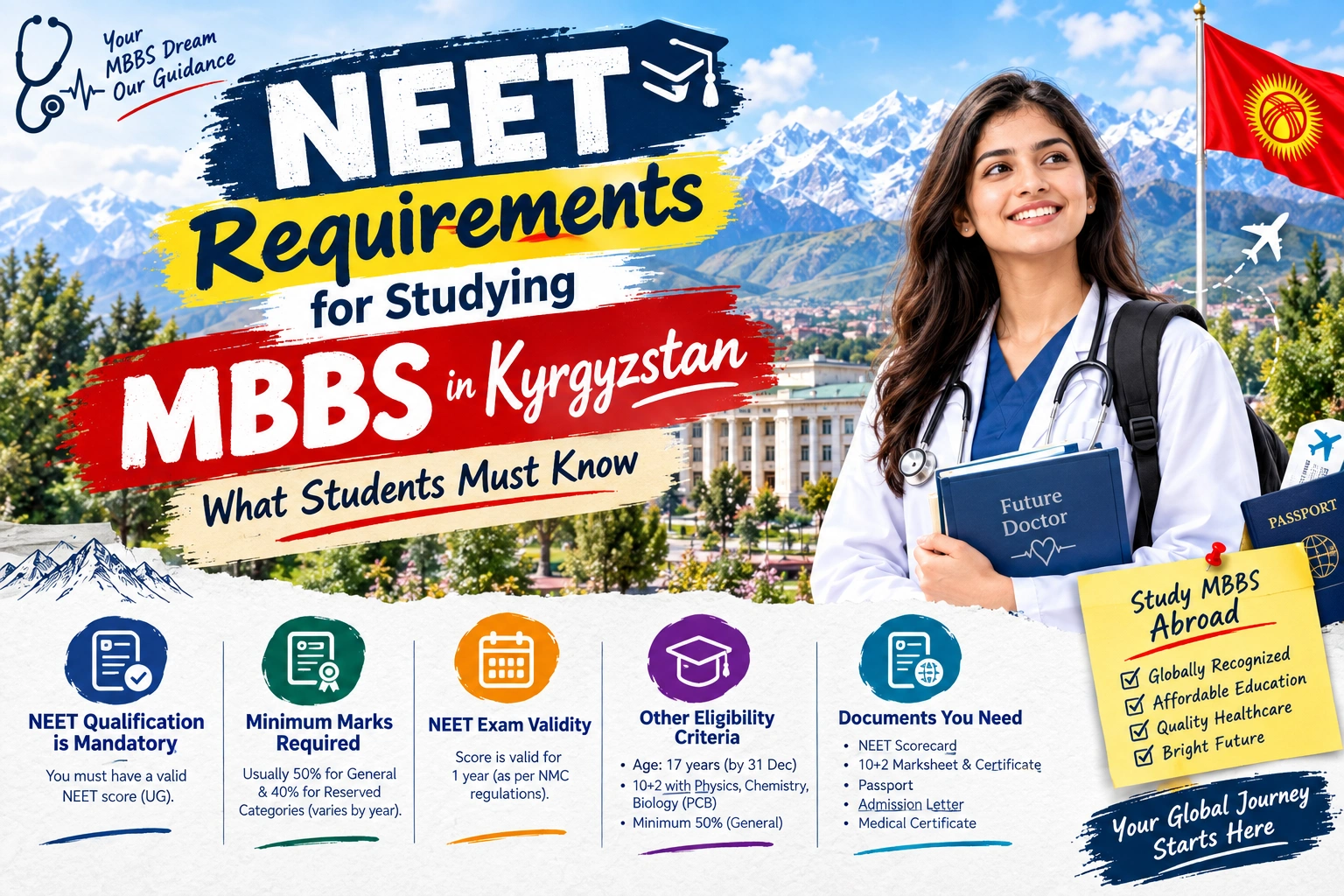
Why discuss NMC rules in a living-cost guide? Because an unsuitable medical programme is the costliest mistake a family can make. Indian students should check the university, programme duration, internship, teaching language, clinical training, and local licensing eligibility against regulations published by the National Medical Commission. A university’s appearance in the World Directory of Medical Schools provides directory information but doesn’t itself guarantee recognition, accreditation, or Indian registration eligibility. Indian applicants generally need to qualify NEET before beginning foreign medical education under the applicable rules. The category-wise cutoff changes annually, so use the official NEET website for the current result and score requirements. Don’t pay six years of expenses for a course you didn’t verify properly. Sounds obvious. Still happens.
Three Realistic Monthly Budgets
A student’s lifestyle makes the clearest difference.
Student type | Approximate monthly spending |
Hostel-based, self-cooking, public transport | USD 180–280 |
Hostel plus Indian mess and occasional taxi | USD 280–450 |
Private apartment, regular delivery and taxis | USD 500–900+ |
These ranges exclude tuition and major annual expenses. Bishkek may sit toward the higher end, while Osh or smaller cities may be less expensive. Students planning MBBS in Kyrgyzstan should choose a monthly target and track actual spending for the first three months. The budget can then be adjusted using real numbers rather than guesses.
How Students Can Save Money Sensibly
Saving money shouldn’t damage health or academics. Skipping meals and walking alone late at night to avoid a taxi are not clever budgeting.
Better options include:
Use a university hostel during the first year.
Share groceries and cooking duties.
Buy local seasonal food.
Use public transport.
Book flights early.
Use the university library.
Track spending every week.
Limit delivery orders.
Keep emergency money separate.
Pay official charges only after receiving an invoice.
A simple spreadsheet or budgeting app is enough. You don’t need a financial consultant to discover that ordering coffee daily adds up.
Frequently Asked Questions
How much does an MBBS student need each month?
A hostel-based student may need around USD 180–350 for ordinary living expenses. Private accommodation, frequent taxis, and restaurant meals can increase the amount substantially.
Is Bishkek more expensive than Osh?
Bishkek generally has higher rent and more spending options. Osh may be cheaper, though the actual difference depends on hostel availability and lifestyle.
Is Indian food expensive?
An economical Indian mess may cost around USD 100–220 per month. Cooking with roommates is usually cheaper, especially if students buy local ingredients.
Is hostel accommodation included in tuition?
Usually not. Tuition, hostel, mess, insurance, visa, and registration are commonly charged separately unless an official package clearly says otherwise.
Can students work part-time to cover living costs?
Study status doesn’t automatically provide unrestricted employment rights, and medical schedules are demanding. Students shouldn’t base their financial plan on part-time work.
How much emergency money should a student keep?
A reserve covering two or three months of ordinary expenses is sensible. Keep it separate from the normal spending account and use it only for real emergencies.
Conclusion
The best student budget isn’t clever. It is predictable. Pay hostel fees officially, cook regularly, use public transport, limit unnecessary subscriptions, and keep a reserve for medical or travel problems. Track spending before it becomes a crisis. Families considering MBBS in Kyrgyzstan should prepare separate calculations for tuition, monthly living, annual travel, visa costs, insurance, and licensing-exam preparation. A realistic budget won’t remove every surprise. It will make sure a late-night food order doesn’t somehow become the reason the monthly account is empty.