Introduction
Over the past decade, market demand for global international medical education has risen sharply. Among all regions, the growth in the number of Indian students applying to study medicine overseas is particularly prominent. Public medical colleges in India have extremely limited enrollment quotas, which are completely unable to meet the country’s huge demand for medical training. At the same time, the cost of private medical education in India is so high that the vast majority of families cannot afford it. This situation drives thousands of Indian students to set their sights on overseas medical programs every year, and the all-English-taught MBBS in Kyrgyzstan programs are exactly one of the most popular choices among these Indian students.
Core Advantages of English-Medium MBBS Programs in Kyrgyzstan
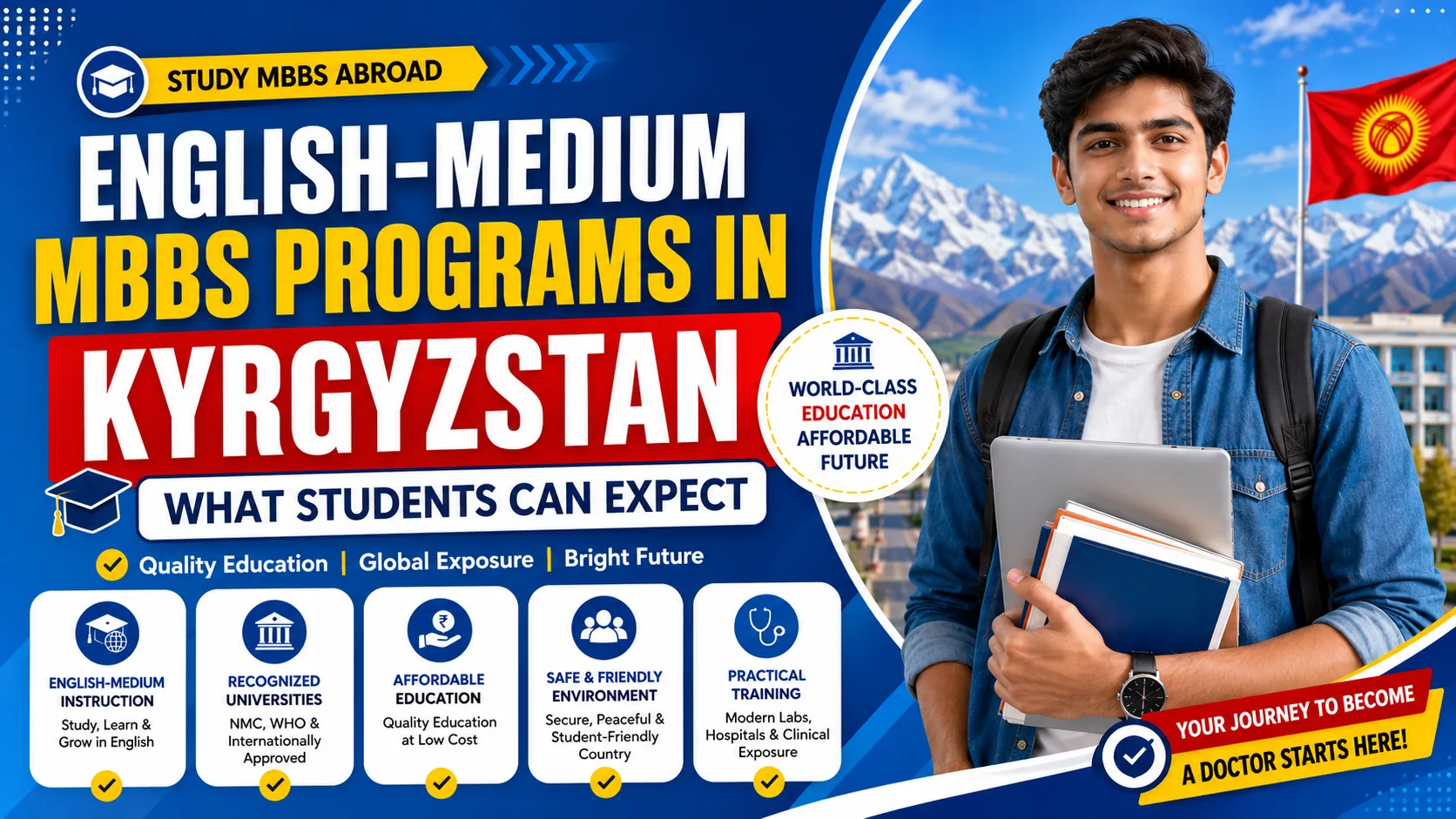
The core advantages of these programs perfectly align with the key pain points of Indian applicants:
Affordable tuition fees fully resolve the problem of prohibitively high medical education costs in India.
All partner institutions hold authoritative international medical accreditations, which meet students’ core demand for widely recognized academic credentials.
Campuses are equipped with modern, comprehensive hardware and facilities.
The all-English instruction system fits well with Indian students’ language habits, with no obvious academic transition barriers.
However, when researching these programs, most Indian students encounter a series of common high-frequency questions, including whether teaching quality meets required standards, whether the practical training system is complete, whether there are sufficient clinical resources, whether there are any additional language requirements, whether their degree can successfully obtain accreditation, specific tuition-related concerns, and their future career prospects after graduation.
English Teaching System and Academic Structure
This article outlines the core details of Kyrgyzstan’s MBBS study abroad program launched for international students, for the benefit of prospective Indian students planning to apply for undergraduate medical degrees.
Complete English-Medium Learning System
The program provides a full-process English-medium teaching system for all international students, covering all six core teaching links:
Medical lectures
Experimental guidance
Supporting teaching materials
Clinical case discussions
All types of exams
Mentorship
All official medical schools in Kyrgyzstan have set up dedicated international student departments to support international students with their applications, enrollment, and all on-campus needs.
Academic Training and Clinical Stages
The entire training process is divided into two core stages: pre-clinical and clinical.
The pre-clinical stage mainly covers foundational medical subjects including anatomy, physiology, and biochemistry, while the clinical stage focuses on core clinical subjects such as:
Internal medicine
Surgery
Obstetrics and gynecology
Pediatrics
Global undergraduate medical education universally incorporates three core modules:
Basic medical theory
Core clinical medicine
General public health literacy
The English-medium MBBS (Bachelor of Medicine, Bachelor of Surgery) program offered in Kyrgyzstan for international students likewise adheres to this general framework to build a complete training system.
Clinical Training Opportunities and Student Development
The program’s learning environment is shaped by its diverse, international student body, and it adopts interactive teaching methods for the full duration of study, effectively helping international students improve their cross-team collaboration skills and clinical reasoning proficiency.
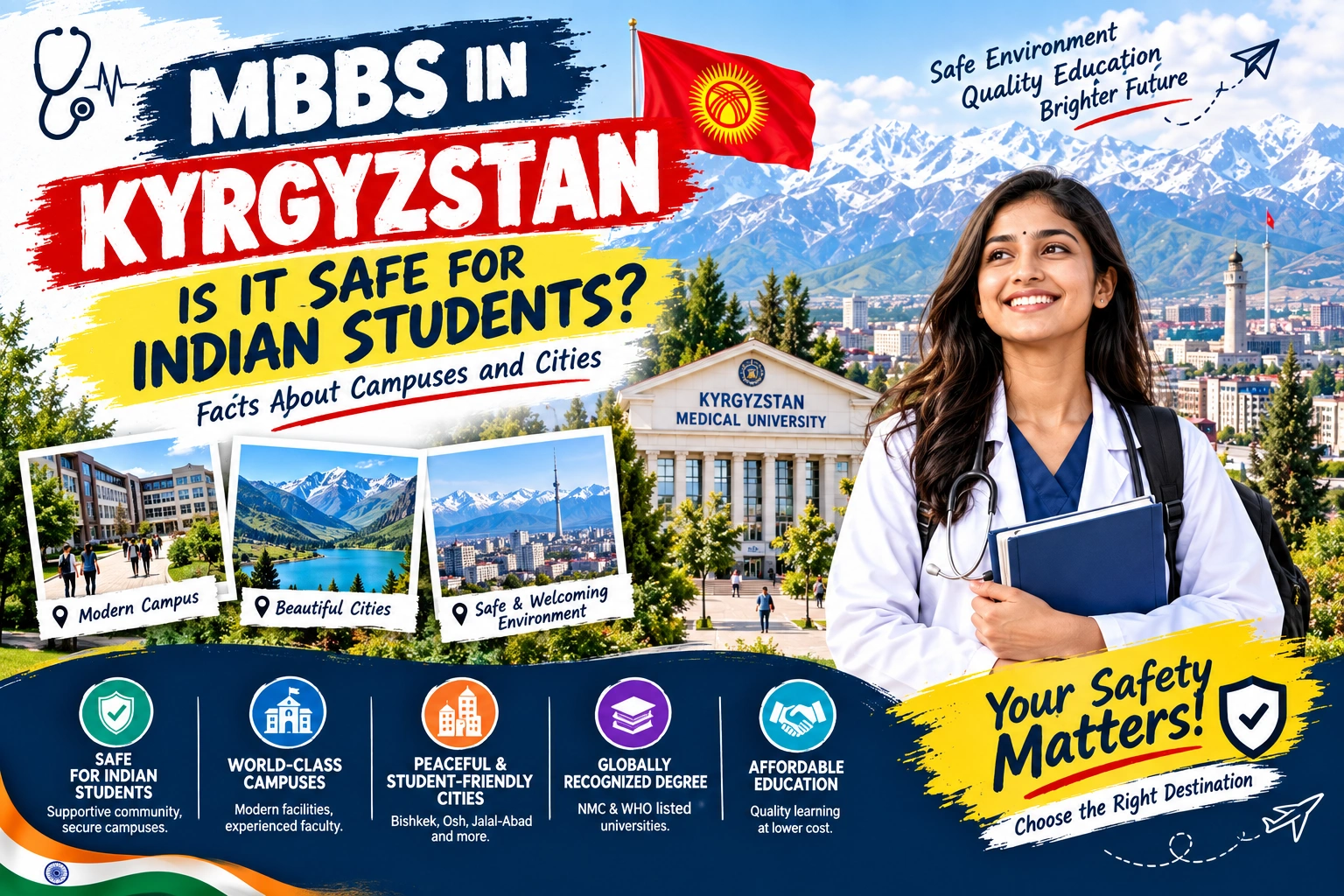
To address the most common concern among students planning to study medicine abroad—insufficient access to clinical practice opportunities—accredited medical schools in Kyrgyzstan that are open to Indian international students provide abundant clinical resources covering six categories, including hospital visits and bedside teaching.
Prospective students must prioritize institutions that hold full clinical teaching qualifications when selecting a school.
The program also directly confronts the barriers that local language use may create for clinical practice, and its partner institutions offer three categories of targeted support measures to resolve these challenges.
MBBS Fees and Overall Cost Planning in Kyrgyzstan
The details related to program costs are among the most frequently searched topics among prospective international students.
The core competitive strength of Kyrgyzstan’s medical education is its strong affordability, but students should never choose a school based solely on tuition fees.
Applicants must conduct a comprehensive assessment of a program’s overall educational value and prioritize:
Educational quality
Clinical training
Qualification accreditation
The total cost of an MBBS program, in addition to tuition, covers:
Accommodation fees
Registration fees
Visa fees
Textbook fees
Medical insurance fees
Internship consumable fees
Miscellaneous fees
Students planning for MBBS in Kyrgyzstan fees for Indian students must verify the complete cost structure before submitting their applications and make adequate financial plans for the entire 6-year program.
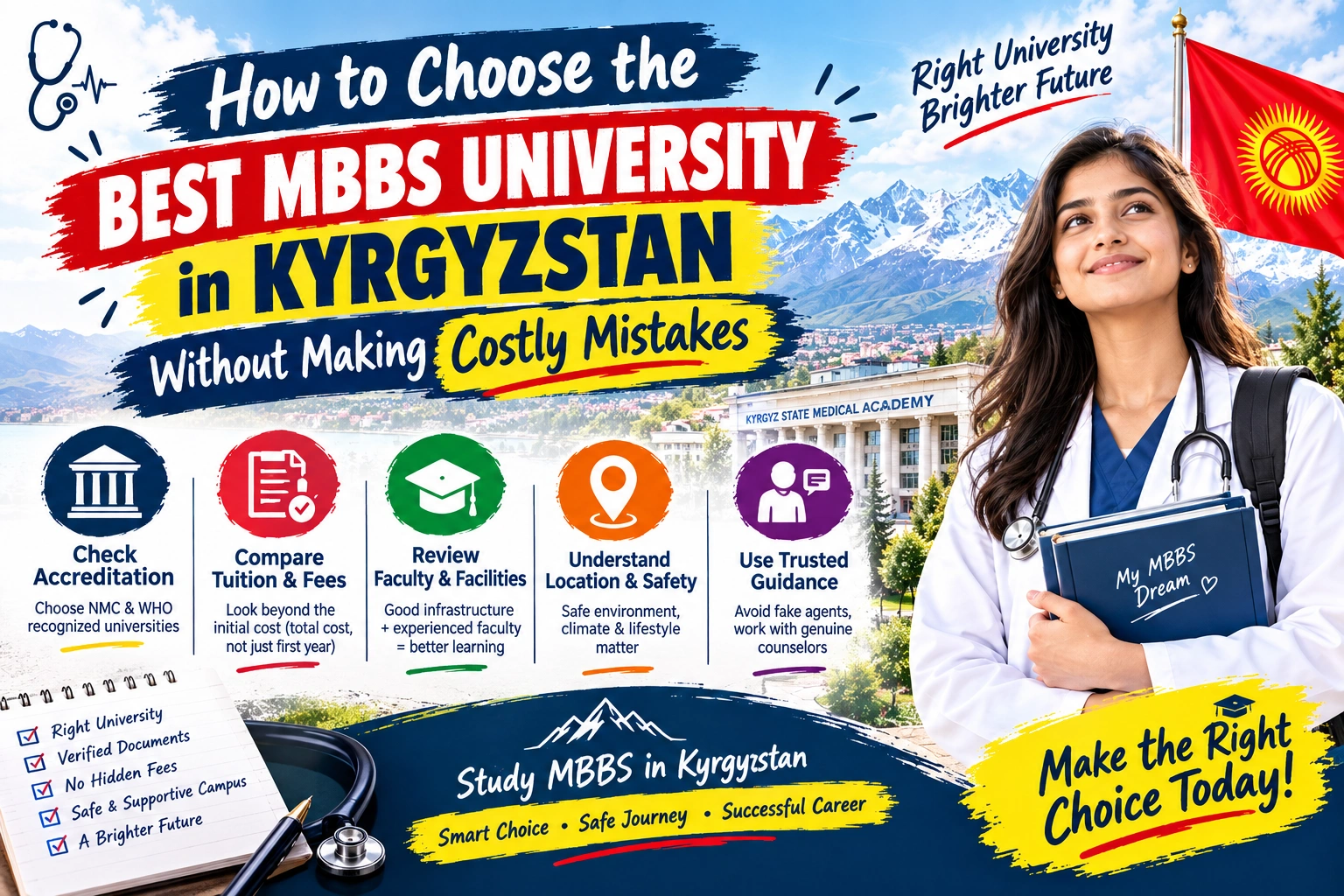
Choosing the Best MBBS Colleges in Kyrgyzstan for Indian Students
Currently, the schools frequently applied to by international students include the International School of Medicine Kyrgyzstan and JAIU Kyrgyzstan.
When choosing a school, applicants must evaluate it against six objective dimensions:
Qualification compliance
Scale of clinical resources
Support services adapted for Indian students
Licensing exam pass rates
Faculty-student ratio
Fee transparency
Applicants should not rely solely on promotional materials, as school choice directly impacts a student’s learning experience and career development.
NMC, NEET, WDOMS, and WHO Recognition Requirements
Before applying, applicants must also verify four core qualifications one by one:
Compliance with the requirements of India’s National Medical Commission (NMC)
Passing the NEET eligibility exam
Inclusion in the World Directory of Medical Schools (WDOMS)
Checking recognition and global health information through the World Health Organization (WHO)
All application requirements must be checked and confirmed well in advance.
Career Opportunities After MBBS from Kyrgyzstan
After graduation, students can choose from five career paths:
Practicing medicine in India
Practicing medicine in Kyrgyzstan
Pursuing further study in a third country
Joining an international health organization
Working in cross-border medical consulting
The core of career success depends on the accumulation of academic and practical skills gained during one’s studies.
Many international students who pursue medical studies in Kyrgyzstan are also concerned about Kyrgyzstan doctor salary. While salary is undoubtedly a legitimate practical need, the long-term success of a medical career fundamentally depends on the solid accumulation of clinical competence and professional practice qualifications.
Personal Growth and Final Thoughts
Beyond academic benefits, studying medicine abroad also brings students five personal growth advantages:
Independence
Adaptability
Cultural awareness
Cross-cultural communication
Global perspective
Feedback from past graduates shows that these qualities can support them throughout their entire medical careers.
This original summary centered on the context of international students pursuing MBBS degrees in Kyrgyzstan points out that Kyrgyzstan’s English-taught MBBS programs are the core driver of the rising popularity of undergraduate medical study in the country among overseas students.
International students applying to these programs, especially Indian students, must avoid the common pitfall of only comparing tuition fees. They need to verify the length of the institutions’ academic programs, clinical training opportunities, and compliance with requirements set by authoritative medical regulatory bodies.
With full preparation, students choosing to study MBBS in Kyrgyzstan can build a solid foundation for their future medical career.