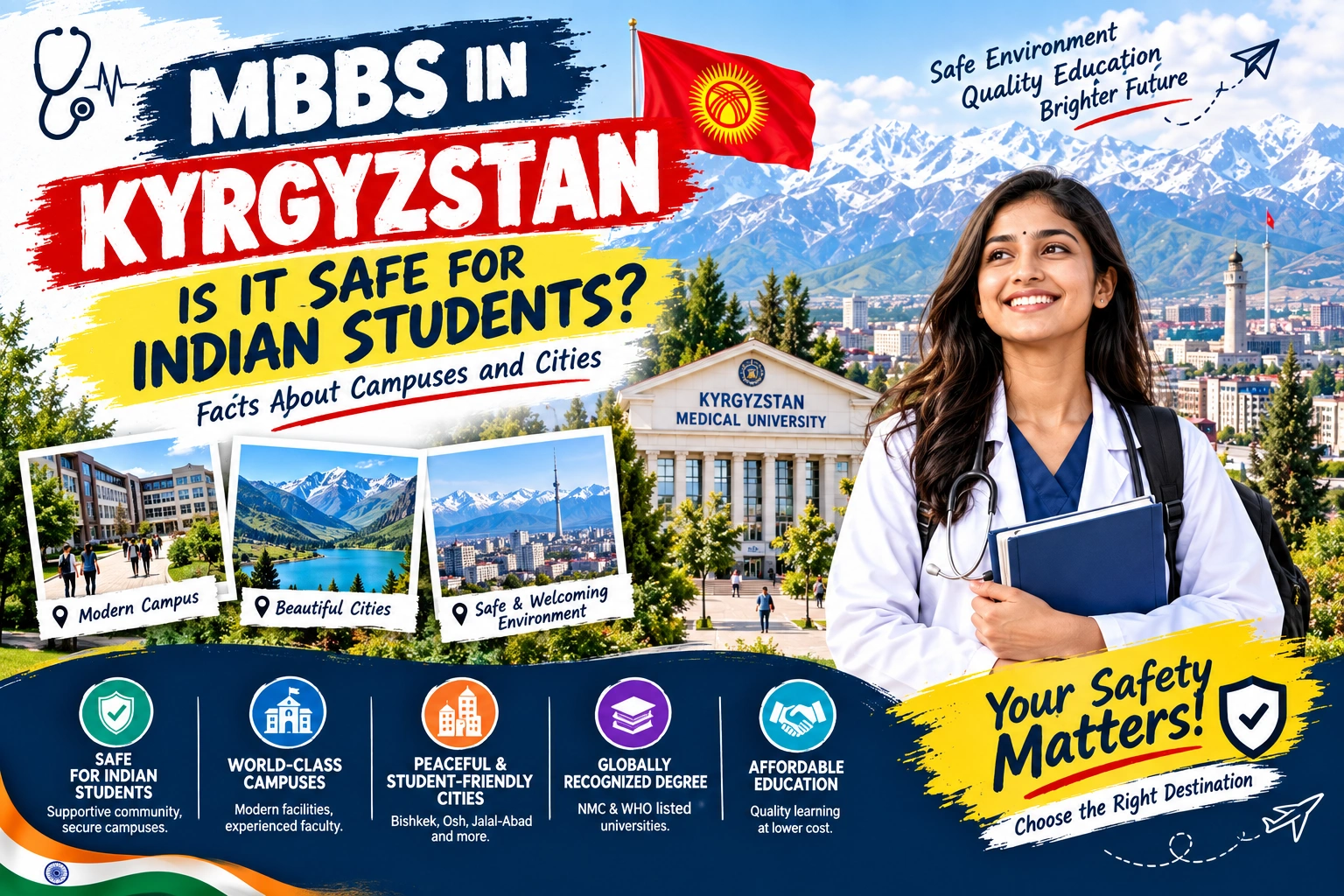
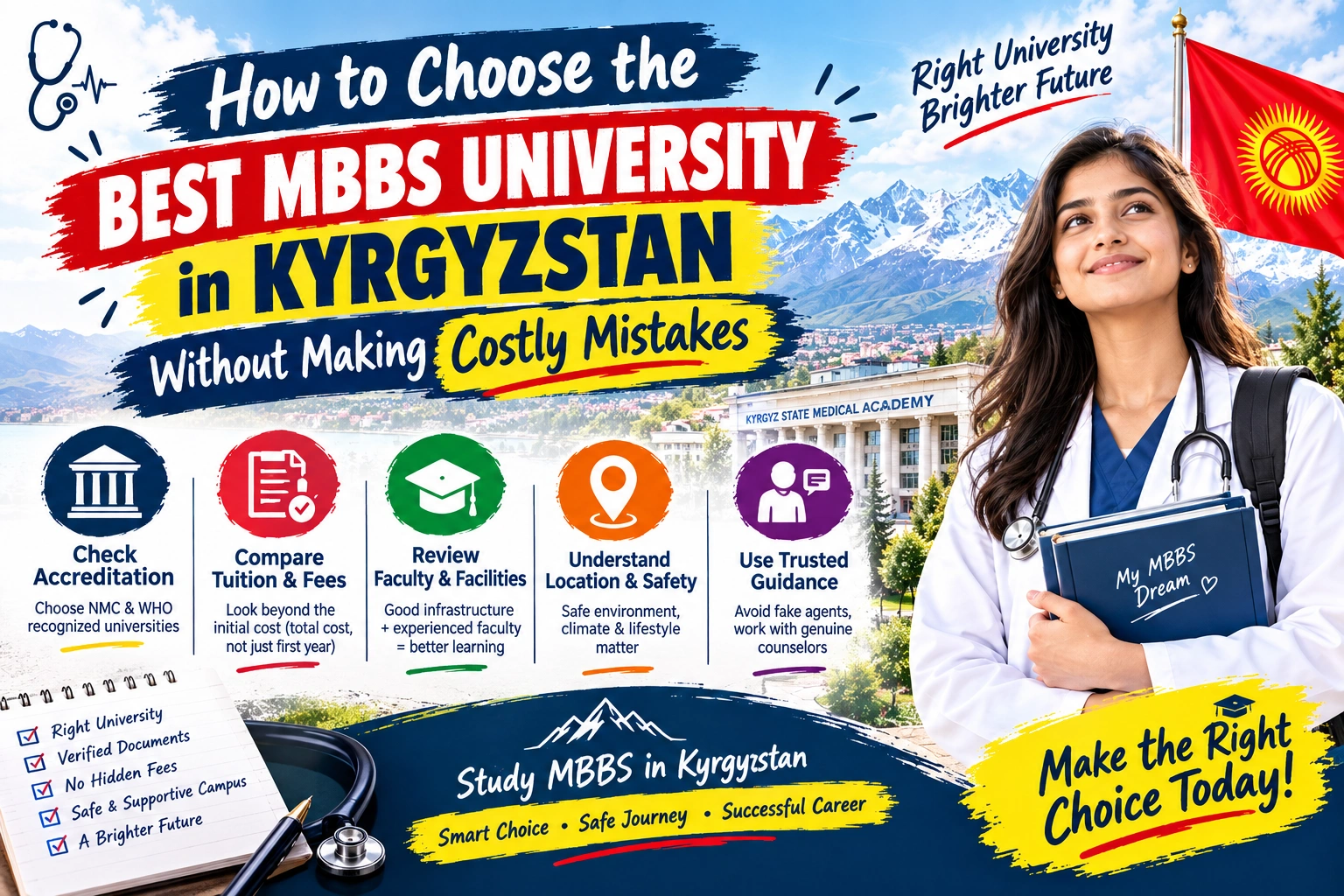
A counsellor opens a spreadsheet and points to the cheapest university. Another shows a campus video and recommends the most expensive one. A third says every listed college is “equally recognised.” Now the family has three answers and no real clarity. Choosing MBBS in Kyrgyzstan is less about finding one universally “best” university and more about finding a programme that meets your regulatory, academic, clinical, and financial needs. The wrong choice may appear cheap during admission but become costly through additional fees, weak hospital training, an unsuitable internship, or future registration problems. First-year tuition matters. The sixth-year outcome matters more.
Check the Complete Course Duration First
What exactly does the university mean by a five-year or six-year medical programme? Ask before discussing hostels, airport pickup, or Indian food. Course descriptions in Kyrgyzstan can vary. You may see programmes marketed as five years, five years plus internship, or six years. Indian students must obtain the official academic regulation showing the number of teaching months, semesters, subjects, clinical rotations, and internship. The National Medical Commission publishes regulations and clarifications for foreign medical graduates. Students need to examine conditions involving academic duration, required subjects, English-medium teaching, clinical training, internship, and eligibility to obtain a medical licence in the country where the qualification is awarded.
Ask the university in writing:
What is the exact degree title?
How many months of academic study are included?
Is the internship included in the stated duration?
Where is the internship completed?
Does the graduate become eligible for local registration?
Will the entire programme be completed in Kyrgyzstan?
Does any stage require transfer to another institution?
If the representative says the internship will be “arranged later,” don’t move forward until the arrangement appears in an official document.
Don’t Treat “NMC Approved” as the Final Answer
Here is one of the costliest misunderstandings. NMC doesn’t provide a simple permanent list that guarantees every programme at a foreign university for every Indian student. The student, admission, course duration, subjects, clinical training, internship, teaching language, and local licensing eligibility must satisfy the regulations applicable to that batch. A university’s legal status in Kyrgyzstan is important, but it doesn’t automatically settle Indian registration eligibility. Before choosing MBBS in Kyrgyzstan, compare the complete university programme with the current NMC framework. Save copies of the curriculum, accreditation records, internship rules, and admission documents. Honestly, “approved everywhere” is usually a sales phrase. Medical regulation is more specific than that.
Understand What WDOMS and WHO Actually Mean
A medical school appearing in the World Directory of Medical Schools is a useful verification point. WDOMS states that inclusion doesn’t itself constitute recognition, accreditation, or endorsement. The World Health Organization works on international public health and doesn’t issue an individual college approval that automatically guarantees registration in India.
Students should make separate checks:
Is the university legally authorised in Kyrgyzstan?
Is its General Medicine programme accredited?
Does the medical school appear in WDOMS?
Can graduates pursue local medical registration?
Does the programme satisfy the current Indian conditions?
One logo can’t answer five questions. Keep them separate.
Compare Established Medical Universities
Several institutions attract Indian applicants, but they differ in ownership, location, tuition, batch size, and clinical setup.
Medical institution | City | Approximate annual tuition | What students should check |
Kyrgyz State Medical Academy | Bishkek | USD 4,000–5,500 | English programme, group size, internship |
Kyrgyz Russian Slavic University | Bishkek | USD 4,000–6,000 | Admission conditions and teaching language |
Osh State University | Osh | USD 3,500–5,000 | International batch size and clinical access |
International Higher School of Medicine | Bishkek area | USD 4,000–5,500 | Private structure, hospitals, local licensing |
Jalal-Abad-based state programme | Jalal-Abad | USD 3,000–4,500 | Exact awarding institution and rotations |
Other private medical institutions | Varies | USD 3,000–5,500 | Accreditation, graduate batches, and faculty |
These are broad planning ranges, not official quotations. Names, programme arrangements, and fees can change. Obtain the current invoice and curriculum directly from each shortlisted university. An older university may have a stronger hospital network. A newer private institution may offer better-maintained classrooms or smaller groups. Neither fact alone settles the choice.
Look at Batch Size, Not Total University Enrolment
Large Indian communities can make life easier. Students find familiar food, regional friends, FMGE study groups, and seniors who understand the registration process. Large international intakes can also produce crowded classrooms and clinical postings. A university may advertise 5,000 students overall without stating that 700 international learners entered one medical intake.
Ask:
How many students enter the English-medium course annually?
How many attend one lecture?
How many share a practical group?
How many students stand around one patient?
Are clinical groups separated by language?
Does each group have a permanent mentor?
A batch of 300 can work if divided properly. A batch of 100 can feel overcrowded if everyone attends the same clinical unit. Numbers need context.
Verify English-Medium Teaching Across All Years
“English-medium” may describe lectures but not every part of medical training. Students should check the language used in practical examinations, oral viva sessions, case discussions, records, and internship assessments. Patients commonly speak Kyrgyz or Russian. Local-language learning therefore becomes necessary during MBBS in Kyrgyzstan, particularly before hospital postings. Ask whether Russian or Kyrgyz classes are included and whether they cover medical vocabulary. Students should learn to ask about pain, fever, breathing difficulty, allergies, past treatment, pregnancy, and medicine use. No need to become a language professor. But standing silently while someone else translates every history isn’t proper clinical learning.
Investigate the Teaching Hospitals
A hospital partnership printed on a website doesn’t reveal how often students actually attend. Request the names of affiliated hospitals and a year-wise rotation schedule. Ask when bedside teaching begins, whether international students can examine patients, and how clinical attendance is recorded.
Speak with fourth-, fifth-, or final-year students. Ask direct questions:
Are hospital postings regular?
Do teachers attend on time?
Are cases discussed in English?
Can students take patient histories?
How large are the clinical groups?
Do students maintain logbooks?
Which departments offer weak exposure?
Are practical procedures demonstrated?
That last negative question—“Which department is weak?”—often produces a more honest answer than “Is clinical exposure good?”
Examine Faculty Stability and Teaching Quality
I’ve noticed that university comparisons often mention buildings but barely discuss teachers. Strange, considering students spend years learning from them. Check whether the international programme uses full-time university faculty, visiting instructors, or a mixture. Ask students whether lectures are understandable, whether professors answer questions, and whether practical classes occur as scheduled.
A dependable academic system generally has:
Regular attendance
Continuous assessments
Oral and practical examinations
Clear promotion rules
Published academic calendars
Remedial classes or repeat-exam procedures
Accessible departmental faculty
Proper marksheets and transcripts
An easy examination system may sound attractive during admission. Later, it can leave students poorly prepared for licensing tests.
Calculate the Full Programme Cost
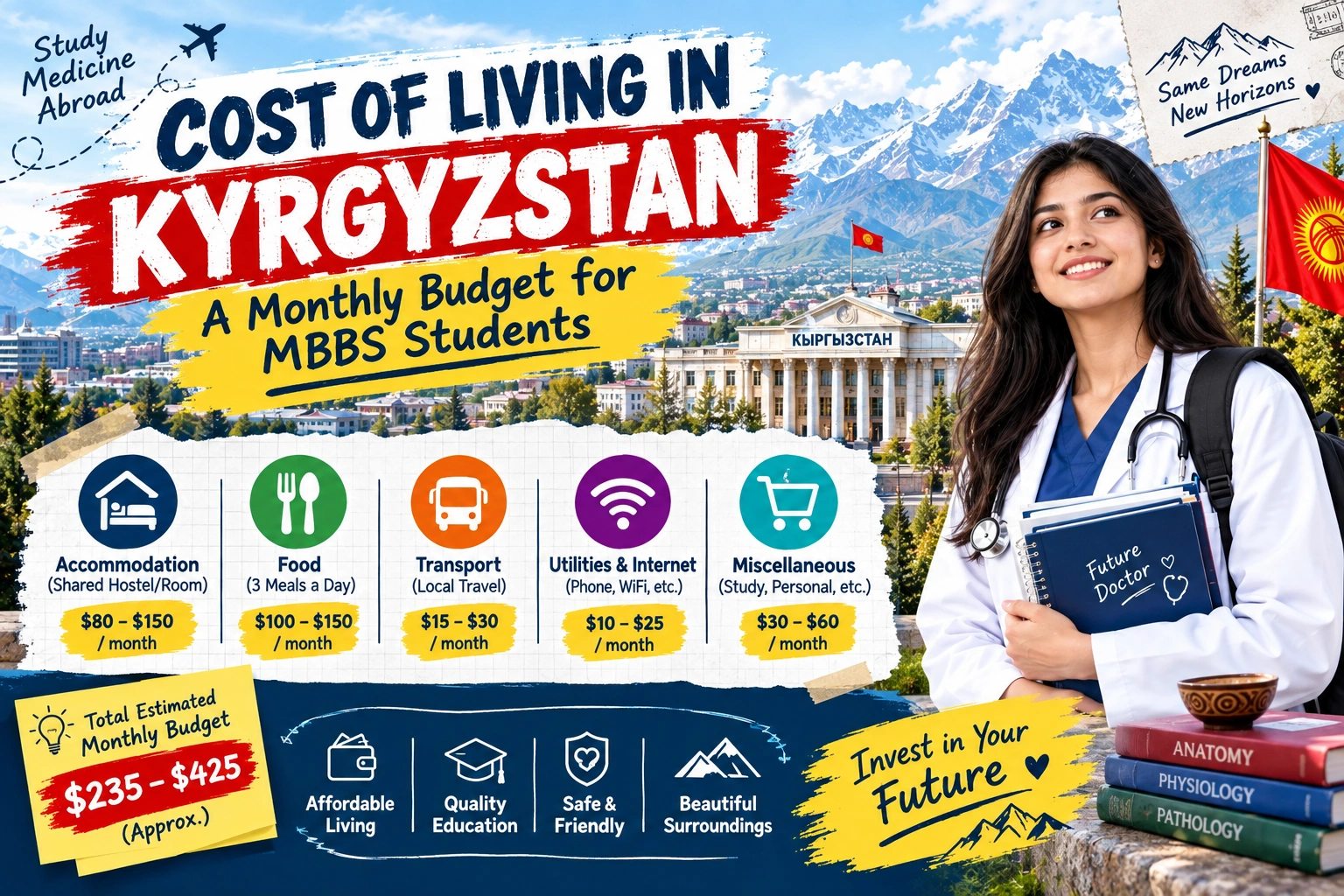
Fees are rarely as simple as tuition multiplied by six. Annual tuition may broadly range from USD 3,000 to USD 5,500 or more. Hostel charges can add approximately USD 500–1,200 per year, while ordinary food and living costs may fall around USD 130–300 per month.
Cost category | Approximate range |
Annual tuition | USD 3,000–5,500 |
Hostel per year | USD 500–1,200 |
Food and living per month | USD 130–300 |
Insurance and medical tests | Varies |
Visa and annual extension | Varies |
Flights | Depends on route and season |
Academic and personal setup | USD 200–500 initially |
A complete family budget may reach approximately ₹20–32 lakh or more. Exchange rates, private accommodation, Indian mess, flights, and university charges can raise the total. Before selecting MBBS in Kyrgyzstan, demand an itemised schedule covering application, invitation, registration, visa extension, insurance, hostel deposit, laboratory charges, examinations, mess, and consultancy fees. Cheap tuition. Expensive surprises. Avoid that combination.
Watch for First-Year Package Tricks
A university package may appear unusually low because the first-year quotation excludes later tuition, includes only a few months of hostel, or hides compulsory service charges.
Compare every programme on the same six-year basis:
Total tuition
Hostel for the full course
Food or mess
Annual visa extension
Registration and insurance
Flights
Clinical or laboratory fees
Internship-related costs
FMGE preparation
Emergency reserve
Ask whether tuition can increase. Ask what happens if the student repeats a subject. Ask whether the hostel is guaranteed after the first year. Honestly, families sometimes negotiate a USD 100 discount and ignore a USD 3,000 hidden-cost difference.
Check Hostel Location and Campus Safety
A secure hostel close to the university may be worth paying slightly more for. Examine controlled entry, guards, CCTV in common areas, wardens, heating, kitchen access, emergency exits, and transport to teaching hospitals. Bishkek offers more universities, hospitals, restaurants, and student services, but living costs may be higher. Osh and Jalal-Abad can be less expensive, though students should compare transport, flight connections, and access to Indian food. Ask current female students separately about hostel management, late clinical postings, complaint procedures, and transport. General assurances may not cover their daily experience. Avoid choosing private accommodation before understanding local registration rules and neighbourhoods. First year? Hostels are usually simpler.
NEET Eligibility Comes Before Admission
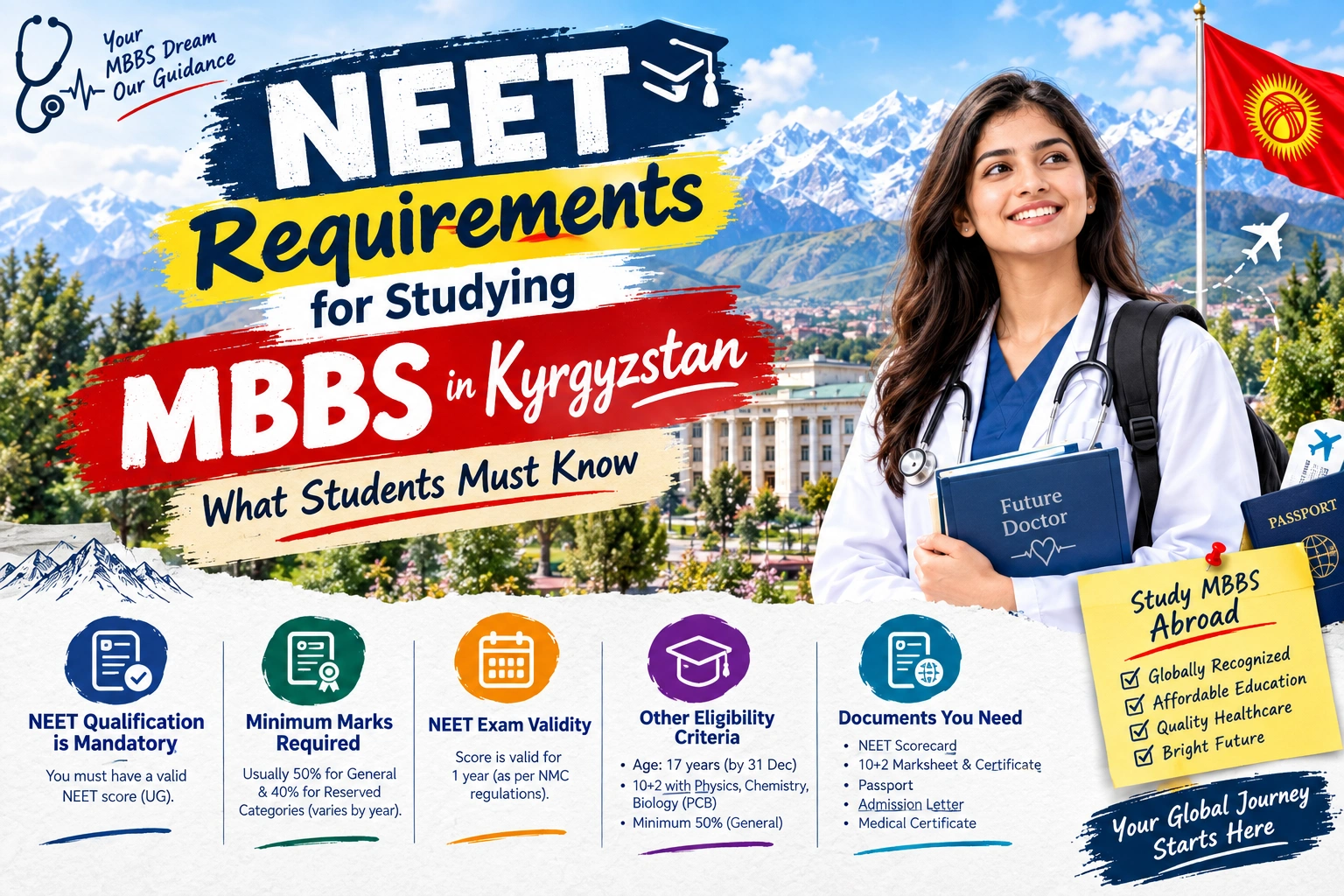
Indian applicants planning foreign medical education and later registration in India generally need to qualify NEET-UG under the applicable framework. For NEET-UG 2026, the reported minimum qualifying score was 213 for General and EWS applicants and 177 for OBC, SC, and ST candidates. PwBD students should check their category-specific result range from official records. Use the NEET portal to confirm the result and qualifying status. Appearing in NEET isn’t the same as qualifying. Students commonly need Class 12 Physics, Chemistry, Biology or Biotechnology, and English. Under the usual framework, General-category applicants require 50% PCB, while eligible reserved-category candidates generally need 40%, subject to current regulations. Don’t make a non-refundable payment until academic and NEET eligibility are clear.
Think About FMGE or NExT Early
The best university for an Indian student should provide enough academic and clinical grounding for the Indian licensing pathway. It doesn’t need to be a coaching centre, but weak fundamentals will make later preparation much harder. FMGE remains relevant for eligible foreign medical graduates in 2026. NExT regulations have been notified, though implementation developments should be followed through official NMC notices.
Check whether students have access to:
Standard English textbooks
Medical journals and digital libraries
Clinical case discussions
Skills laboratories
Image-based teaching
FMGE study groups
Quiet study facilities
Proper academic and clinical records
Treat claimed FMGE pass percentages carefully. Ask for the examination session, number of candidates, and original source. A 100% result from two candidates is technically impressive and practically unhelpful.
Study the Admission and Refund Process
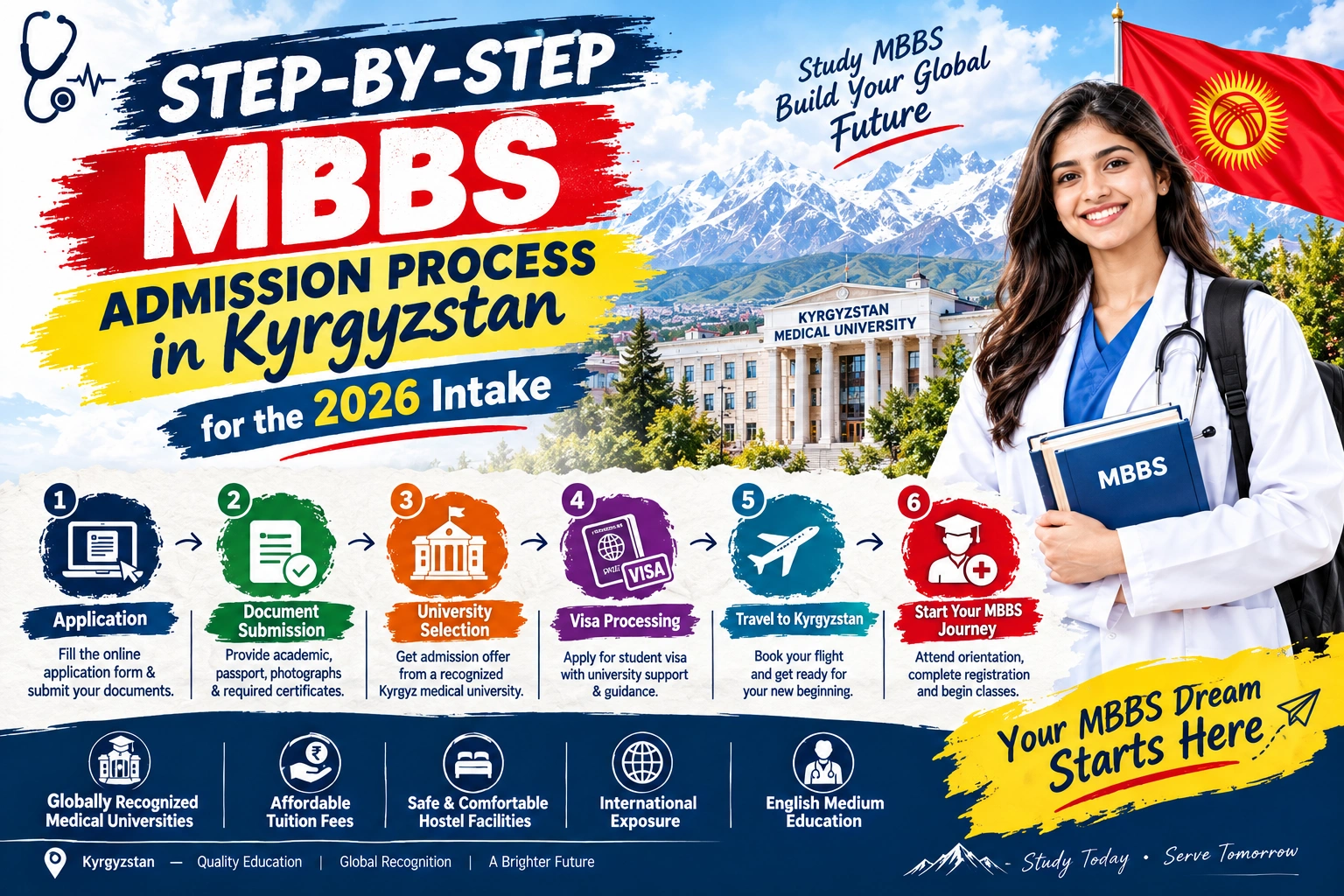
The normal admission route includes document review, interview where applicable, offer letter, initial payment, invitation, student visa, travel, and post-arrival registration. Confirm the offer using an official university email address. The letter should identify the programme, duration, tuition, teaching language, reporting date, and refund terms. Pay only into an official university account or a properly verified authorised channel. Keep invoices and receipts.
Be cautious if someone says:
The full payment must be made today.
A personal account is “easier.”
Refund terms are verbal.
The hospital list will be provided later.
Course duration doesn’t need checking.
Indian registration is guaranteed.
Urgency protects the seller. Verification protects the student.
Red Flags That Should End the Search
Some claims deserve an immediate pause:
“No NEET is needed.”
“NMC has approved every course.”
“WDOMS guarantees Indian registration.”
“Students don’t need Russian or Kyrgyz.”
“Internship can be completed anywhere.”
“Clinical postings begin after graduation.”
“All six years cost exactly the same” without written proof.
“Transfers won’t affect eligibility.”
“Everyone clears FMGE.”
A trustworthy university should be able to answer difficult questions. If the answers keep changing, the decision should too.
A Simple University Scoring Method
Give each shortlisted programme a score from one to five.
Factor | Suggested priority |
Course and internship compliance | Very high |
Local licensing eligibility | Very high |
Clinical exposure | Very high |
Accreditation and legal status | Very high |
English teaching | High |
Faculty and batch size | High |
Six-year cost | High |
Hostel and safety | Medium |
Indian food and community | Medium |
Promotional ranking | Low |
Don’t allow a beautiful hostel to cancel out an unclear internship. Priorities matter.
Frequently Asked Questions
Which medical university is best in Kyrgyzstan?
There is no universal winner. Kyrgyz State Medical Academy, Kyrgyz Russian Slavic University, Osh State University, and other institutions differ in fees, hospitals, batch sizes, and programme structures.
Is the cheapest university a good choice?
It can be, but only if the course, internship, clinical training, accreditation, and local licensing eligibility meet the required conditions. Low fees alone aren’t enough.
Is NEET compulsory for Indian students?
Indian students planning to pursue medical registration in India generally need to qualify NEET under the applicable foreign medical education rules.
Does WDOMS listing mean the degree is valid in India?
No. WDOMS listing provides directory information but doesn’t itself establish NMC compliance, accreditation, or Indian registration eligibility.
What is the approximate total course cost?
A broad estimate may range from ₹20 lakh to ₹32 lakh or more, depending on tuition, hostel, food, travel, exchange rates, and additional charges.
Can students change universities later?
Transfers may affect credits, training location, course duration, internship, and NMC eligibility. Don’t transfer without written confirmation from the universities and relevant regulators.
Conclusion
The costliest mistake isn’t paying USD 500 more in tuition. It is spending several years at a programme that doesn’t provide the required academic structure, internship, clinical access, or licensing eligibility. Compare documents. Talk to senior students. Calculate the full cost. Inspect the hospital and hostel arrangements. Then decide. Before finalising MBBS in Kyrgyzstan, shortlist at least three universities and score them against the same academic, regulatory, and financial criteria. The most advertised university won’t always win. The one with clear answers usually should.