Introduction
As the interconnectivity of global healthcare services continues to grow, cross-border medical practice has become an increasingly common career choice among medical students worldwide. The steady improvement of cross-border mobility of national medical education resources and mutual qualification recognition systems has removed a growing number of institutional barriers for medical students who aim to complete their medical training overseas and later practice in their home country or a third country.
Among many overseas study destinations for medical students, Kyrgyzstan in Central Asia has emerged as a fast-growing popular choice among Indian medical students in recent years, driven by its English-medium MBBS (Bachelor of Medicine and Bachelor of Surgery) programs. The number of Indian medical students enrolling in Kyrgyzstan each year maintains steady growth.
The core support for this trend is that Kyrgyzstan’s MBBS programs directly address the key pain points of Indian medical students seeking advanced overseas medical education: compared with the exorbitant tuition fees of top European and American medical schools, which often reach hundreds of thousands of US dollars, the total tuition for a full medical program in Kyrgyzstan is only around one-tenth of that amount.
All of Kyrgyzstan’s programs are accredited by the World Federation for Medical Education, and the academic credentials of their graduates can directly pass the practice qualification review by the National Medical Commission of India. Full English-medium instruction eliminates language barriers, and local medical schools also allocate sufficient public hospital clinical rotation resources for international students, ensuring medical students receive the hands-on training required to meet practice standards.
For the large number of Indian medical students who cannot pass the strict entrance screening of India’s domestic medical schools, this is a highly attractive, compliant pathway for further education.
Importance of Clinical Training During MBBS in Kyrgyzstan
This paper focuses on this rapidly expanding cross-border medical study-abroad phenomenon, sorts out the operational logic of Kyrgyzstan’s MBBS programs, international students’ in-study experience, and their subsequent career development paths in medical practice, clarifies the fundamental logic behind the rise of this niche Central Asian medical study destination, and provides a reference analytical framework for Indian students planning to study medicine overseas and researchers in related fields.
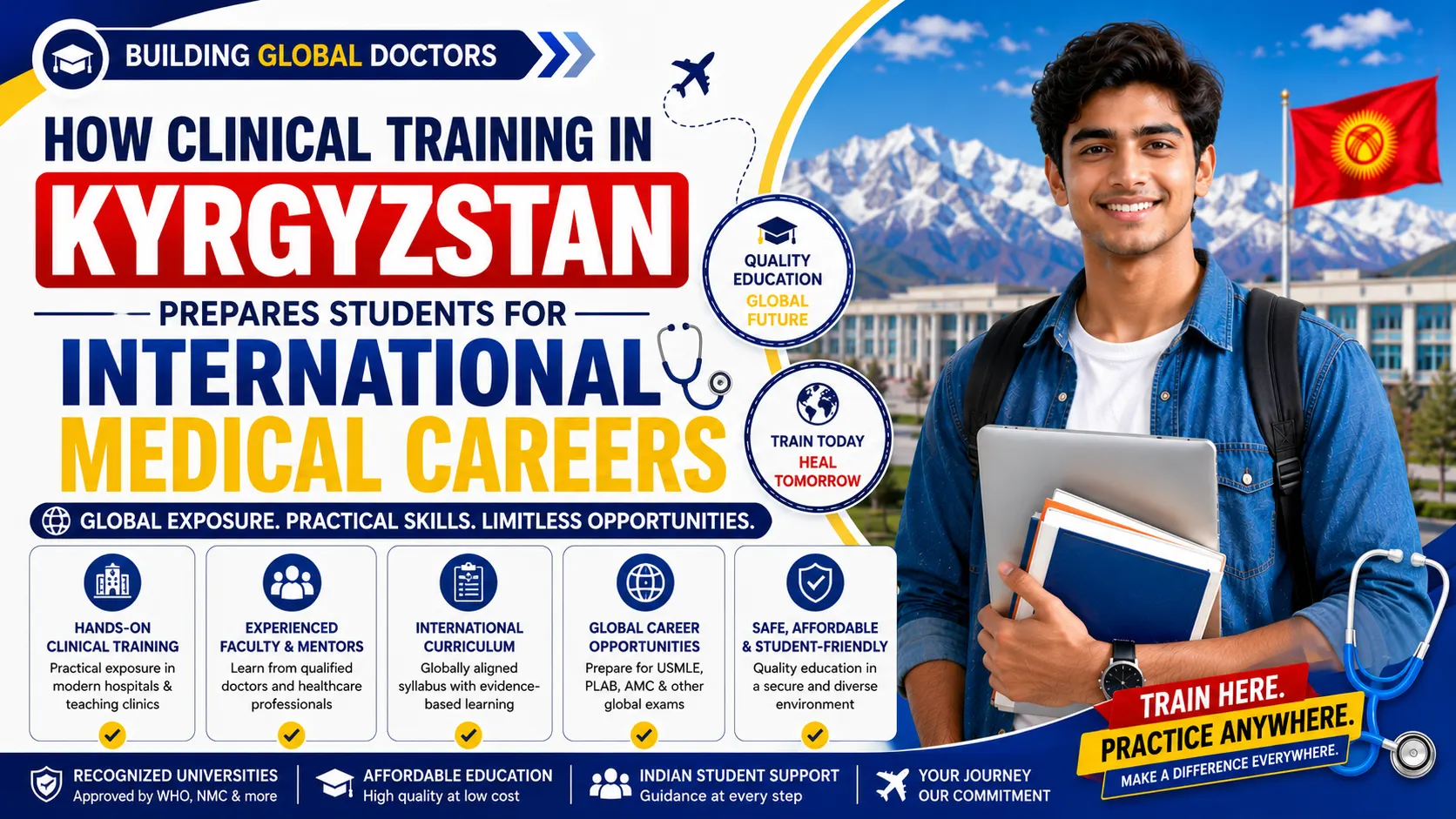
For all international students planning to pursue a medical degree overseas, clinical training is a core pillar of medical education, which brings seven indispensable key developmental gains for medical students:
Observing real clinical cases
Applying theoretical knowledge learned in classrooms
Building a framework for clinical reasoning
Accumulating experience in doctor-patient communication
Becoming familiar with standard medical protocols
Honing practical hands-on skills
Developing a sense of professional responsibility
None of these gains can be omitted. If medical students lack sufficient in-person clinical exposure during their studies, they will ultimately only be able to theorize on paper, mastering only written theoretical knowledge and unable to work effectively in real medical scenarios.
For our core service group—international students planning to pursue an MBBS in Kyrgyzstan, clinical training’s critical role in converting academic learning into practical skills is even more prominent.
Structure of Clinical Training in Kyrgyzstan MBBS Programs
We have also systematically sorted out the core information related to the frequently searched query “clinical training for MBBS in Kyrgyzstan”, which is detailed as follows:
The MBBS programs offered by major local medical schools are six-year programs with a clear training rhythm.
In the early stage, students focus on foundational medical courses such as anatomy and physiology to build a complete theoretical framework.
In the middle stage, they enter the clinical phase, formally interacting with patients and participating in hospital rotations.
In the final stage, under the specialized guidance of teaching staff at affiliated teaching hospitals, they accumulate the real-world medical experience required to practice professionally.
Core Benefits of Hospital Rotations and Clinical Exposure
The core advantage of clinical training in Kyrgyzstan is that students can access patient groups with diverse backgrounds, which helps them develop five core professional competencies including clinical observation and diagnostic skills, meeting the requirements for future careers in transnational healthcare.
Hospital rotations are the core of clinical education, and we have also clearly outlined the specific learning content for the four core rotation departments:
Internal medicine
Surgery
Pediatrics
Obstetrics and gynecology
to help prospective international students fully grasp the core value of the programs.
Six Major Clinical Competencies Developed During Training
This paper focuses on Indian students intending to pursue an MBBS degree in Kyrgyzstan, and systematically elaborates on six core competencies of the relevant program’s clinical training.
Emergency Care and Practical Response Skills
First, the program designs specialized emergency care training, with a focus on building students’ practical ability to respond rapidly to all types of critical and severe illnesses.
Sufficient first-line hands-on experience consolidates students’ career readiness, laying a solid foundation for their long-term professional growth.
Diagnostic Thinking and Clinical Decision-Making
Second is diagnostic thinking training. Unlike the traditional rote-learning-based theoretical study model, the program includes five core training components:
Symptom analysis
Interpretation of laboratory reports
Patient medical history assessment
Development of differential diagnoses
Formulation of treatment plans
This training helps students effectively improve patient outcomes, while building professional confidence in clinical diagnosis and treatment.
Communication and Professional Soft Skills
Third is soft skill development. Aligned with the internationally endorsed patient-centered healthcare model, the program offers five training modules:
Patient interviews
Medical history collection
Explanation of patients’ conditions
Communication with patients’ families
Teamwork
This support helps students deliver stronger professional performance and build stable trust between clinicians and patients.
Alignment with International Medical Standards
Fourth, the program aligns with six international standards:
Evidence-based medicine
Clinical competence
Ethical practice
Patient safety
Practical skills training
Continuous assessment
This alignment enables graduates to meet the requirements of medical licensing exams, postgraduate training, and diverse healthcare systems around the world, enhancing their employability and career mobility.
FMGE and NExT Examination Preparation
Fifth, the program provides dedicated support to prepare Indian students for the FMGE and NExT exams, which are required to practice medicine after returning to India.
Adapted to the exams’ trend of prioritizing practical skills over rote memorization, the training builds four key abilities among students:
Case resolution
Diagnostic interpretation
Clinical reasoning
Long-term knowledge retention
enabling students to succeed in both their academic coursework and professional licensing exams.
Important Medical Recognition and Eligibility Terms
Finally, the program organizes core credential-related terms that students commonly encounter, including WHO, NMC, NEET, and WDOMS.
It clarifies the core impact of these elements on students’ access to professional opportunities and medical practice qualifications, eliminating the study-abroad cohort’s concerns about regulatory compliance.
If you are an Indian student planning to pursue an undergraduate medical degree overseas, you must first clarify the core thresholds of the full application process before submitting your applications.
Key Eligibility Requirements for Indian Students
The first set of requirements relates to medical practice qualifications: compliance with the regulations of India’s National Medical Commission (NMC) is the foundational baseline.
You must pass the NEET exam, and your target institution must be included in the World Directory of Medical Schools (WDOMS).
These three conditions are mandatory prerequisites for applying for a medical license. The often-discussed WHO certification holds far less priority than these three, acting only as a routine reference point that does not directly affect medical practice applications.
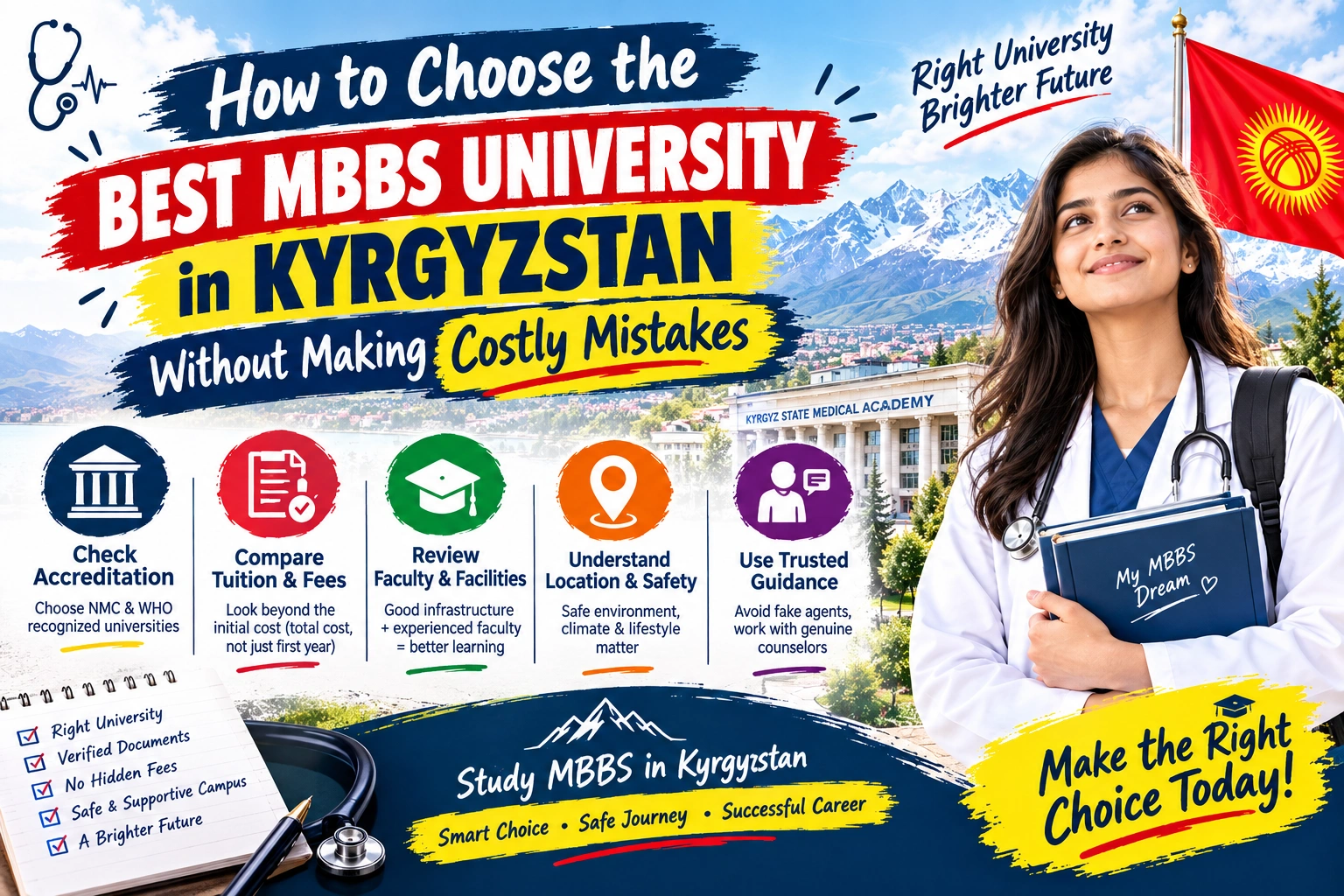
Choosing the Right Medical University in Kyrgyzstan
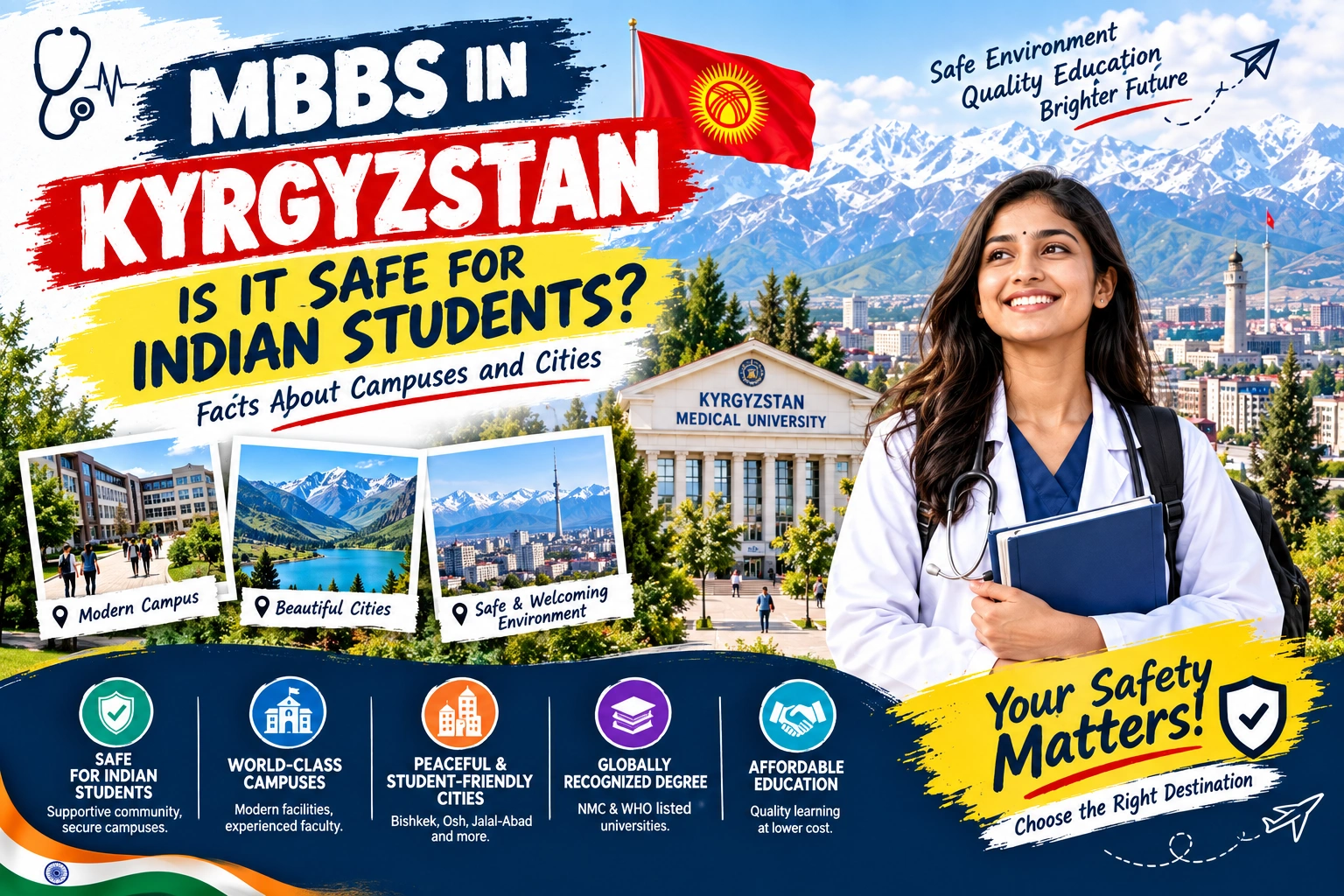
Among popular study-abroad destinations, higher education institutions in Kyrgyzstan are widely favored by Indian students.
The International School of Medicine Kyrgyzstan and JAIU Kyrgyzstan are well-known among the Indian student population.
When selecting a school, you must evaluate it across five dimensions:
Hospital partnership eligibility
Quality of clinical training
Faculty level
Opportunities for patient interaction
Opportunities for practical learning
An institution’s hard clinical infrastructure has a far greater impact on career development than rankings shaped by marketing packaging.
High-quality clinical training can help you build core skills including physical examination operations, clinical decision-making, communication within medical teams, and management of medical responsibilities.
It reduces the transition difficulties new doctors face when entering the profession, and meets the hiring needs of global medical employers.
Cost Considerations and Long-Term Career Investment
In terms of costs, you must verify one by one all 11 cost-related keywords that Indian students frequently search for.
Do not only focus on low prices; you should treat medical education as a long-term career investment.
A subsequent analysis will outline the global career pathways you can access after completing comprehensive clinical training.
Career Opportunities After Completing Medical Education
Graduates who major in clinical medicine can pursue 9 types of healthcare-related career tracks:
General practice
Specialized clinical care
Public health
Medical research
Senior health management
Maternal and child health
Emergency medicine
Telemedicine
Medical policy development
The clinical practice skills these graduates accumulate during their studies are the core foundation that supports the long-term development of all these diverse career paths.
As global healthcare systems continue to iterate and upgrade, the worldwide demand for clinicians with qualified professional practice competence has remained consistently strong.
Doctor Salary and Future Prospects in Kyrgyzstan
Many international students planning to pursue an overseas medical degree pay particular attention to core issues such as local doctors’ salary levels and career development prospects after studying medicine in Kyrgyzstan.
We have sorted out five core factors that influence local doctors’ salaries, and we explicitly clarify that the core driver of individual career growth is hard indicators such as professional competence, rather than the location of one’s undergraduate institution.
Conclusion
Kyrgyzstan’s MBBS program has a mature, comprehensive clinical training system. For Indian medical students studying in Kyrgyzstan, the clinical experience they gain during their studies not only meets India’s domestic professional practice compliance requirements, but also builds core competitiveness for their future global medical practice.
Leading local institutions such as the state-owned Kyrgyzstan National Medical University have operational advantages including sufficient clinical resources and a reasonable faculty-student ratio.
We remind all applicants that in addition to conventional school-selection factors such as tuition fees and admission procedures, they must prioritize clinical training quality as their core consideration when choosing a school.
At the same time, they need to prepare in advance the necessary conditions to build long-term competitiveness for an international medical career, such as language proficiency and pre-assessment materials for professional practice qualifications.