Introduction
Central Asia has become the most trusted destination for Indian students seeking to pursue an overseas Bachelor of Medicine, Bachelor of Surgery (MBBS) degree. Driven by three key factors in India: insufficient domestic medical school seats, private medical college tuition fees that reach as high as 7 million to 10 million Indian rupees, and the intense, cutthroat competition of the NEET exam, thousands of Indian medical applicants travel to study in three Central Asian countries each year: Kyrgyzstan, Uzbekistan, and Kazakhstan.
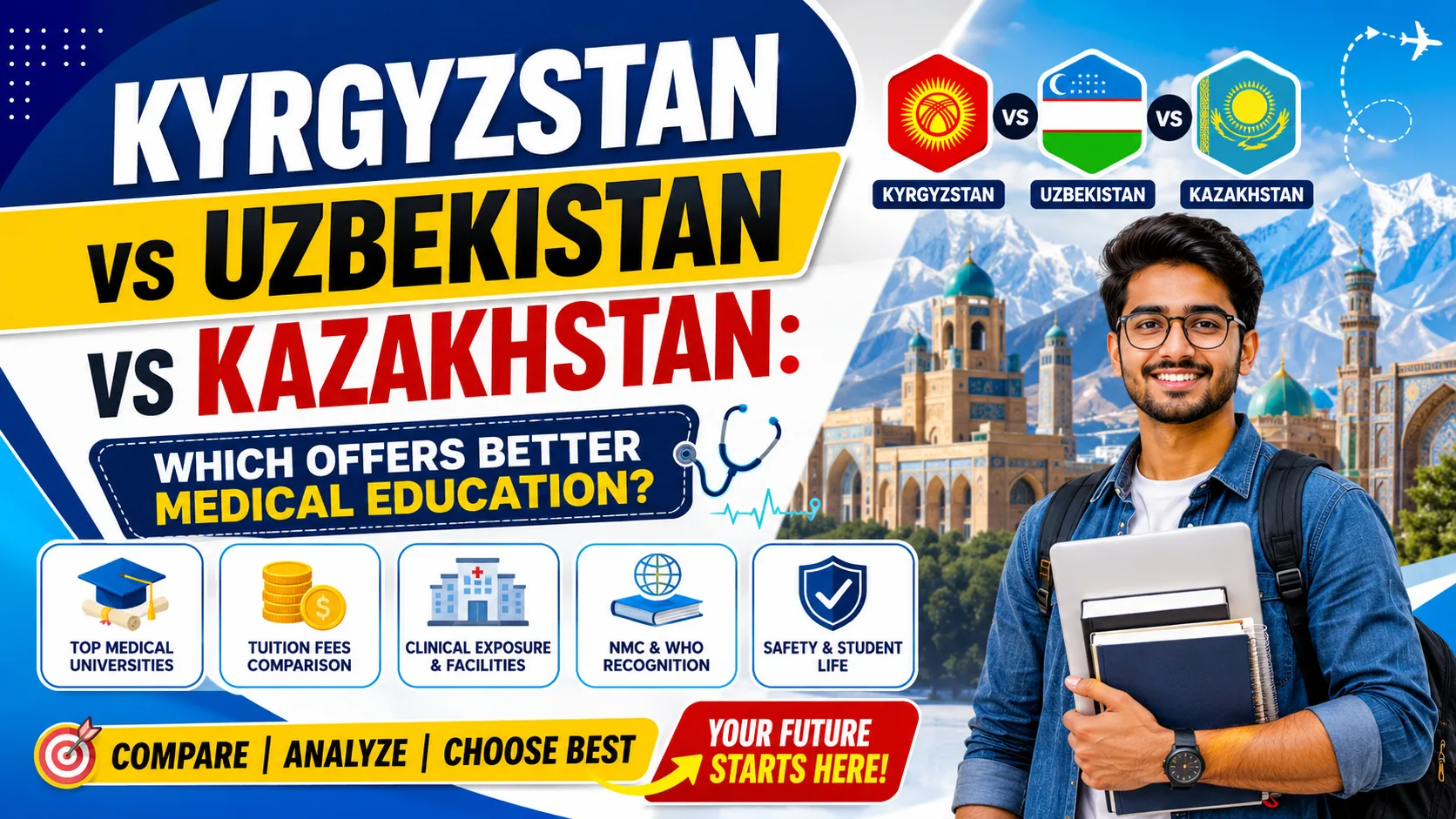
The core question this paper explores is exactly: among these three countries, which has a competitive edge in the quality of its medical education? The full paper carries out a horizontal comparison across five dimensions—application eligibility, tuition fees, admission procedures, university quality, and career outcomes—to help applicants make informed independent decisions, rather than relying only on one-sided opinions from overseas study agents.
This paper first presents its core preliminary conclusion: Kyrgyzstan’s programs have the lowest overall cost and the highest cost-effectiveness; Uzbekistan balances affordability with modern infrastructure; Kazakhstan’s research-oriented European-style curricula deliver the highest quality, though its tuition is slightly higher.
All higher education institutions across the three countries meet the requirements of India’s National Medical Commission (NMC), and are listed in the World Health Organization (WHO) directory and the World Directory of Medical Schools (WDOMS). A final choice must be tailored to each applicant’s budget, preference for learning environment, and long-term career goals.
Core additional advantages of Central Asian MBBS programs include full English-medium instruction, direct admission eligibility for applicants who only pass the NEET-UG exam with no requirement for additional tests, compliance with the NMC framework set out in the 2021 Foreign Medical Graduate Licentiate (FMGL) regulations, and the presence of well-established, mature communities of Indian international students in the region.
This paper attaches a comparative table of application eligibility requirements for the three countries, which verifies that all three share identical entry thresholds and all adhere to the unified NMC framework, laying the groundwork for subsequent in-depth comparisons.
This article is aimed at all Indian students applying for overseas MBBS programs. It organizes and aligns study-abroad related information for Kyrgyzstan, Uzbekistan, and Kazakhstan using a consistent set of dimensions, to enable applicants to conduct straightforward side-by-side comparisons.
Admission Process Comparison
First, it outlines the admission application processes for each of the three countries separately.
The unified entry requirement for all three countries is as follows:
Applicants must pass the NEET-UG exam.
Their intended target institution must meet NMC compliance standards.
The university must be included in the WDOMS directory.
Cost and Course Duration Comparison
Next, the article shares cost and program duration data for the three countries:
Country | Total Tuition Fees | Course Duration |
Kyrgyzstan | 15–25 lakh INR | 5–6 years (including internship) |
Uzbekistan | 18–30 lakh INR | 5–6 years (including internship) |
Kazakhstan | 20–35 lakh INR | 5–6 years (including internship) |
For application-specific details:
Uzbekistan can issue its admission invitation letter within 48 hours.
Kazakhstan has a unified annual semester start date in September.
Country-wise Advantages and Considerations
The article then describes the unique study-abroad advantages and key drawbacks to consider for each country.
It draws on a range of authoritative third-party sources, including NMC’s 2026 compliance warning for certain Uzbekistani higher education institutions, and the 2021 FMGL regulations.
Finally, it adds the universal requirement that all Indian students must pass the FMGE/NExT screening test to practice medicine in India after returning home.
Important Recommendations
The article’s authors put forward two core decision-making recommendations:
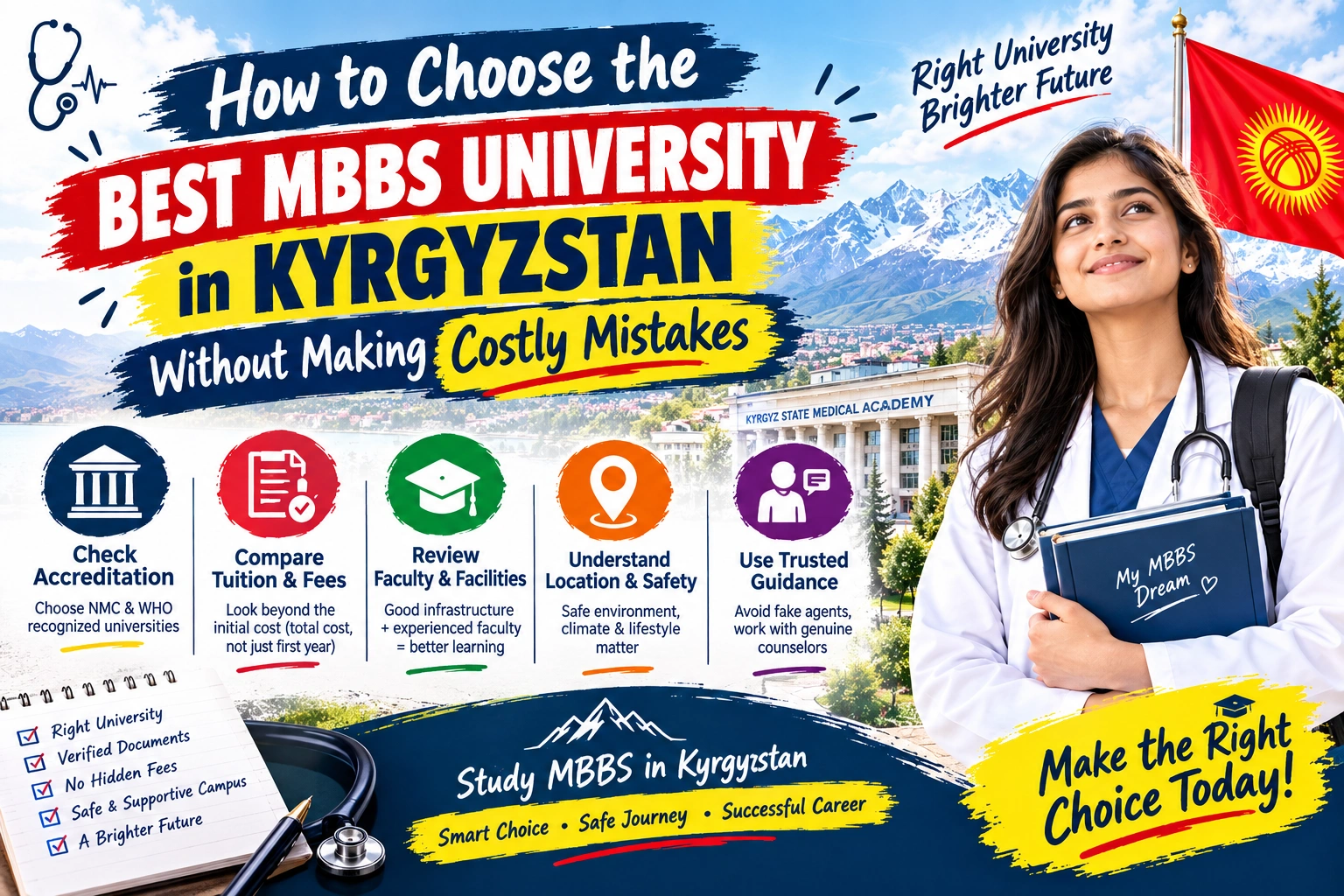
Indian middle-class families with limited budgets can prioritize MBBS in Kyrgyzstan as their first choice.
All applicants must independently verify the accreditation status of their target institution, never relying solely on education intermediaries.
All information presented in this article is structured around the target group’s core decision-making needs, covering all key decision points including entry requirements, costs, institutional qualifications, and domestic medical practice eligibility.
Complete Guide for Indian Students
This guide is designed for Indian international students planning to pursue a Bachelor of Medicine and Bachelor of Surgery (MBBS) in Central Asia, and compiles core information about the full application process for three Central Asian nations: Kyrgyzstan, Uzbekistan, and Kazakhstan.
Top Medical Universities
First, it lists the top medical universities in these three countries:
Kyrgyzstan
Kyrgyz State Medical Academy
Osh State Medical University
International School of Medicine
Jalal-Abad State Medical University
Asian Medical Institute
Uzbekistan
4 leading medical universities
Kazakhstan
4 leading medical universities
A reminder that all applicants must hear repeatedly is that before finalizing your university choice, you must verify a school’s eligibility against the official World Directory of Medical Schools (WDOMS) catalog and the official website of the National Medical Commission (NMC), complete this eligibility check in advance, and never select a university solely based on general country-level recommendations. This avoids risks to your future medical practice that come from attending an unqualified institution.
Career Path After MBBS
No matter which of the three countries you choose to study in, Indian students returning to India to practice medicine must:
Pass the Foreign Medical Graduate Examination (FMGE) — which will soon be replaced by the National Exit Test (NExT).
Complete the registration process with the NMC or your home state’s medical council.
After obtaining your license, you may pursue 4 mainstream career paths.
This guide consistently upholds the core principle that a university’s individual qualifications matter more than its country’s reputation; your career development depends far more on the quality of clinical training at your target university and your own exam preparation, rather than the Central Asian country you study in.
Student Experience Comparison
Next, this guide conducts a horizontal comparison of the study experience in the three countries across six dimensions:
Affordability
Campus infrastructure
Admission difficulty
Indian student community
Local climate
Suitable applicant groups
Among these, the total MBBS tuition in Kyrgyzstan is approximately 15 to 25 lakh rupees.
Frequently Asked Questions
Following the comparison, the guide organizes core frequently asked questions (FAQ) for the application stage.
The first five sets of answers address the five most common concerns:
Study abroad costs
NEET-UG requirements
University recognition
Licensing exam rules
Career prospects
The Q6 slot has not yet been finalized.
Is Kazakhstan Better Than Kyrgyzstan?
Is Kazakhstan a more suitable destination than Kyrgyzstan for Indian international students pursuing an undergraduate Bachelor of Medicine and Bachelor of Surgery (MBBS) degree?
Kazakhstan boasts stronger research infrastructure and a more advanced academic environment, but the overall cost of studying there is relatively high.
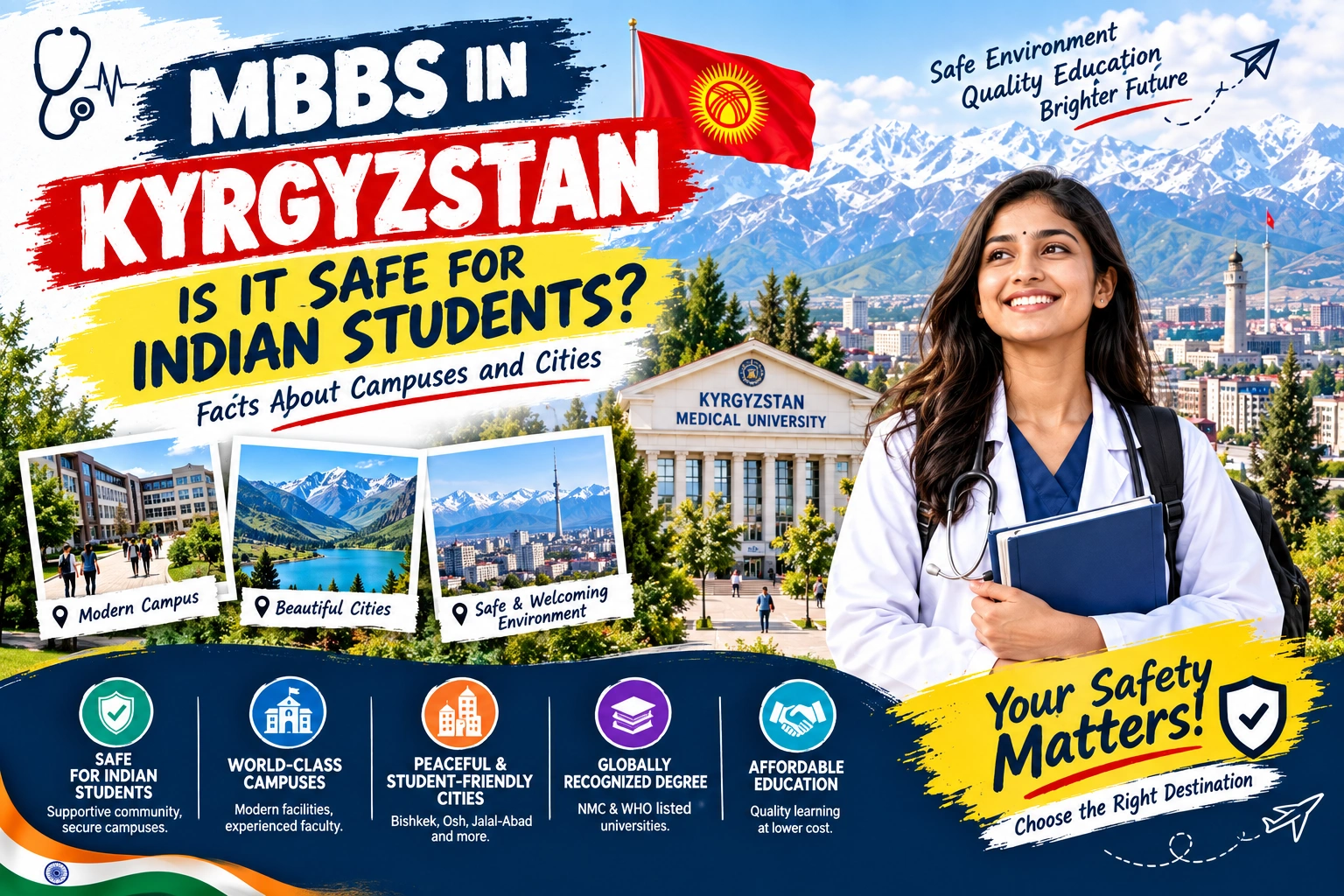
Kyrgyzstan is suited for students who prioritize affordability; for those whose top priority is controlling costs and who require access to a peer support network of fellow Indian students, it is an optimal choice within the region.
The programs offered in Kazakhstan, Kyrgyzstan, and Uzbekistan all meet the requirements of India’s National Medical Commission (NMC).
When making a decision, students must align their choice with their budget, academic priorities, and ability to adapt to a new environment.
It is essential that all students independently verify the institutional qualifications of any target school through the World Health Organization (WHO), the World Directory of Medical Schools (WDOMS), and the NMC.
Do not skip this due diligence out of pressure from study-abroad consultants.