Introduction
In recent years, pursuing an MBBS (Bachelor of Medicine and Bachelor of Surgery) in Kyrgyzstan has become a popular choice for Indian students seeking affordable, high-quality overseas medical education. This boom is driven by the persistent practical dilemmas facing India’s domestic medical education system: intensifying competition for limited medical seats, and year-on-year rising tuition fees at private medical colleges.
Kyrgyzstan’s MBBS programs have standout core advantages: all local universities hold international medical accreditations, deliver full English-medium instruction, and their overall tuition costs are far lower than those of private medical colleges in India.
Nearly all Indian students and parents who inquire about the application process list the same top and most concerning core question: what career development opportunities are available after graduation. After all, the core goal of medical education is to build a feasible, successful career path, rather than merely obtaining a degree certificate.
To address this, this paper comprehensively sorts out all viable career paths for graduates of these programs, including returning to India to practice medicine, applying for postgraduate study, seeking professional licensure to practice in other countries, engaging in medical research, and entering the healthcare management sector.
It also breaks down key information for each path, such as licensing requirements, opportunities for further education, and development prospects, to eliminate all uncertainties.
As leading local institutions, universities including the International School of Medicine Kyrgyzstan attract thousands of applications from international students every year, further consolidating Kyrgyzstan’s status as a popular study destination for medical students.
MBBS Duration and Curriculum in Kyrgyzstan
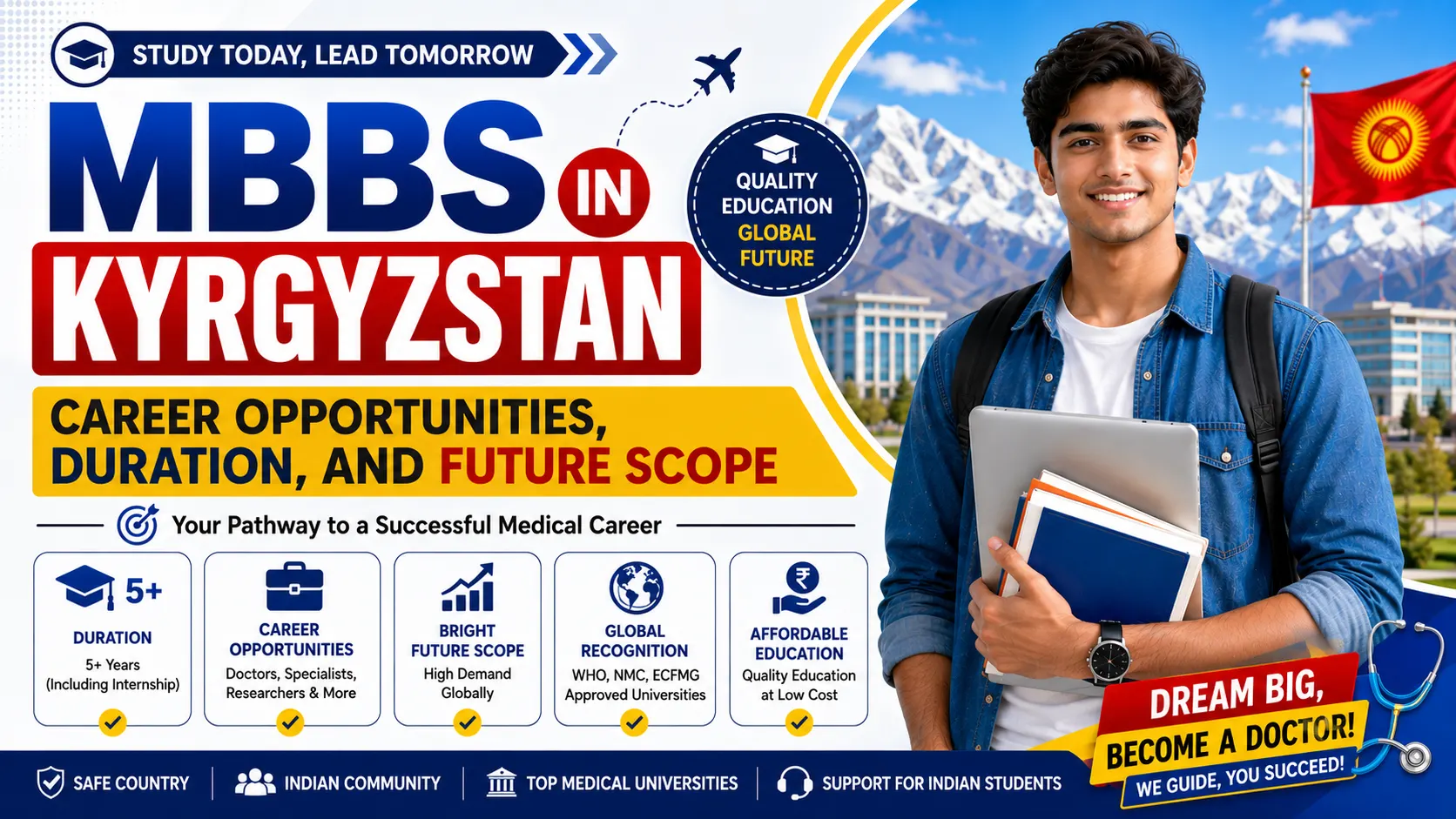
In response to the question of program duration, which is frequently searched by the Indian student population, the MBBS programs at the vast majority of local universities are 6 years long.
These programs include core modules such as:
Theoretical learning
Practical skills training
Clinical internships
The training content covers all categories of disciplines:
Basic sciences
Pre-clinical subjects
Clinical subjects
This curriculum fully meets students’ subsequent needs to practice medicine or pursue further study.
For all Indian medical students traveling to Kyrgyzstan to pursue a Bachelor of Medicine, Bachelor of Surgery (MBBS) degree, the local compliant six-year medical program will help you qualify to take national medical licensing exams across the world and unlock diverse career development opportunities.
Top Career Paths After Completing MBBS in Kyrgyzstan
Below, we sort out five core career paths from the most mainstream to the least common, ordered by the employment and further study decision priority of Indian graduates.
Practicing Medicine in India
The most mainstream choice for Indian graduates requires meeting 6 strict requirements set by India’s National Medical Commission (NMC):
Successful completion of a medical degree
Compliance with NMC eligibility standards
Holding a valid NEET score
Completion of the required length of clinical training
Passing the corresponding licensing exam
Obtaining official registration from the competent medical authority
Pursuing Postgraduate Study
You can choose from 11 mainstream specialties including:
General practice
Surgery
Pediatrics
Orthopedics
Dermatology
Radiology
Psychiatry
Anesthesiology
Obstetrics and gynecology
Cardiology
Whether you study at an institution in India or overseas, this path can greatly boost your career prospects and income level.
Working in the Public Healthcare System
Eligible employment scenarios cover 6 categories including:
Primary healthcare services
Community health programs
Public hospitals
Rural health programs
Preventive care programs
These positions offer high job stability and also allow you to provide medical support to underdeveloped regions.
Working in Private Medical Institutions
You can choose from 5 types of institutions including:
Multi-specialty hospitals
Chain medical groups
Diagnostic centers
Emergency care facilities
Specialty clinics
This path lets you quickly accumulate clinical experience and gain exposure to cutting-edge medical technologies in the field.
Overseas Career Development
Finally, overseas career development remains a flexible alternative option. The entry requirements, eligible scenarios, and core advantages of all paths are clearly defined, with no ambiguous descriptions.
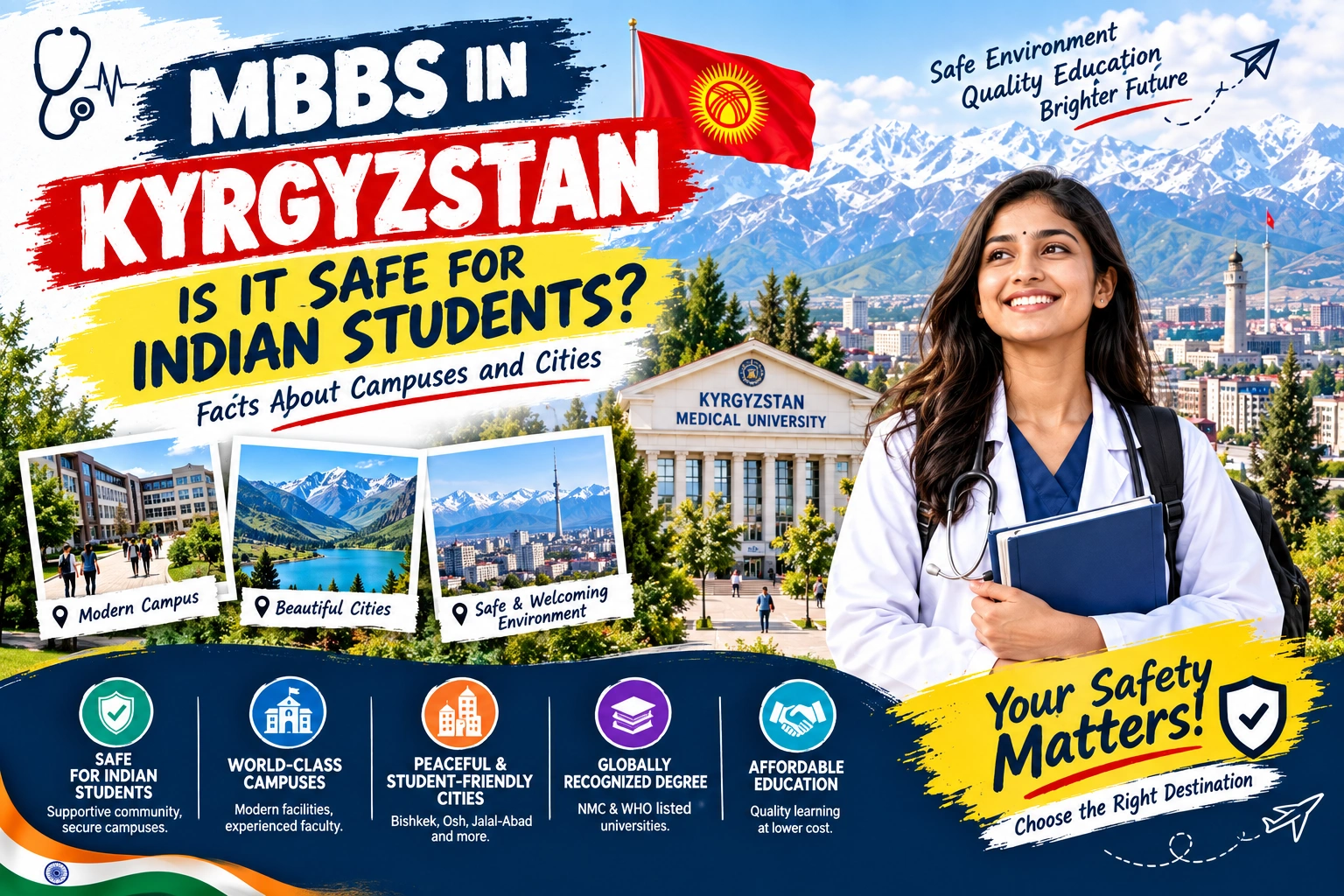
If you plan to apply for the MBBS in Kyrgyzstan program, you first need to clarify that the country’s officially accredited medical degrees enable graduates to apply for medical practice licenses in many regions including Europe, Asia, Middle Eastern countries, Australia, and North America.
However, differences exist across all these jurisdictions in their license application processes, eligibility requirements, language standards, and examination systems.
All applicants must comply with local regulations and examination requirements and conduct targeted research in advance.
Non-Clinical Career Opportunities After MBBS
Beyond the standard clinical practice path, graduates may also choose from five diverse non-clinical career tracks related to the medical field.
Medical Research and Academic Careers
Professionals in this track can specialize in areas such as clinical research and biomedicine, take on teaching work for medical students, lead scientific research projects, and publish academic papers.
Universities and research institutions across the globe have demand for talents in this field.
Public Health Careers
The core focus of this field is to improve population health outcomes rather than diagnose and treat individual patients, and professionals can participate in work such as disease prevention and health policy formulation.
Healthcare Administration and Management Careers
This path requires a combination of medical expertise and management capabilities, and suitable roles include hospital management and healthcare operations.
Completing additional management-focused education can help professionals advance to senior management positions.
Healthcare Technology and Pharmacy Careers
Graduates can participate in work such as medical technology development and pharmaceutical research.
Medical Entrepreneurship
Graduates can launch ventures such as private clinics and telemedicine platforms, and the growth of digital healthcare has also created new opportunities for entrepreneurial candidates.
Important Accreditations and Eligibility Requirements
Applicants to this program will frequently encounter four core sets of accrediting bodies and qualifications:
These credentials directly impact graduates’ future career opportunities, so applicants must prioritize learning about them at an early stage.
Admission, University Selection, and Cost Considerations
This guide lays out all core requirements for the full process of studying medicine abroad for Indian students planning to travel to Kyrgyzstan to pursue a Bachelor of Medicine and Bachelor of Surgery (MBBS).
Admission Qualification Verification
Applicants must earn a passing score on the NEET exam as required by India’s National Medical Commission (NMC), hold an average score of no less than 60% in high school physics, chemistry, and biology, and submit proof of English proficiency with an IELTS score of 5.5 or an equivalent qualification.
Institution Selection
Applicants may only apply to universities accredited by the Ministry of Education of Kyrgyzstan and included on the NMC’s official list of recognized overseas medical institutions to avoid the risk of earning an invalid degree from an unqualified school.
Cost and Return on Investment
The total cost of completing the full 5-year MBBS program is approximately 13 million to 19 million Indian rupees, which is over 60% lower than tuition at private medical schools in India.
Graduates may return to India immediately after graduation to take the national medical licensing exam.
Clinical Competency Development
During their studies, students must complete no fewer than 2400 hours of clinical rotations in core departments including internal medicine, surgery, obstetrics and gynecology, and pediatrics to accumulate hands-on practical experience that meets professional practice requirements.
Future Career Trends
In recent years, the pass rate on India’s national medical licensing exam for Indian medical graduates who earned their degrees in Kyrgyzstan has reached 42%, a rate higher than that of graduate cohorts from most other overseas study destinations.
Graduates can secure employment at public and private medical institutions at all levels across India.
Doctor Salary and Career Growth After MBBS
This paper is a full-process guide for overseas study and career development, launched specifically for Indian students who intend to pursue an MBBS degree in Kyrgyzstan.
It addresses the core concern of this student group: the salary levels of doctors working in Kyrgyzstan.
The guide sorts out five core factors that affect doctors’ income:
Country of medical practice
Medical specialty
Years of work experience
Healthcare sector of employment
Geographical work location
It reminds readers not to focus only on starting salaries, but to prioritize long-term career growth. The returns of experienced specialist doctors are far higher than those of general practitioners.
Continuous education, in-depth professional specialization, and skills upgrading are the core supports for career advancement.
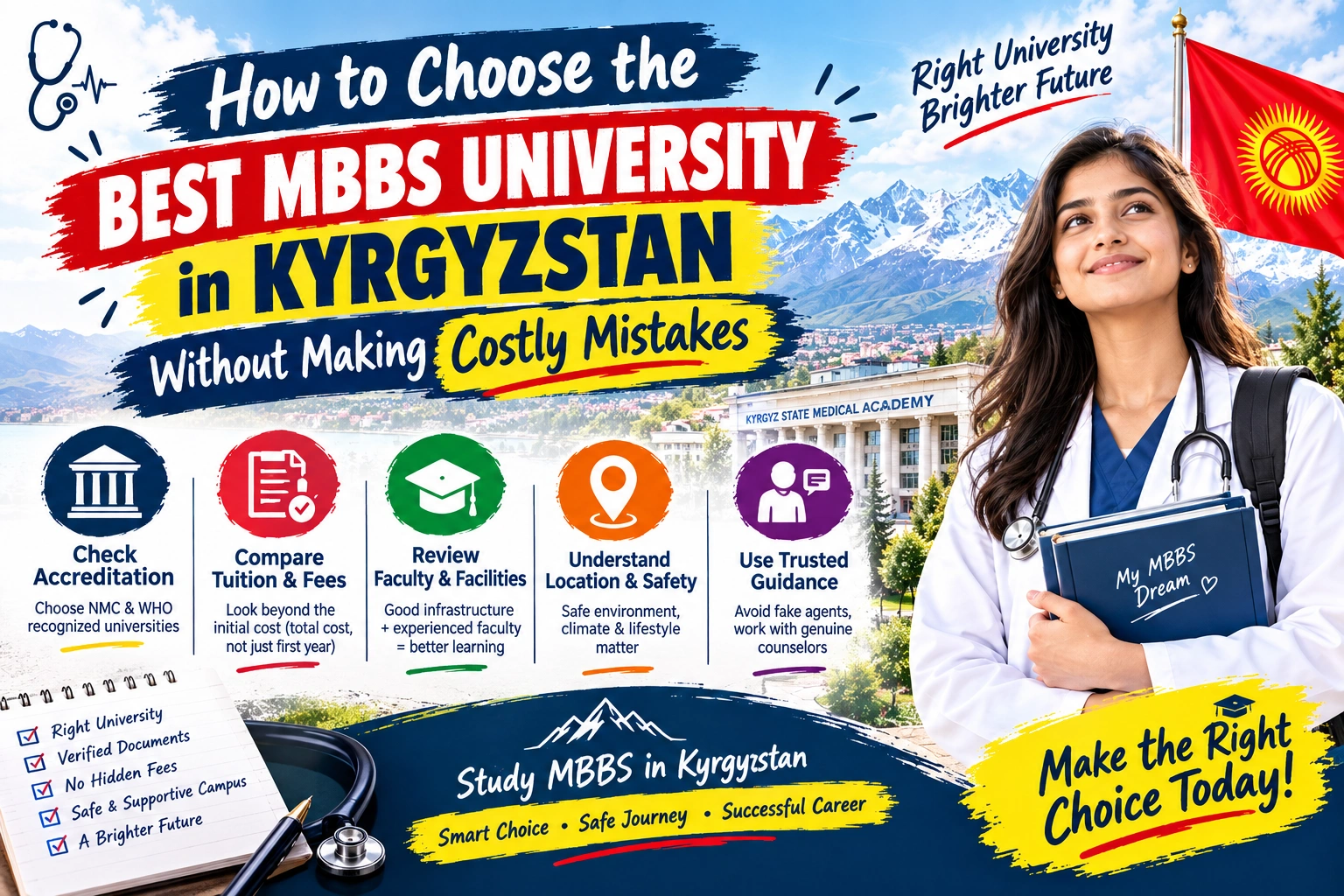
Choosing the Right Medical University in Kyrgyzstan
After completing an MBBS in Kyrgyzstan, students can choose from six career paths.
Kyrgyzstan has become a popular study-abroad destination due to four major advantages. Eligible institutions such as the International Medical School of Kyrgyzstan are worthy of key attention.
When selecting a school, students need to verify four criteria:
Compliance with NMC regulations
Registration in WDOMS
Access to clinical training opportunities
Overall academic quality
Completing four key preparations will enable students to build a successful career in medicine.
For students planning to study MBBS in Kyrgyzstan, understanding university recognition, career pathways, and future opportunities is essential.
The overall MBBS in Kyrgyzstan fees for Indian students remain one of the major reasons why students prefer this destination.
Many students also compare the best MBBS colleges in Kyrgyzstan for Indian students before selecting their university.
The complete process of MBBS admission in Kyrgyzstan requires proper planning and verification of university accreditation.