Introduction
In recent years, competition for medical degrees within India has continued to intensify, while tuition fees and associated costs at private medical colleges have risen steadily. Many families hoping for their children to become doctors either cannot secure one of the limited spots at public medical colleges, or cannot afford the exorbitant expenses of domestic private medical education. This supply-demand imbalance has pushed a growing number of families to turn their attention to overseas MBBS programs, among which relevant programs in Kyrgyzstan have become one of the most popular choices in recent years.
The core advantages of Kyrgyzstan’s MBBS programs align closely with the needs of Indian families: their costs are affordable and manageable, all compliant host institutions hold authoritative accreditations, instruction is delivered entirely in English, and there is a long-established, mature community of Indian international students that helps new arrivals adapt quickly to life abroad.
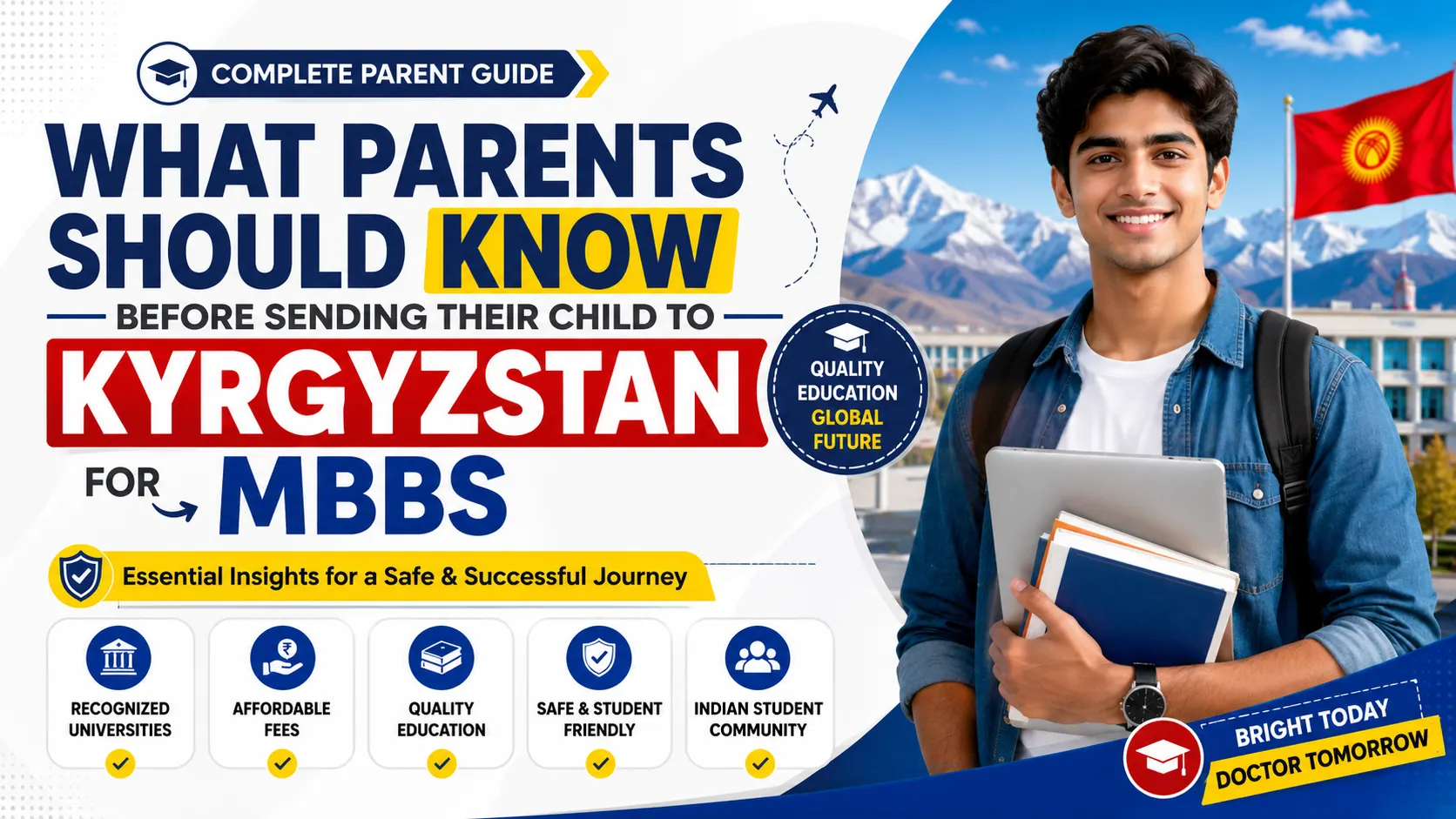
Key Concerns of Indian Parents Before Sending Their Children Abroad
Unlike their children, who prioritize campus atmosphere and the convenience of local daily life, parents—who hold full decision-making power—have far more practical core concerns:
Validity of the university’s accreditations
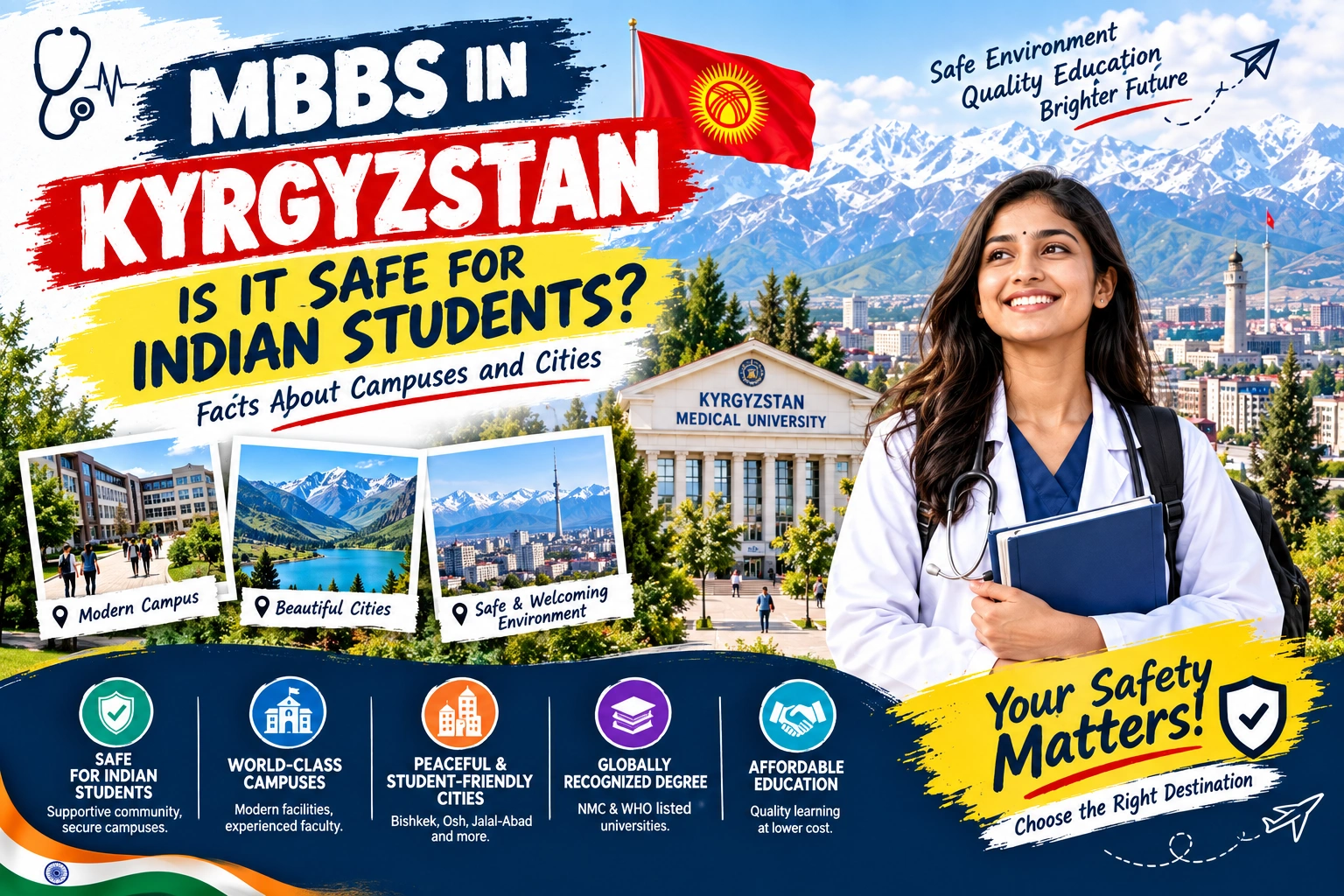
Personal safety of their child
Total cost of the entire degree program
Maturity of the local healthcare system
Global professional value of the degree
As educational content developed specifically to serve Indian families pursuing overseas medical education, this article first reminds all parents: studying medicine abroad is a major 6-year-long decision that leaves no room for oversight.
Understanding NMC, NEET, WDOMS, and WHO Requirements
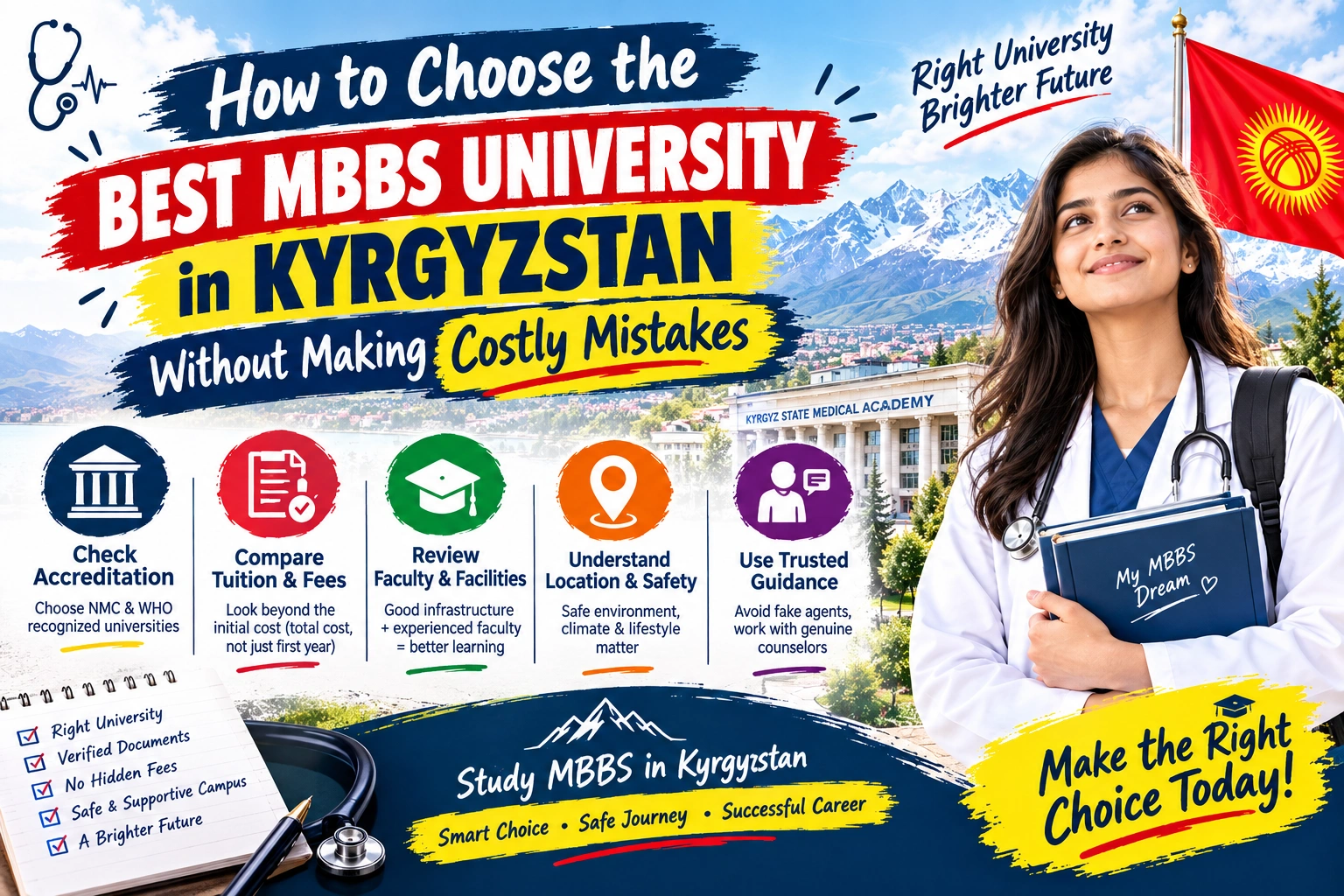
The most critical first task you must complete is to verify the relevant accreditations of your target university before enrollment. During your research, you will gradually encounter professional terms including WHO, NMC, NEET, and WDOMS.
NMC Compliance
Applicants must satisfy all the regulatory rules for overseas medical education set by the National Medical Commission (NMC) of India, which serves as the non-negotiable baseline for all applications.
NEET Qualification
Students must obtain a valid passing score on the NEET exam, the mandatory entry qualification for all Indian students applying to any overseas medical program.
WDOMS Listing
Parents must confirm that their target institution is included in the World Directory of Medical Schools (WDOMS), which is essential for international recognition.
WHO Recognition
They need to verify that the institution holds official medical education accreditation from the World Health Organization (WHO).
Completing these checks one by one in this order will help families avoid the vast majority of common entry pitfalls.
Understanding MBBS Program Structure and Total Cost Planning
To address core concerns that Indian parents frequently search for—including MBBS application requirements, NMC-recognized medical schools, the validity period of NEET scores, total cost of studying medicine in Kyrgyzstan, and practice requirements for overseas degree holders—this article sorts out key precautions across two core dimensions for local MBBS programs.
Program Structure and Internship Requirements
Applicants must confirm that the length of clinical internships included in the program meets NMC accreditation requirements to avoid future eligibility issues for medical practice in India.
Complete Cost Assessment
Parents must calculate all expenses in advance, including:
Tuition
Accommodation
Registration fees
Medical insurance
This helps avoid unforeseen extra charges during the program.
Six Core Decision Modules for Parents
1. Budget Planning
Families must calculate the total cost of the full six-year academic program and itemize specific cost categories including tuition, school fees, living expenses, and other related expenditures.
2. Safety Assessment
Families must complete safety checks before selecting a school. Institutional support services and personal safety education form the foundation of a secure study-abroad experience.
3. Residential Life Assessment
Most medical schools in Kyrgyzstan that accept Indian international students operate dedicated dormitories. A comfortable living environment supports faster adaptation and better academic performance.
4. Clinical Training Evaluation
Parents must avoid prioritizing school rankings and tuition costs while neglecting clinical training quality. They should verify hospital partnerships and practical training opportunities.
5. Faculty and Academic Quality
High-quality teaching staff provide long-term benefits for students’ academic foundation and future career development.
6. Target University Assessment
For universities such as the International School of Medicine Kyrgyzstan and JAIU Kyrgyzstan, parents should use objective evaluation criteria instead of relying only on reputation.
University Selection and Long-Term Career Planning
Students should evaluate universities based on:
Institutional accreditation
Faculty quality
Clinical opportunities
Fee structure
Student outcomes
A proper balance between academic quality, affordability, and career potential is essential.
Emotional and Academic Support for Students Abroad
In addition to academic responsibilities, students may face challenges such as:
Homesickness
Cultural adaptation
Language adjustment
Academic pressure
Regular communication and emotional support from parents can help students overcome these challenges.
Career Opportunities After MBBS
Graduates can explore several professional pathways:
Clinical practice
Postgraduate education
Scientific research
Public health
Healthcare management
Medical education should be viewed as the foundation of lifelong professional growth.
Financial Preparation for the Six-Year MBBS Journey
Parents should follow five major financial preparation steps:
Estimate annual expenditures
Maintain an emergency reserve fund
Monitor exchange rate changes
Prepare for unexpected expenses
Review fee structures regularly
Financial stability plays a vital role in a successful medical education journey.
Doctor Salary and Long-Term Career Success
Many Indian parents worry about their child’s future income as a doctor. However, professional income depends on multiple factors, and starting salary should never be the only criterion when choosing a university.
Long-term success depends on:
Educational quality
Clinical competence
Continuous learning
Professional skills
Career development planning
Final Checklist Before Selecting an MBBS University in Kyrgyzstan
Sending a child to study for an MBBS in Kyrgyzstan is a major educational and financial decision. The advantages of studying in Kyrgyzstan are significant, but parents should never rely solely on marketing claims.
Before applying, families should verify:
University qualifications and accreditations
Academic quality
Clinical resources
Total study cost
NMC and WDOMS compliance
NEET eligibility requirements
Student support services
Careful research, proper financial planning, and objective university assessment will help students build a strong foundation for a successful medical career.