When Indian students consider studying MBBS abroad, they analyze accommodation along with the academic and financial aspects. A good accommodation allows students to adjust to a new country and concentrate on their studies. Knowing this, medical universities in Kyrgyzstan invest in their infrastructure to improve international student accommodation.
Each year, thousands of students choose MBBS in Kyrgyzstan. Medical education is relatively inexpensive, universities have global recognition, and the country has a welcoming atmosphere. Still, students and parents have many concerns regarding hostel life. What are the rooms like? Is it safe? Is Indian food easily available? What services are there?
We have answered the above questions and many more regarding hostel facilities offered by medical universities in Kyrgyzstan.
Why do International Students Prefer Hostel Accommodation?
University hostels are the preferred accommodation choice for many first year students. Living on or very near the university helps students adapt to their new surroundings.
Hostels have many benefits, including:
Low accommodation costs
Convenience of being near university buildings
Improved safety and security
Less time wasted commuting
Opportunity to meet and interact with fellow students
Availability of a supportive student community
For many foreign students visiting Kyrgyzstan for the first time, hostel accommodation makes the move to a foreign country much easier and less stressful.
Kyrgyzstan's medical universities have developed their on-campus accommodation to keep up with the growing numbers of international students.
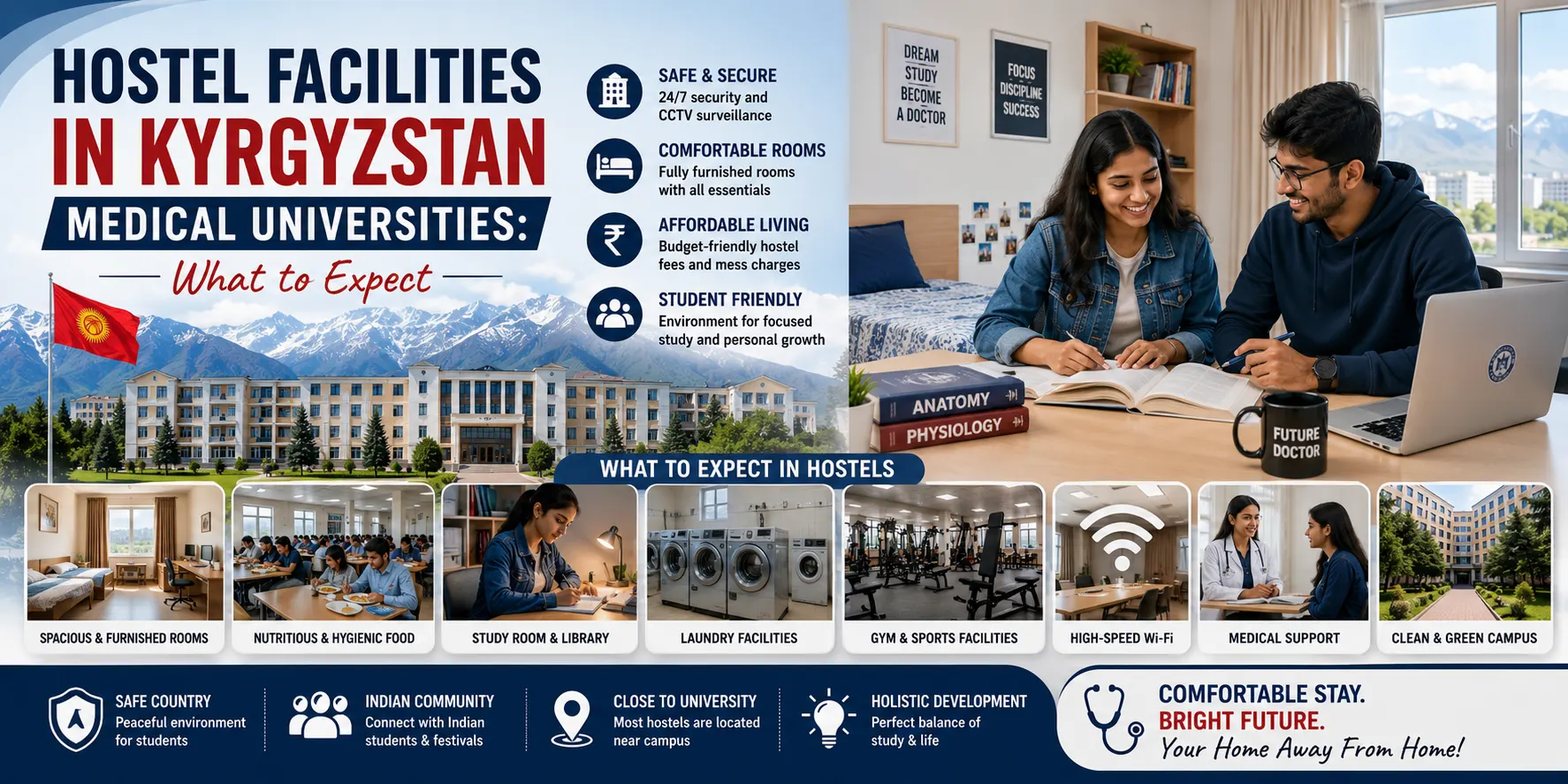
Over the years, university accommodation has improved. Modern university hostels offer facilities that provide support for comfortable living and success in studies.
Hostels usually are:
Modern hostel buildings
Furnished hostel rooms
Central heating
Internet
Common study room
Security
Laundry
University managements are aware that residential facilities have a direct impact on the performance and wellness of students.
Room Types and Accommodation Options
What kind of room is offered is often based on the university and the hostel building.
Shared / Dormitory Rooms
Shared accommodation is usually the only option offered to international students.
Rooms usually take:
2 students
3 students
4 students
Shared accommodation is a great way to make friends, adapt to a new place and reduce the costs of accommodation.
Semi-Private Spaces
Some universities offer semi-private spaces to students looking for a little more personal space.
These spaces usually have:
Fewer occupants
More space
Greater privacy
Less room noise for study
Less room noise for study
Separate Accommodation Options
After students become familiar with the area, more senior students often take private apartments. However, the majority of universities have a hostel recommendation for the early years.
Fully Furnished Living Spaces
One of the largest headaches for international students is figuring out how to get (or buy) furniture.
,Most hostel rooms have:
Beds
Mattresses
Study desks
Chairs
Wardrobes
Shelves
This allows students to move in without incurring costs for a lot of new things.
The furniture will be practical for students while also helping them keep their rooms organized.
Safety and Security Measures
Safety is always going to be a priority for students and their parents.
Kyrgyzstan’s medical universities will usually keep hold of intense safety measures for their hostels.
The most common of these include:
Entry is controlled
Staff is present
CCTV is operational
Visitors are registered
Emergency contacts are offered
These measures allow students to worry about their studies and not about their safety.
Safeguarding your own documents and following the hostel’s rules are some of the security measures students are encouraged to practice as well.
Internet and Digital Connectivity
Having a good internet connection is a necessity for an education in Medicine today.
Students use the internet for:
Lectures
Research
Videos
Family
Assignments
Exams
Hostels for most Universities will give Wi-Fi. Some have even improved their systems to keep up with the demands of their students.
Having a strong internet means students are connected during their studies and can remain connected socially.
A Comfortable Study Environment
Medical studies can take a long time and require lots of reading, reviewing and learning.
Because of this many hostels have areas dedicated to studying such as:
Reading rooms
Study halls
Discussion rooms
Libraries
Computers
These facilities will also help students develop good study habits.
Kitchen Facilities and Cooking Options
Food matters to students studying abroad.
Common in hostels are shared kitchens where students have the ability to cook their own meals.
These kitchens usually have:
Cooking counters
Gas or electric stoves
Washing areas
Food storage spaces
Basic utility connections
For Indian students, shared kitchens are extremely helpful in preparing meals and allowing them to stick to their preferred Indian diets.
Cooking in groups has become very popular, as students divide the work.
Availability of Indian Food
Since they are the largest group of international students in Kyrgyzstan, many Indian food products have become more accessible.
All students can purchase:
Rice
Wheat Flour
Lentils
Spices
Tea
Instant Snacks
Ready to Cook Products
Indian restaurants and grocery stores are extremely accessible in the major student populated areas.
This availability has contributed to the ease of food habits in contrast to the original expectations of many students.
Laundry and Hygiene Facilities
Personal hygiene is an important aspect of hostel living.
Most university hostels provide:
Laundry rooms
Washing machines
Drying Facilities
Cleaning Services for Common Areas
There is an expectation of cleanliness in personal rooms, encouraging responsibility and self-discipline.
Learning to manage daily tasks of a household is quite important for independent living.
Heating and Winter Comfort
Students from the warmer regions of India often struggle to adjust to the colder Kyrgyzstan winters.
Fortunately, winter designed heating systems are installed in University hostels.
Most accommodations have:
Central heating
Insulated Buildings
Hot Water Supply
Weather Resistant Infrastructure
These buildings allow students to stay warm and dry even during heavy snows.
Most students eventually acclimate to and learn to cope with local weather changes.
Community Life in Hostels
Hostel life provides students with a lot more than a place to sleep.
Most students say, and many view, their hostel community as an extended family. Friendships form in hostels as a result of the many activities that the residents participate in.
The activities that sometimes take place in hostels include:
Group studies
Sport activities
Social activities
Celebration events
Birthday gatherings
These activities help students to build communities and networks. These networks can help students cope with some of the most stressful and demanding times of their life, including the exam period.
Cultural Diversity and International Exposure
Due to the number of countries that the medical universities in Kyrgyzstan recruit students from, hostel residents come into contact with students from:
India
Nepal
Pakistan
Bangladesh
African countries
Middle Eastern countries
Central Asian countries
Living in such a diverse environment helps students to develop and nurture their
Professional skills
Soft skills
Communication skills
Cultural sensitivity
These will help students improve and develop their future careers.
Healthcare Support Within Hostels
Based on the needs of the students that universities in host countries recruit internationally, many hostels provide:
In-house medical services
Emergency healthcare
Healthcare insurance
Student welfare networks
Students that go to the universities that are in the World Directory of Medical Schools (WDOMS), get the opportunity to go to universities that offer quality medical education as a result of the country's compliance with internationally accepted medical education.
In addition to the above, students should also keep themselves updated on the NMC recommendations and the healthcare updates on WHO during their studies.
Hostel Rules Every Student Needs to Know
Freedom in hostels does have limits, students are expected to abide by the rules of the university. Most common rules include: observing quiet hours, upholding a certain level of cleanliness, adherence to visitor policy, university property must not be damaged, safety procedures should be followed.
While these rules are in place to ensure a comfortable living environment for all residents, there are additional guidelines to help ease the transition for students new to living in a hostel.
New students can benefit by:
Packing their personal belongings
Bringing appropriate clothing for the local winter
Relearning the local language to learn a few words
Forming a study schedule
Getting involved with other students
Frequent communication with family
Other personal factors
Being positive and adaptable is the key to being able to adjust to living in a hostel.
Additional Guidelines for MBBS Students
Students planning to pursue medical education abroad should also qualify NEET and regularly review updates from the National Medical Commission before making academic decisions.
The hostel facilities within the Kyrgyzstan medical universities have modernized to be in line with international students' expectations. Safety, comfort, practicality and having a fully supportive community all contribute to making hostel life a positive experience.
MBBS students from other countries who wish to study in Kyrgyzstan, consider university hostels as being much more than accommodation. They are spaces that allow students to gain independence, enjoy meaningful friendships, and embrace cultural differences, while being able to focus on their medical studies.
A well organized hostel encourages individual growth during this journey to be a future qualified healthcare professional, while also supporting university studies.